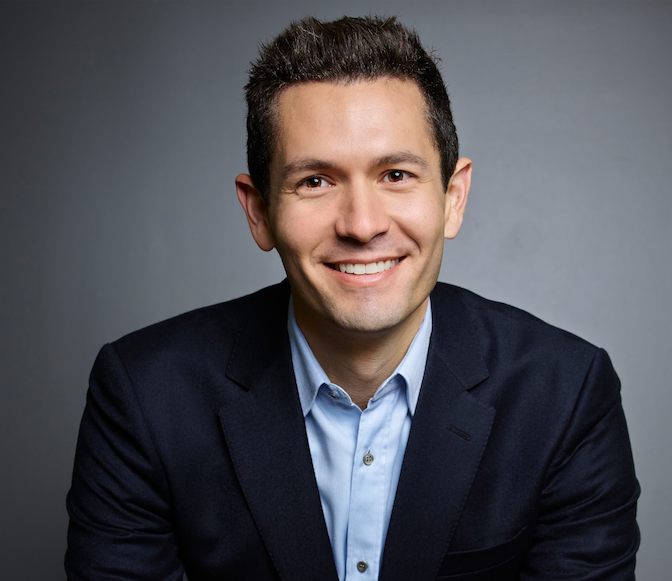
Rewiring the injury claim, one negotiation at a time
Joshua Schwadron runs Mighty, a New York legal-technology company with a simple, stubborn premise: the person injured in a car accident should get a fair outcome without surrendering a third of it or fighting an insurer alone.
In January 2026, Mighty did something the legal industry had mostly treated as a talking point. It turned on a free, AI-powered platform that takes a motor-vehicle accident claim from raw facts to a settlement offer. The software gathers the accident details, pulls police reports and medical records, produces what Mighty calls a Live Estimate of the claim's value, and then negotiates with the insurance company on the user's behalf. Mighty says some cases have already settled entirely through AI, with reported outcomes ranging from about $5,500 to $8,500 and no human negotiator in the loop.
That launch is the clearest expression yet of the idea Schwadron has been circling for more than a decade. He frames it as a third option. After a crash, most people either hand a lawyer a contingency fee that can reach 40 percent, or they go it alone against an insurer built to minimize payouts. Mighty's platform is meant to sit between those two, letting a person value their own claim and see a settlement offer before they ever decide whether to hire anyone.
Schwadron is a lawyer by training and a repeat founder by temperament. He is licensed to practice in New York, Florida, and New Jersey, and he has spent his career building at the seams where consumers tend to get a raw deal. What makes Mighty unusual is that it grew out of a grievance he can trace to a specific object from his childhood.
"He actually did not handle any cases. He signed up people, and then he and his team referred 100% of them to other attorneys."
Growing up in Miami, Schwadron passed a highway billboard for a family friend, a lawyer who advertised that he could help accident victims win good settlements. As a teenager, Schwadron learned the lawyer did not actually work the cases. He signed people up and referred all of them out. The lesson stuck: the person whose face is on the billboard is not always the person doing the work, and the gap between the promise and the practice is where injured people lose.
That insight took a while to become a company. Schwadron went to the University of Michigan, where in 2003 he was named a GQ national college "Big Man on Campus" and, in the same stretch, won NBC's Fear Factor in a Las Vegas special that ran across two episodes. He earned degrees in economics and accounting from Michigan's Ross School of Business, then a law degree from Emory University School of Law.
His first company was not legal at all. In 2010 he founded Betterfly, a consumer marketplace that connected people with service providers for jobs like home remodels and yard work. It raised $4 million from Lightbank, the fund started by Groupon co-founders Eric Lefkofsky and Brad Keywell, both of whom sat on the board. Betterfly was acquired by TakeLessons in 2013.
The same year, Schwadron moved toward the industry that had bothered him since childhood. He co-founded Summon Litigation Ventures, a firm that financed plaintiffs' needs while they waited out slow legal settlements. It was here, working close to personal injury practices, that he saw the mechanics up close: the money that flowed to high-advertising lawyers, and how little support reached the people actually recovering from accidents.
The CompanyMighty, and the fight it picked
Schwadron founded Mighty in New York City in 2015. The original plan was to help personal injury lawyers run more efficiently, on the theory that savings would trickle down to accident victims. They didn't. So Schwadron changed the plan. In June 2022, Mighty launched Mighty Law, an operating law firm that represents car-accident victims directly and competes with the very lawyers Mighty once served, starting across nine states.
The move made him enemies. Mighty's marketing openly casts "billboard lawyers" as predators who profit when people are most vulnerable, and the personal injury bar noticed. Schwadron says some lawyers pressured medical providers to stop taking referrals from Mighty. He has been unapologetic about the friction.
"We know we have hit a nerve because we are telling the truth."
Asked whether the backlash had rattled him, his answer was the opposite of retreat: "Oh no, we're emboldened." The blowback, he admitted, had been stronger than expected. It did not change the direction. If anything, the resistance became evidence to him that Mighty was aimed at something real.
Behind the rhetoric is a company of roughly 63 employees that has raised more than $117 million, including a $105 million Series B in 2018. It sits at the intersection of legal services, insurance claims, and software, and its 2026 pivot to AI agents is a bet that the same automation reshaping other industries can be pointed at a process most people only encounter once, at their worst moment, with the least leverage.
Whether AI can reliably settle claims that carry real medical and financial stakes is still an open question, and Mighty's platform flags complex cases for a human attorney rather than pretending the software can do everything. But the ambition is consistent with everything Schwadron has built. He keeps returning to markets where consumers are outmatched, and he keeps trying to hand them more leverage.
The through line from the Miami billboard to the AI negotiator is not technology. It is a conviction that the injured person, not the advertiser, should be the point of the whole system. Mighty is his argument that you can build that conviction into software - and then dare the incumbents to object.
He won NBC's Fear Factor in a 2003 Las Vegas special that spanned two episodes.
GQ named him a national college "Big Man on Campus" the same year.
Betterfly's board included Groupon co-founders Eric Lefkofsky and Brad Keywell.
His Mighty co-founder Dylan Beynon later created the wellness company Mindbloom.
He is licensed to practice law in three states: New York, Florida, and New Jersey.
Mighty's HQ sits on Park Avenue South in Manhattan.