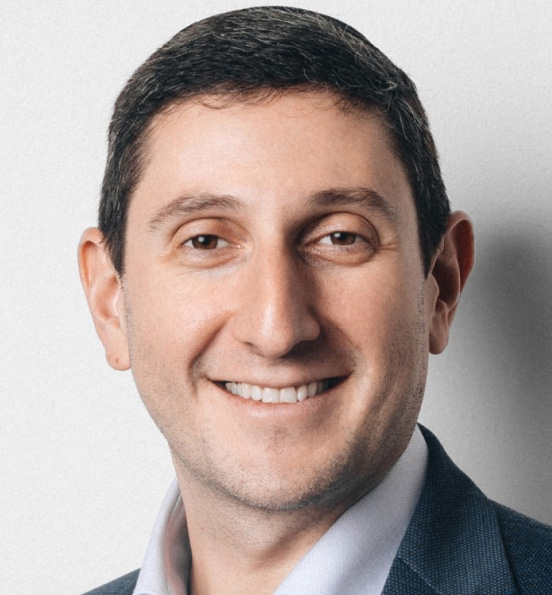
Vadim Vladimirskiy did not set out to build a unicorn. He set out to stop drowning in his own paperwork.
For fifteen years he ran Adar IT, a Chicago managed service provider that gave clients full IT infrastructure in a virtual environment - desktops and data they could reach from anywhere, years before "work from anywhere" became a slogan. Running that business meant wrestling Microsoft's cloud into shape by hand, over and over, for every customer. So his team wrote tooling to automate the grind. The tool worked. By 2016 he noticed every other MSP was fighting the same dragon with the same blunt sword. That observation became Nerdio.
Today Nerdio is the thing the tool grew into: a platform that deploys, manages, and optimizes virtual desktops in Microsoft Azure, Windows 365, and Intune, and claims it can shave up to 80% off Azure compute costs through automated scaling and scheduling. It serves thousands of organizations across more than 50 countries - the kind of customers who do not have a platform team to lean on and need the cloud to behave like a product, not a project.
In March 2025 General Atlantic led a $500 million Series C, with Lead Edge Capital and StepStone alongside, quadrupling the company's valuation in two years to more than a billion dollars. By that June, Nerdio had crossed $100 million in annual recurring revenue. The kid who charged $25 an hour to set up home networks now runs a company growth investors line up to fund.
The raise came with grown-up consequences. General Atlantic took two board seats, with Aaron Goldman and Asher Hecht representing the firm, a signal that the company has moved from scrappy bootstrap to institution. Later in the year Microsoft named Nerdio a 2025 Americas Partner of the Year finalist - a useful credential for a business whose entire value proposition is wrapped around Microsoft's own cloud. Vladimirskiy did none of this alone: he co-founded Nerdio with Joseph Landes, who serves as president and runs the global go-to-market side while Vladimirskiy steers product and strategy.
"Most limitations are in our heads. We usually perform relative to what we think is possible to achieve."
— Vadim Vladimirskiy
Origins
A 13-year-old, a new country, and no English
He arrived in Chicago from Ukraine in the early 1990s at age 13, starting ninth grade a few months later while barely speaking the language. The first stretch of high school was hard for the obvious reasons. Then a freshman-year fascination with computers gave him a foothold, and by junior year he had turned it into ComTech Computers, helping neighbors set up home networks and plugging dial-up modems in under their desks.
One teacher mattered more than most. Dr. Cohn, his ninth-grade algebra instructor, looked past an early bad grade and told him he would become the best student in the class. Vladimirskiy credits that prediction with reshaping what he thought he was capable of - a theme that runs through everything he has built since.
He stayed in town for school: a BS in Computer Engineering from Northwestern, magna cum laude, then an MBA from Northwestern's Kellogg School of Management in 2010. The engineering taught him how the machine works. The MBA taught him how the business around it works. He has needed both.
The Disaster That Built a Company
He erased a client's hard drive. Then he made sure no one else would.
Early in his consulting days, Vladimirskiy ran a hard-drive cloning operation in the wrong direction and wiped out a client's data. It was the kind of mistake that ends careers, or starts them. For him it became a permanent allergy to data loss and the seed of Level2 Storage, the cloud backup company he co-founded in 2005. Secure, automatic, online - because he had felt exactly what its absence costs.
Level2 led to a 2007 pilot virtualizing servers and offering remote access to a handful of clients, which grew into Adar IT, which grew into the frustration that became Nerdio. Three companies, one method: find the inefficiency everyone has quietly decided to tolerate, then automate it out of existence.
"At Nerdio, AI isn't just about making things easier - it's about ensuring customers consistently achieve the best performance."
— On where Nerdio is headed
The Person
Stubborn, in the useful way
Colleagues and interviewers describe a founder who is meticulous about anything irreversible - a trait you can trace straight back to that wiped hard drive - and cheerfully stubborn about goals others call unrealistic. He is a reader: Anders Ericsson's Peak, the book on deliberate practice, reshaped how he thinks about getting good at anything.
The running story is the tell. During the pandemic he set out to run more and logged over 1,000 miles in a year he had assumed was impossible. The next year he passed 1,500. It is the same move he makes in business - decide the ceiling is imaginary, then go through it - applied to a pair of shoes and a lot of Chicago weather.
What he is building now is less a product than a thesis: that cloud power should not be reserved for companies with deep engineering benches. Nerdio's whole reason to exist is to hand the MSP and the mid-size IT team the same leverage the giants have. Increasingly that means AI doing the predictive scaling and the resource babysitting that used to eat a human's week. He has spent thirty years on the unglamorous side of IT. He knows exactly which week he is giving back.
That instinct to democratize is the through-line. Vladimirskiy talks about Nerdio less as software and more as a way to let organizations without specialist expertise actually use the cloud well - to deploy, manage, and optimize Microsoft environments without first hiring a team to babysit them. It is a worldview earned from the customer's chair. For fifteen years he was the customer, fighting the same complexity, paying the same bills, eating the same 2 a.m. surprises. The company he runs is, in a real sense, the tool he wishes he'd been handed in 2007.
There is a tidy symmetry to it. The boy who arrived without the language found his first fluency in machines. The consultant who lost a client's data spent the next two decades making data loss someone else's nightmare instead of his own. The MSP operator who got tired of doing the same thing by hand for every customer built the thing that does it for everyone. Each chapter is a frustration converted into a company. Whether the next one is purely AI-driven or something he has not named yet, the pattern is hard to bet against.