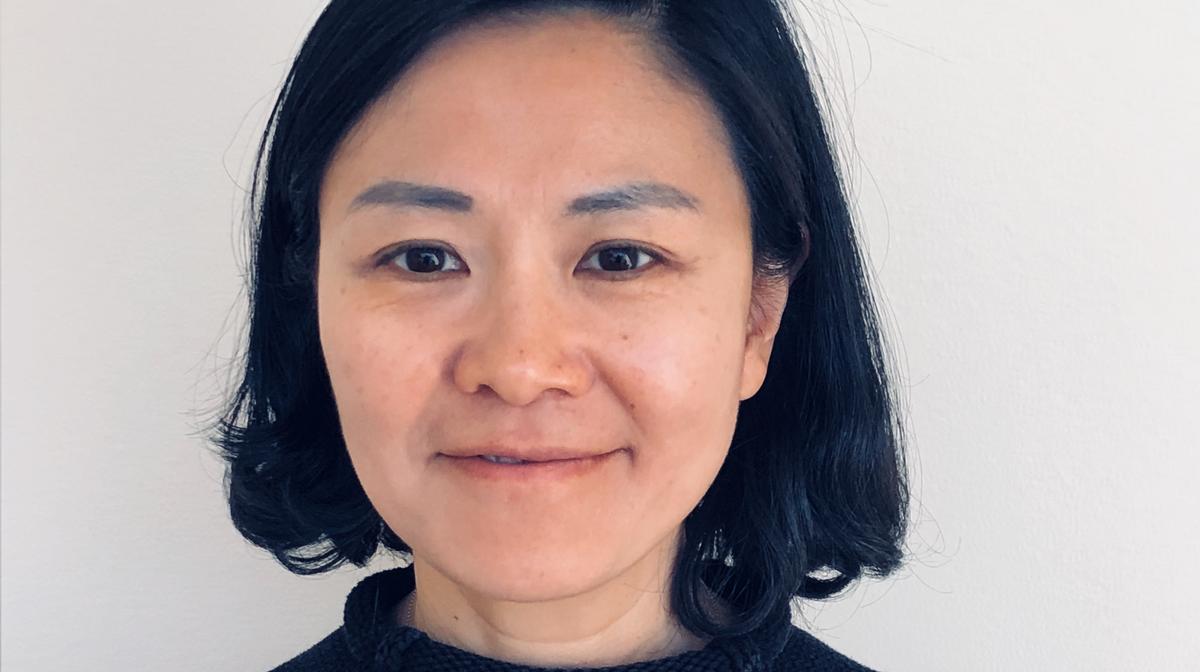
The chemist who keeps building the thing herself
There is a certain kind of founder who arrives at a demo day with a slide deck, a hoodie, and a promise to disrupt an industry they discovered eighteen months ago. Sofie Qiao is not that founder. She arrived at biotechnology the slow way: through an organic chemistry Ph.D. at MIT, an undergraduate chemistry degree at Harvard, and years at a laboratory bench at Genzyme, coaxing molecules into behaving. By the time she started raising venture money, she already knew the difference between a reaction that looks finished and one that actually is. It is a distinction that has shaped everything she has done since.
Her career reads less like a ladder and more like a lattice - science and capital, woven together, then unwound and woven again. Bench chemist. McKinsey consultant. Business development at Syrrx and Discovery Partners International. Venture director. Three-time company founder. Most people pick one of those lives. Qiao appears to have collected the full set, and she wears them, as the saying goes, like a very well-cut trench coat with four careers stuffed in the pockets.
From Harvard to MIT, and then to the bench
Cambridge, Massachusetts is a small town with two enormous institutions at either end, and Qiao managed to attend both. She took her A.B. in chemistry from Harvard and her doctorate in organic chemistry from MIT - a geographic commute of roughly two miles and an intellectual one considerably longer. Organic chemistry is the discipline of building complicated molecules on purpose, atom by stubborn atom, and it turns out to be excellent training for building complicated companies the same way.
She began her industry life as a medicinal chemist at Genzyme, now part of Sanofi. Then, in a move that would define her pattern, she stopped doing only the science and started doing the business of science too - consulting at McKinsey, business development at Syrrx and Discovery Partners International. She was learning, in effect, both halves of the biotech equation: how to make a drug, and how to fund one. Few people bother to learn both. Fewer still learn them well enough to run the whole play alone.
LEAD Therapeutics, and a drug that outlived the company
In 2006 she co-founded LEAD Therapeutics, a chemistry-driven drug discovery outfit. She assembled the team and played a central role in raising $17 million in Series A financing - not a headline number by today's inflated standards, but a serious sum for an unproven company built around hard chemistry. LEAD was also an early experiment in the US-China hybrid model of drug development, running discovery across borders roughly a decade before that structure became an industry buzzword. Being early tends to look like being lonely, right up until it looks like being right.
In 2010 BioMarin acquired LEAD for up to $97 million. The prize was a PARP inhibitor then sitting quietly in preclinical development - a molecule now known as Talazoparib. It went on to become an approved cancer therapy, and it is marketed today by Pfizer. Which is to say: a drug that patients take right now traces its lineage back to a startup Qiao founded and sold before most of its future prescribers had heard the word "PARP." That is the quiet flex behind her whole story. The companies come and go. The molecules keep working.
The companies come and go. The molecules keep working.
A managing director learns where the money lives
After LEAD, Qiao crossed to the other side of the negotiating table. She became Managing Director of WuXi Ventures, the corporate venture arm of the drug-services giant WuXi AppTec. If founding LEAD taught her how founders think, running a venture fund taught her how investors think - what makes a check writer flinch, what makes them lean in, how a covert science story survives contact with a term sheet. When she went back to founding, she was carrying both perspectives at once. It is a genuinely unfair advantage, and she has spent a decade quietly compounding it.
Drugging the pathway everyone called impossible
In 2015 she founded Vivace Therapeutics and installed herself as president, CEO and board member. Vivace's bet was the Hippo pathway - a signalling network with a faintly zoological name and an outsized role in cancer. Its downstream players, the YAP-TEAD transcription machinery, had a reputation across the field as beautiful biology and terrible drug targets. Undruggable, the consensus said. Qiao raised more than $105 million over Series A through D to argue otherwise. Sometimes the entire job of a founder is to refuse a consensus that everyone else finds comfortable.
And she did it in silence. Vivace spent roughly two years in stealth before publicly announcing its funding. Asked why, Qiao gave an answer so unhype-able it is almost radical: the science was early and novel, and she wanted to see how it turned out before saying anything. No masthead announcements. No manifesto. Just a chemist waiting for the reaction to finish. The rounds kept coming - a $30 million Series C in 2020, a $35 million Series D in 2025 to push the lead program through clinical development. From 2020 to 2024 she also served on the board of directors of the Biotechnology Innovation Organization, the industry's main trade body, lending her scar tissue to the sector at large.
Vivace's funding, round by round
Leaving at the top to start over
Here is where the story turns, and where Qiao reveals what she actually is. In 2026, not long after Vivace closed a fresh round, she stepped back from the chief executive job into an advisory role - and founded a new company, Virtuoso Therapeutics, which she now runs as president and CEO. Some people retire on a win. Others treat the finish line as a starting block and simply walk to the next one. She belongs firmly to the second group.
It is worth pausing on how unusual this is. Most successful founders spend a single company's worth of energy and then cash out into board seats and podcasts. Qiao has now done the founding-and-building act at least three times - LEAD, Vivace, Virtuoso - each time from a blank page. The pattern is too consistent to be luck. She does not appear to enjoy the outcome of building companies so much as the act of building them. The check clears; she goes back to the bench.
Quiet, stubborn, and allergic to hype
What emerges from the public record is a founder with an unusual temperament for the era. In an industry that runs on breathless press releases and pre-revenue swagger, Qiao's defining professional instinct is restraint. Stealth for two years. Pursue the targets others abandoned. Say little; ship molecules. There is a chemist's discipline running underneath all of it - the understanding that impressive claims mean nothing until the data agrees, and that the data does not care how loudly you tweet at it.
There is also, one suspects, a dry sense of humor about the whole enterprise. This is a woman who named her latest company Virtuoso after spending a career proving she can play more than one instrument - the chemistry, the fundraising, the deal, the board, the long wait. If you had to compress her philosophy into a single unglamorous sentence, it might be this: build the hard thing, keep quiet, and let the results do the talking. In a field addicted to noise, that is very nearly a rebellion.
The molecules, meanwhile, keep working. Somewhere a patient is taking a cancer drug that began in a startup she sold fifteen years ago. Somewhere else, in a clinic and a lab, the Hippo-pathway program she spent a decade nursing is being tested against the thing she built it to fight. She has already moved on to the next blank page. That, more than any single exit or round, is the real Sofie Qiao story - not one great company, but the stubborn, repeatable habit of starting another.