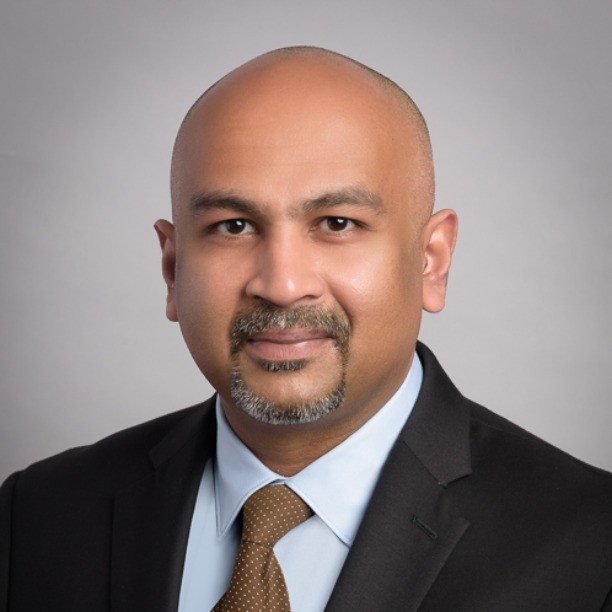
The Story
The Builder Who Never Left the Whiteboard
In 2012, the phrase "apply for a mortgage online" still meant printing forms, mailing documents, and waiting. Then Ranga Mohan's team at Capital One decided that was an engineering problem worth solving. The result was something that had not existed before in American finance: a fully online mortgage pre-approval experience. No branch. No paperwork handed across a desk. Just a digital flow that compressed weeks into minutes.
That detail matters because it is a window into how Mohan thinks. Not "improve the process" - build the thing that makes the old process obsolete. He spent seven years at Capital One, rising from Senior Manager of Software Engineering to Senior Director, and the pattern repeated: find the friction in a customer journey, architect it away, and do it at scale inside one of the largest financial institutions in the country.
Convenience Store, Global Scale
The move from Capital One to 7-Eleven in 2020 looked surprising from the outside. Convenience retail and financial services share almost no surface area. But inside the challenge they are identical: massive customer volumes, real-time transactions, international complexity, and the unforgiving need for systems that simply never go down.
At 7-Eleven, Mohan took the title VP of Digital Technology & International - and the word "International" carried serious weight. 7-Eleven operates in 19+ countries, with regional brands, franchise structures, and loyalty programs that each come with their own technical debt. Building a global convenience tech platform across all of that is not a software project. It is a foreign policy exercise combined with a software project. Mohan led that work for five years.
The customer experience improvements he drove there - across digital ordering, loyalty, international platforms, and brand integrations - gave him something Capital One never fully could: exposure to consumer behavior at the literal point of transaction, millions of times per day, across cultural contexts.
Why ServiceNow, Why Now
In 2025, Mohan joined ServiceNow as VP of Digital Technology (GTM-Marketing). The timing aligns with the company's aggressive expansion beyond IT service management into enterprise AI, customer workflows, and go-to-market automation. ServiceNow's marketing technology stack is, by any measure, one of the more complex in enterprise software - spanning Salesforce, Adobe Experience Cloud, Marketo, Eloqua, Snowflake, Anthropic Claude, Drift, DemandBase, and dozens of other systems.
Managing that stack is not a marketing job. It is an engineering job that happens to produce leads. Mohan's role sits at exactly that intersection: the person responsible for making the technology work that drives how a $13B+ enterprise cloud company finds, engages, and converts its customers.
The Engineering Instinct
Before either Capital One or 7-Eleven, there was Infosys - one of India's flagship technology services companies, where Mohan began his career as a Software Engineer and Technology Lead. For someone from PES Institute of Technology in Bangalore, Infosys was a proving ground: large clients, global delivery models, a training in precision and process that Indian IT shops developed over decades into a genuine competitive advantage.
From Infosys, Mohan moved to Bank of America as a Technology Lead (2008-2011), entering the US market at the exact moment that financial institutions were beginning to treat digital channels as primary rather than supplementary. The 2008 financial crisis compressed a decade of digital adoption into two years as banks scrambled to serve customers who could no longer easily visit branches. Mohan was building inside that accelerator.
The technical toolkit he built across those years reads like a tour of modern enterprise architecture. At ServiceNow alone, the technology environment spans Kubernetes, Terraform, Kafka, OpenTelemetry, Prometheus, Redis, multiple AWS services, Azure, Google Cloud, and a dozen specialized marketing and analytics platforms. The person responsible for making all of that work as a coherent GTM system needs fluency in both infrastructure engineering and revenue operations simultaneously.
Dallas as a Strategic Choice
Mohan is based in Dallas, Texas - which has quietly become one of the more interesting executive talent markets in enterprise technology. Companies like AT&T, Toyota, Goldman Sachs, and McKesson have relocated significant operations there. The labor market for senior technology leaders is deep, the time zone sits usefully between Silicon Valley and the East Coast, and the cost of operating is dramatically lower than either coast.
For a VP managing a GTM technology function at a California-headquartered company, the Dallas base reflects both personal choice and practical reality: building distributed teams across time zones is now table stakes for enterprise technology leadership, and being in neither Silicon Valley nor New York actually offers a certain clarity of perspective.
The Stack He Manages
A partial inventory of what Ranga Mohan oversees at ServiceNow is itself a statement about how far enterprise marketing technology has traveled: Salesforce for CRM, Adobe Marketo Engage and Eloqua for marketing automation, Adobe Experience Platform and Experience Cloud for customer data, DemandBase for account-based marketing, Drift for conversational engagement, Snowflake for data warehousing, Anthropic Claude for AI workflows, and the ServiceNow platform itself running beneath much of it.
That is not a list of tools. It is a distributed system with a revenue number attached. Making it work requires someone who can speak engineering to the engineers, architecture to the architects, and outcomes to the CMO. The career arc from PES Institute to Infosys to Bank of America to Capital One to 7-Eleven to ServiceNow is precisely the preparation that job requires.
In 2026, with AI rewriting what enterprise marketing looks like at the infrastructure level, the VP sitting at the intersection of GTM strategy and digital engineering at a company like ServiceNow is not a support function. It is a growth function. Ranga Mohan, mid-stride, is running it.