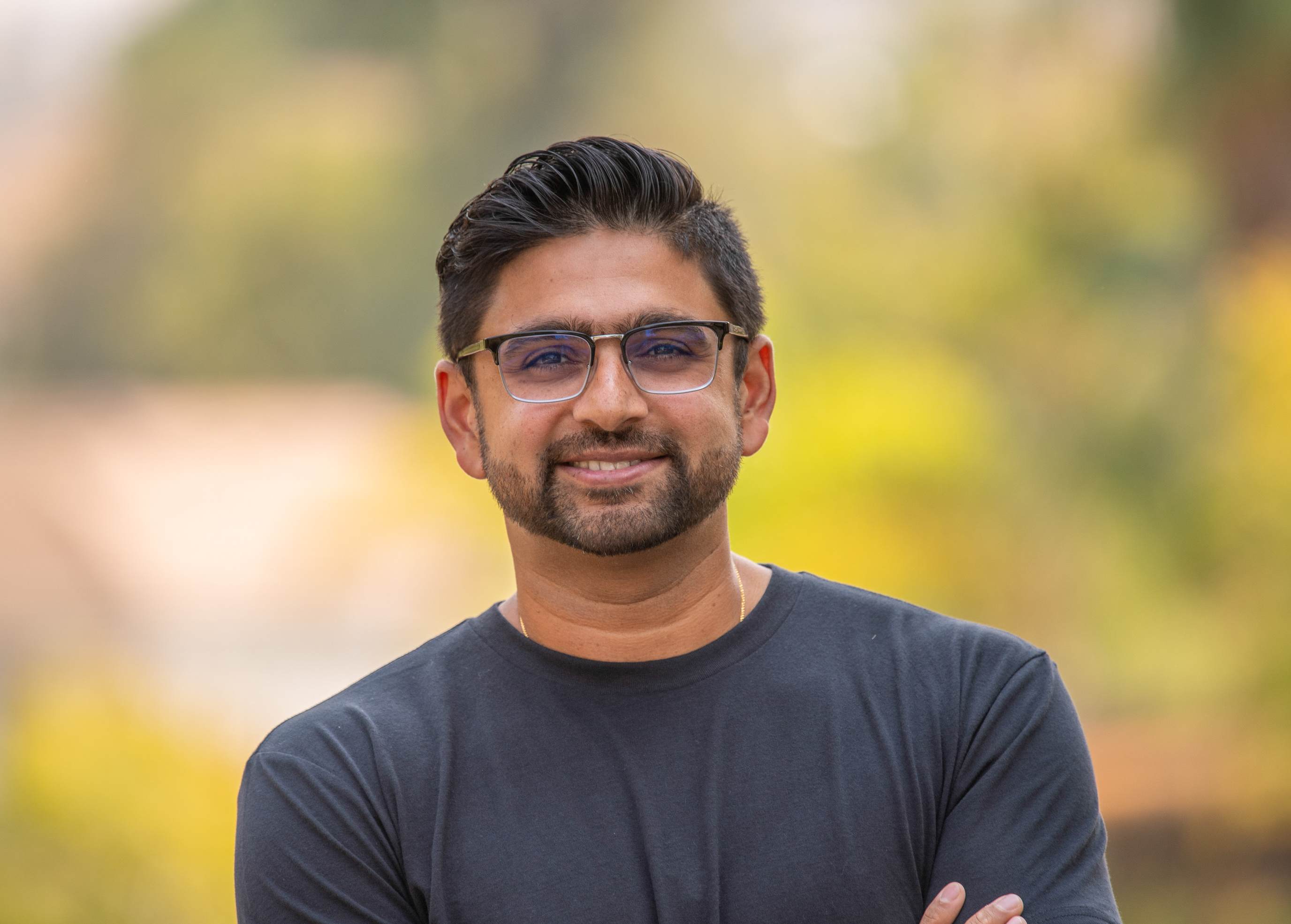
There is a specific problem Anand Tharanathan has been solving for roughly two decades: how do people interact with systems that are more complex than they appear? He started in aerospace, at Honeywell's Advanced Technology Labs, studying abnormal situation management - the science of what happens when industrial operators face conditions they were not trained for. He published papers on operator display design, on how visual layout affects situational awareness in control rooms, on the difference between a decision made with good information versus a decision made with a busy screen.
That question followed him from the aerospace sector into the internet economy, through Fjord and Angie's List, into Facebook's research labs, and eventually to ServiceNow, where he now runs global product research and insights as a Group Vice President. The systems changed. The question never did.
Building generative AI trust requires a fundamentally human-centered approach - considering fairness, transparency, and accountability from the very start.- Anand Tharanathan, ServiceNow
At Facebook from 2015 to 2020, Tharanathan led end-to-end research for some of the platform's most visible product work. He was part of the team that shaped Facebook Dating. He contributed research to Facebook News, Facebook Memories, and the landmark redesign of Facebook.com. These are products used by hundreds of millions of people daily - surfaces where design decisions carry weight at a scale most researchers never encounter. His job was to understand how real people actually used them, before and after they shipped.
When MetaCX, a B2B customer collaboration startup, needed a Chief Product Officer in September 2020, they created the role specifically and filled it with Tharanathan. The press release noted his Facebook tenure and his track record building research and design teams. At MetaCX, he took ownership of the entire product organization: strategy, management, research, design, and delivery. It was the first time his name appeared in a C-suite title, but the kind of work he had been doing for years.
ServiceNow's platform serves 85% of the Fortune 500. When Tharanathan's team researches how workers interact with AI-powered workflows, the findings shape products used by millions of enterprise employees globally - healthcare workers, IT teams, HR professionals, financial services staff. The scale of UX research at ServiceNow is difficult to overstate.
At ServiceNow since 2022, his focus has moved to a problem that is genuinely new: generative AI trust. The question is not whether AI can do the task - it usually can, at least approximately. The question is whether the person on the other end of the interface trusts it enough to use it, defer to it, and know when not to. Tharanathan has been public about framing this as a human factors problem first, a policy problem second. Five considerations drive his approach: fairness, transparency, accountability, reliability, and user control.
The background makes this perspective coherent rather than coincidental. His Ph.D. work at Texas Tech was in experimental psychology - specifically visual performance and human judgment under conditions of uncertainty. His early research includes a study on how drivers judge collision risk when objects move at non-constant velocities: a problem that is, structurally, identical to asking whether a user can correctly assess AI confidence levels. The intellectual thread from that lab at Texas Tech to ServiceNow's AI research team is unusually direct.
Exploring Leadership and AI with Anand Tharanathan - a candid conversation on research, AI, and building high-performing teams.
His path to this moment is worth tracing because it is not the standard Silicon Valley biography. He did not study computer science. He did not found a startup in his twenties. He studied bus schedules - literally: one of his early research papers at NJIT was titled "Human factors approach towards improving readability of bus schedules." He was studying how to make information legible to people who needed it. He was 25 years into a career before most observers would notice him from the outside, and by then the career had stacked: two engineering degrees, a psychology doctorate, a Kellogg MBA, a stint at Honeywell's aerospace division, and a methodical climb through consumer internet from Angie's List to Facebook.
That accumulation is not accidental. Human factors as a discipline rewards practitioners who understand both systems design and human psychology. Tharanathan trained in both, formally, before anyone expected him to. The industrial engineering degrees gave him a systems view - a way of seeing processes as designed objects that can be measured and improved. The psychology Ph.D. gave him a theory of the user that is not just a persona or a survey respondent but a biological entity with real limitations in attention, memory, and judgment.
At Angie's List in the early 2010s, he was VP of UX Research, Design and Innovation - a broad remit that gave him a consumer lens before he moved to Facebook's scale. He built teams, implemented design-led product innovation frameworks, and ran the kind of cross-functional work that moves institutions. He was, by most accounts, someone who could translate between the vocabulary of researchers and the vocabulary of product managers and engineers without losing fidelity in either direction.
Four degrees. Three disciplines. A biography built in layers.