conversion-optimization
(36)
Avalaunch Media Found the Missing Middle Between a CMO and a Campaign
Most agencies sell hands. Consultants sell advice. Avalaunch built its pitch around the awkward space between them - then joined Amplēo to make that space its main business.
The Agency That Decided Marketing Should Show Its Work
No Boundaries Marketing Group sells a simple corrective to an industry built on mystery: let small-business owners see the work, own the keys and understand what happens next.

The SEO Agency That Put Mr. Rogers on the Dashboard
Digital Neighbor borrowed its manners from public television and its discipline from performance marketing. The result is a Tampa agency that sells clarity, counts leads, and is willing to admit when an experiment deserves the undo button.

He Mistook Realtor.com for a Furniture Company. Then He Built an Agency Around It.
Rahul Alim found digital advertising by applying to the wrong kind of company. The useful accident became a lesson in niches, speed and selling small businesses one connected system instead of a sack of marketing parts.

Ex Marketer Makes Digital Marketing Human Again
The Los Angeles boutique agency sells an antidote to bloated digital campaigns: fix the plumbing, find the audience, and make every click answer for itself.

The Agency Where the Clever Idea Has to Survive Discovery
L7 Creative has spent a quarter-century turning the mess of marketing into a machine. Its best idea may be the rule that every other idea must earn its keep.

The Agency That Put Every Marketing Lever in One Room
Social Media Top Team has spent more than two decades selling small businesses a tempting idea: stop managing a cabinet full of specialists and make one team answer for the trip from click to client.

Wonder Media wants to take vendor management off your to-do list
The Pasadena agency bundles brand strategy, websites, advertising, and email into one flat-fee team. Its most interesting promise is the work that happens between those jobs.

Next Step knows when fewer leads are better
A behavioral design agency finds growth in the details companies overlook: the wrong prospect, the intimidating message, the feature nobody asked for.

Sleepless Media makes the hard part of shopping feel easy
A fire-pit builder, a tea quiz, a cleaner path to a water filter: the Santa Cruz-born agency turns product complexity into custom Shopify storefronts.
Optimizely Grew Up. Your Testing Stack Might Have To.
The A/B-testing pioneer now wants to run the whole digital experience, from the first content brief to the last conversion report. For teams with enterprise complexity, that sprawl can feel less like bloat and more like relief.

Persado Put the Copywriter in a Lab Coat
Persado treats every adjective, offer and call to action like a testable variable. For banks and big marketing teams, that can turn the copy desk into a measurable growth system - if the scale justifies the machinery.

Dynamic Yield Wants Every Click to Feel Handpicked
The personalization platform that graduated from publisher paywalls to drive-thru menus now wants to run the decision layer behind every serious customer journey. It is powerful, sprawling, and built for teams with more ambition than spare time.

Landingi Makes Campaign Pages Behave Like a Product
Landingi gives marketers the keys to the campaign-page factory. The trade is refreshingly concrete: more control and scale, in exchange for limits you should price before the traffic arrives.

Guidance Built the Plumbing Behind the Buy Button
For three decades, Guidance took on the checkout jobs with too many markets, too many systems and no room for a wobble. Now inside OneMagnify, its best argument is still the work nobody notices when it works.

Digistore24 Built a $3 Billion Checkout by Doing the Work Creators Hate
The German-born platform bundles payments, tax, refunds, affiliate payouts and funnel tools into one transaction fee. For online sellers, the promise is simple: give up a slice of every sale to get your back office - and a distribution network - in return.

Jeremy Wallace Has Spent Three Decades Turning Friction Into Action
Before retail teams were his audience, the wind was his feedback loop. Jeremy Wallace's route from sailing coach to SaaS founder to Zipline marketing chief is a study in making the next move clear.

Alix de Sagazan Built a Company on a Radical Habit: Stop Guessing
She turned a frustrating handoff between marketers and developers into a global software business. Sixteen years later, her operating system still begins with a test, a team, and the nerve to learn in public.

Quantum Metric Found the Million-Dollar Bugs Hiding Between Your Dashboards
A checkout error looks tiny until someone prices the lost carts. Quantum Metric built a business turning digital friction into a number executives can act on - and is now asking an AI analyst to do the detective work.
The Landing Page Tool You Need Depends on Your Traffic
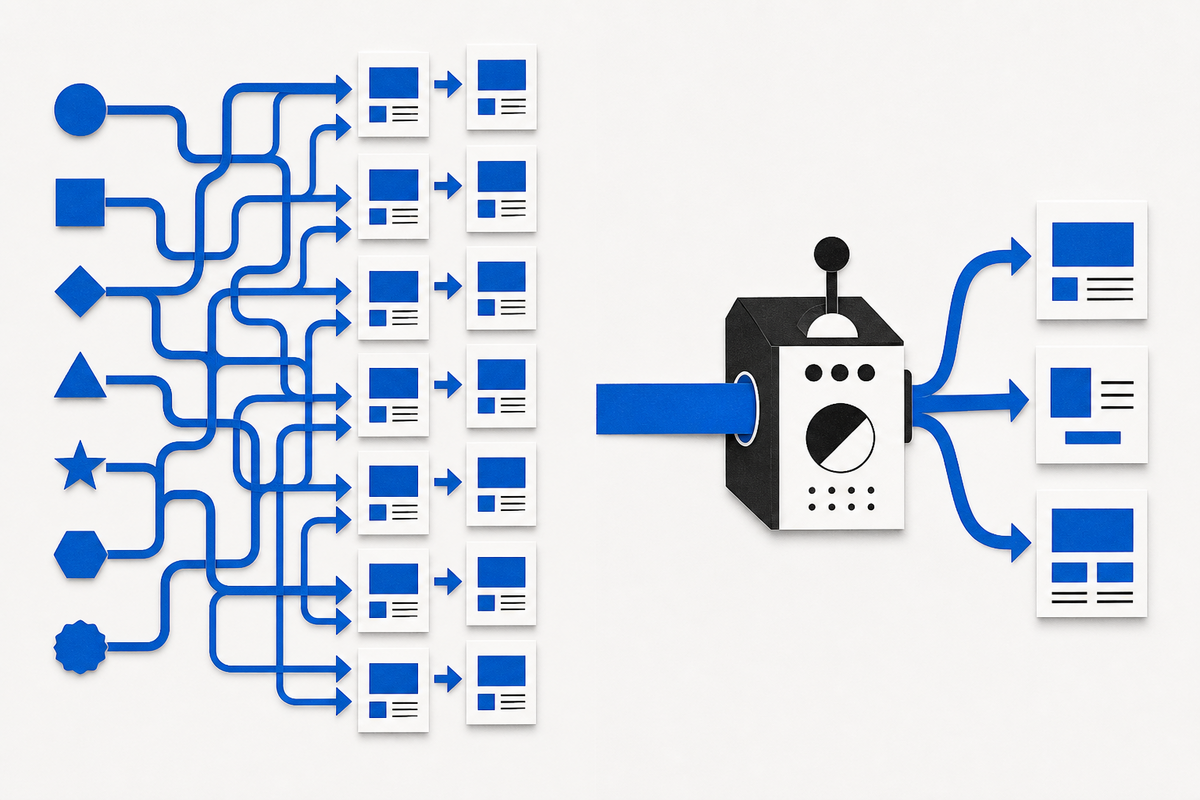
Instapage maps sprawling ad portfolios. Unbounce learns which page variant suits each visitor. The right choice begins with the kind of complexity you actually have.

The Agency That Turned Marketing’s Messy Middle Into a Live Dashboard
Online Marketing Gurus built a sizeable agency by selling the thing digital marketing often misplaces: a straight line from activity to revenue. Its answer is equal parts specialist labor, disciplined measurement and a dashboard called Gurulytics.

Centerfield Built a Customer-Acquisition Machine. Now It Wants to Own the Moment Before the Click
The Los Angeles company reaches shoppers through its own media network, routes intent through Dugout, and gets paid for measurable outcomes. Its latest bet is that the most valuable click may be the one an AI answer makes unnecessary.
The Finnish Engine Trying to Make Every Online Store Feel Like It Remembers You
Founded in 2013 by three Finns tired of impersonal online shopping, Nosto now decides what millions of shoppers see the moment a page loads - and it is betting its next chapter on AI agents that run the store for you.

Contentsquare
The Paris company that watches a billion clicks a day so brands can finally see what their customers were trying to do - and where the website got in the way.

Rivia.AI
Rivia.AI is a Bengaluru-based, Y Combinator (S21) startup that lets marketing, sales and demand-generation teams build interactive, self-guided product demos without code. Using a Chrome extension, teams capture pixel-perfect clones of their live product, layer on guided tours, checklists and video narration, then share or embed the demos and track how prospects engage. It positions itself as an affordable alternative to demo platforms like Walnut, Storylane and Navattic.
eko
eko is a New York-based media-technology company that turns product footage and data into interactive, shoppable video experiences for online retail. Founded in 2010 as Interlude to pioneer 'choose-your-own-adventure' interactive entertainment, the company rebranded to eko in 2016 and later pivoted toward ecommerce, using AI-driven tools to build interactive product pages, 360-degree product views and verified product data that help brands and retailers - most notably its long-time partner Walmart - lift engagement and conversion.

SamCart
SamCart is a SaaS checkout and direct-to-consumer selling platform built for digital creators, course sellers, coaches, and online entrepreneurs. Founded in 2014 by brothers Brian and Scott Moran, it turns a high-converting one-page checkout into a revenue engine with one-click upsells, order bumps, subscription recovery, and course hosting. Now repositioned as an AI-first 'digital business platform,' SamCart says it has helped 75,000+ sellers process billions in sales - focused on maximizing revenue per customer rather than simply driving more traffic.

Hovr
Hovr is a Philadelphia-based marketing technology company that layers interactive, vertical-video experiences on top of existing hotel and resort websites. Its patented, no-code software lets marketers drag and drop video content - pulled from YouTube, Vimeo, Matterport, TikTok, and Instagram or uploaded directly - over static web pages using tools like Highlights, Anchors, Pins, and Pathways. The goal is to turn passive browsing into 'choose-your-own-path' storytelling that lifts guest confidence, engagement, and direct bookings, with a real-time analytics dashboard that ties video interactions to revenue. Hovr grew out of Hio, founder Jason Craparo's earlier networking and events venture.

Jason Craparo
Jason Craparo is the founder and CEO of Hovr, a Philadelphia-based marketing technology company whose patented, no-code tool sits on top of hotel and travel brand websites and turns static pages into interactive, video-rich experiences that drive direct bookings. A Babson MBA who started as a dishwasher at 14 and ran Sonic Drive-In franchises by 21, Jason spent six years at social enterprise Juma Ventures before founding networking apps Contap and Hio, then pivoting the technology into hospitality. He holds a dozen granted patents, is a certified private pilot who flies aerobatics, runs triathlons, and is a father of three.

Jenkin Richard
Jenkin Richard is the co-founder and CEO of ChatLabs, an AI platform that turns social media traffic into personalized, on-brand shopping journeys for luxury and consumer brands. Incubated inside LVMH's innovation accelerator, ChatLabs raised a $3.2M seed round led by Silicon Road Ventures in December 2024 and counts LVMH houses like Dior and Tiffany, plus Kering, Richemont and Samsung among its partners. Before ChatLabs, Richard founded and served as CTO of the social commerce firm Chatly, which was acquired by Salesforce. He holds an MBA from MIT's Sloan School and an undergraduate degree from UC Berkeley.