A business owner opens a marketing report and finds 80 pages of perfectly respectable fog. Impressions are up. Click-through rate is healthy. A keyword has moved from position nine to position six. Somewhere, presumably, money has changed hands. But the useful question - what did the business get back? - remains stranded between dashboards.
Online Marketing Gurus built its company around that stranded question. The Sydney-founded digital agency, usually shortened to the marvelously convenient OMG, manages search engine optimization, paid search, paid social, programmatic advertising and conversion-focused websites. It does the familiar agency work of auditing accounts, producing content, buying media, testing creative and repairing technical plumbing. The less familiar part is the insistence that those activities should arrive in one commercial view.
That view is called Gurulytics. Launched in 2022, the agency’s proprietary reporting platform gathers rankings, traffic, advertising spend, conversions and attributed revenue into a live client dashboard. It is not sold publicly as a freestanding software subscription. It is the glass wall around the service: a client can look in before the monthly meeting, while a campaign is still changeable.
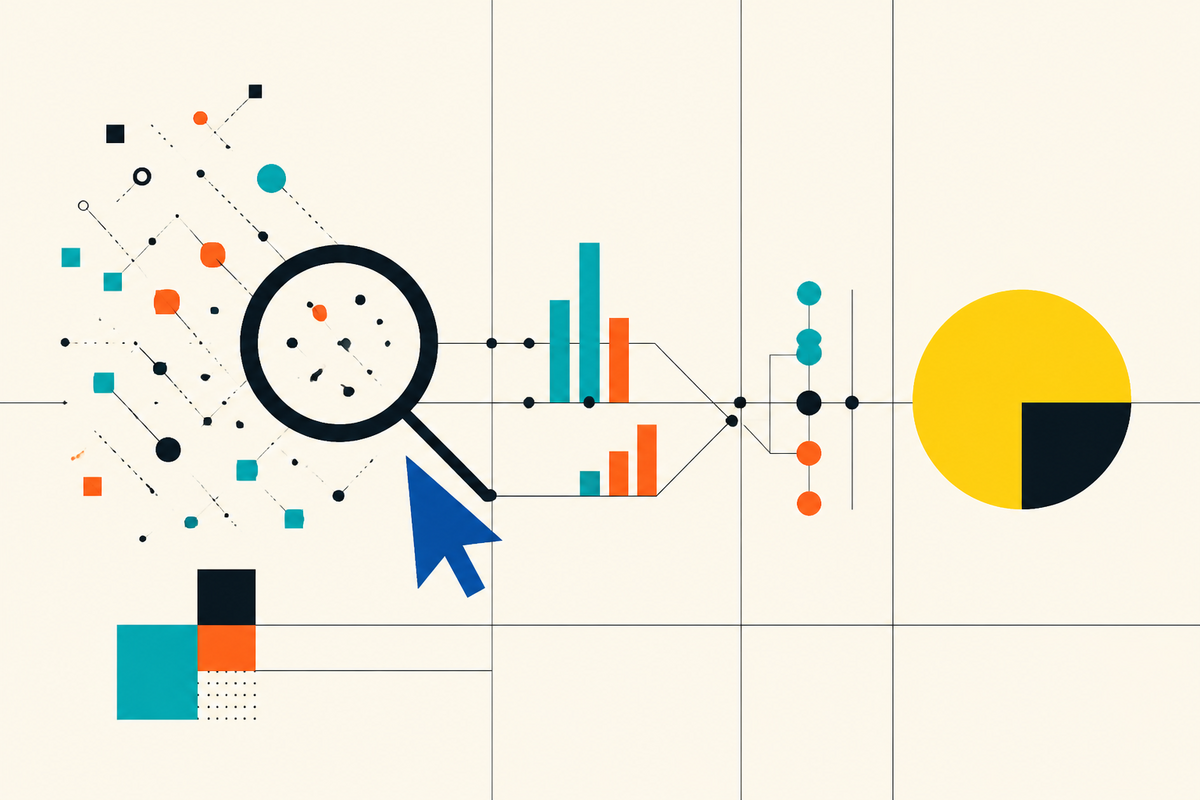
A cure for the PDF hangover
Andrew Raso and Mez Homayunfard founded the company in 2012, when SEO still carried a strong whiff of back-room alchemy. Its own origin story is blunt: too many agencies used “smoke and mirrors,” and too many businesses could not see the relationship between an invoice and a result. The registered Australian entity is SEOBI Marketing Pty Ltd, but the public identity has always been clearer and more playful. Employees are Gurus. The dashboard is Gurulytics. Even the in-house educational arm is OMG Academy.
The naming could have become a costume. Instead, the company put a fairly sober operating model underneath it. SEO is organized through a TLC framework - Technical, Links and Content. Paid media specialists focus on platforms and campaign mechanics. Web teams build on Shopify, WooCommerce, WordPress and custom stacks. Account and strategy teams are supposed to join the channels around the client’s commercial target rather than ask every department to defend its own metric.
The clever move was to treat reporting as part of the product, not the receipt left behind after the work.
This matters because the firm is not a boutique selling one founder’s attention, nor a global holding-company network selling reach across every medium. It sits in the awkward middle: independent, but large enough to divide labor sharply. The company reports more than 200 specialists across six offices and says it has served more than 1,000 businesses since launch. Its published client roster stretches from Australian operators to brands including Calvin Klein, LG, BCF, Fujitsu, Tommy Hilfiger, Nespresso, Mirvac and T2.
All four figures are company-reported. They describe the scale of OMG’s pitch, not audited public-company accounts.
One agency, several kinds of buyer
The buyer is often a company that has outgrown improvisation. A retailer may have an ecommerce site, a Google Ads account, Meta creative, an email list and an SEO backlog, each owned by a different person. A legal or healthcare practice may have traffic but no reliable view of lead quality. An enterprise may have capable internal marketers who need technical search depth or a larger execution bench. The alternatives are a handful of specialist shops, an in-house team covering too many channels, or a large network with more layers.
OMG’s offer is to make the seams less visible. Search work covers technical audits, content, link acquisition, local and international SEO, ecommerce migrations and, increasingly, visibility in AI-generated answers. Paid search runs through Google, Microsoft, Shopping, Performance Max and YouTube. Paid social spans Meta, Instagram, TikTok, LinkedIn and Pinterest. Programmatic and remarketing bring display and video into the mix. Web design and conversion optimization address the embarrassing possibility that the campaign works but the landing page does not.
Many channels, one commercial view
An editorial map of the service stack. Bar lengths show the journey from discovery to conversion, not company performance.
The business model remains recognizably agency-shaped. Clients pay management retainers or project fees; media spend sits alongside the fee. On its remarketing page, OMG says it separates media cost, management fee and data cost rather than marking up media invisibly. Public directory data on Clutch places common engagements in the low thousands of dollars per month, although actual scope varies widely. Gurulytics adds software-like leverage to that relationship without turning the company into a SaaS vendor.
What accumulated repetition buys
The defensible asset is not a magical keyword list. It is repetition. Hundreds of ecommerce campaigns reveal familiar technical failures. Years of paid social work create a sharper instinct for creative fatigue. A large account base can show which measurements are robust and which melt when a platform grades its own homework. The agency claims 4.2 billion impressions, 1.7 billion website visitors and 1.2 billion tracked conversions across its case-study archive. Those totals are self-reported, but they explain the strategic bet: the next client borrows pattern recognition from the last thousand.
The case studies make the argument in smaller pieces. For Calvin Klein Australia, OMG reports a 142 percent increase in organic revenue and a 52 percent increase in organic traffic after technical, content and authority work. A campaign for CVCheck New Zealand, built around international paid growth and Performance Max, was credited by the agency with a 2,045 percent revenue increase and won Google’s 2024 International Growth Award. In 2025, the Global Agency Awards named OMG SEO Agency of the Year, citing Gurulytics, research and named enterprise campaigns among the entry’s strengths.
Specialist boutique
Deep expertise and senior attention, with less capacity to coordinate every growth channel at once.
Independent at scale
Dedicated channel specialists, cross-channel strategy and a proprietary reporting layer in one relationship.
In-house team
Maximum business context and control, often with one to three people stretched across a wide technical stack.
There is a necessary caution in performance marketing: attribution is never omniscient. Privacy changes, offline purchases, long consideration cycles and competing platform models all complicate the clean line to revenue. A live dashboard can make assumptions visible; it cannot abolish them. Third-party feedback also has range. Clutch carries dozens of positive reviews praising communication and measurable gains, alongside a sharply negative telehealth review alleging missed delivery and poor accountability. Scale produces pattern recognition, but it also creates the ordinary service challenge of keeping every account close.
The agency becomes a classroom
OMG’s culture materials echo the client proposition: progress should have names and numbers. The careers site describes mapped promotions, monthly one-to-ones, OKR-led growth plans, specialist training and funded trips to conferences including BrightonSEO and Ahrefs Evolve. In the preceding 12 months, it reported 43 consultants upskilled and 16 internal promotions. Staff receive access to OMG Academy, the separate education business aimed at teaching founders and business leaders practical digital strategy.
Then there are the less measurable inputs: Monday lunches, Friday breakfasts, a Sydney Harbour client boat party, town halls and an office dog appearing in a football shirt. For a business whose employees can spend a day arguing with ad interfaces and crawling broken websites, being “suspiciously well fed,” as the careers copy puts it, is not the worst retention strategy.
Two people and a transparency problem
Raso and Homayunfard launch in Sydney with a focus on measurable search marketing.
The map gets larger
US, UAE and Singapore presences extend account coverage beyond Australia.
Reporting becomes a named product
Gurulytics v1 launches as the company passes 200 specialists.
Campaign work wins outside recognition
Google’s International Growth Award is followed by SEO Agency of the Year.
Search escapes the search box
Services expand visibly into generative engine optimization, AI answers and ChatGPT advertising.
Where the search goes next
The company now faces the same disruption it sells clients help navigating. Search is spreading beyond ten blue links into AI Overviews, answer engines and chat interfaces. Paid media is becoming more automated just as marketers demand more control over its decisions. OMG has responded by adding generative engine optimization, answer-engine work and ChatGPT advertising to its menu, while extending Gurulytics to track traffic and revenue from AI-search sources.
That is a sensible adjacency, though not a guaranteed advantage. Every credible search agency is learning the same vocabulary. OMG’s better argument is structural: it already has technical search teams, content operators, paid media specialists and a measurement layer that can watch a new channel without pretending the old ones disappeared. The market position is not “we know the secret.” It is “we have enough specialists to investigate the change, and enough instrumentation to see whether it mattered.”
Fourteen years after launch, Online Marketing Gurus is still selling an antidote to marketing mystery. The scale is bigger, the acronyms are newer and the dashboard is considerably prettier. The useful question has not changed. A client spends a dollar. What happened next?