There is a peculiar moment in the life of a growing company when everyone agrees that marketing matters and nobody can say, with confidence, who is driving it. The founder has opinions. The sales chief has a spreadsheet. A freelance designer has six tabs open. An agency is buying clicks. Someone in finance keeps asking why the dashboard does not look like revenue. The work is everywhere. The center is missing.
Avalaunch Media has built its current identity around that missing center. The Lehi, Utah agency offers the familiar machinery - search optimization, paid media, content, branding, websites, email, social, public relations and video - but increasingly puts a fractional marketing leader in front of it. The pitch is simple: the person drawing the map and the people paving the road should at least know one another.
That framing explains why Amplēo acquired the agency in September 2025. Amplēo already supplied fractional executives across finance, people and marketing. Avalaunch supplied roughly 60 specialists who could make campaigns after the meeting ended. Co-founder and CEO David Mink stayed on and became president of Amplēo Marketing. The deal price was not disclosed. The strategic arithmetic was.
An agency built by people who once had to hire one
Avalaunch’s origin is slightly untidy, which is often a sign that an origin is real. The company traces its roots to 2005, when Mink and his former college roommate Matt Siltala were operating ecommerce businesses and learning promotion from the buyer’s side. Public accounts place the modern Avalaunch Media formation in 2012 with Mink, Siltala and Andrew Melchior. The founders describe the aim as building the agency they wished they had.
Siltala’s prehistory is better. In the late 1990s, he worked at a radio station while studying network administration. His employers heard “computers” and concluded “web designer.” He built three station websites, encountered links and title tags, and stumbled into search marketing. It is the kind of career accident that produces a useful bias: learn the tool because something has to ship by Friday.
Over time, the shop widened from search and visual content into a full-service roster. Its public portfolio ranges from GoPro and Blendtec to Kaiser Permanente, Salesforce, Fidelity, credit unions, software companies and a ballet company. This is not a tidy vertical specialization. The common thread is a business event that can be counted - an application, a ticket, a new occupant, a funded account.
The first thing to fail was the handoff
The agency’s best case studies begin with something less dramatic than catastrophe. Ballet West felt its agency relationship had grown stale. Lendio wanted more qualified loan leads without letting cost run away. Kiln’s physical coworking spaces felt better than its digital front door. In each case, the failure was not a shortage of channels. It was a loose connection between the desired business result and the daily mechanics of marketing.
For Lendio, Avalaunch audited the Google Ads account, then changed what the system was learning from. Revenue and CRM data informed bidding. Campaign structure, ads and landing pages were revised; mobile performance and first-party audience signals received attention; tests kept running. Over 18 months, the budget grew 3.2 times while qualified leads grew 7.12 times. The application rate moved from 23 to 41 percent. Avalaunch reports a “117% decrease” in cost per lead - mathematically awkward wording because a cost cannot fall more than 100 percent, so the direction is useful but that particular percentage should be treated cautiously.
Relative bars are editorially normalized for legibility. Figures are company-reported: qualified leads for Lendio over 18 months; new occupants across Kiln locations; year-over-year Ballet West ticket sales.
Ballet West forced a different correction. Each production needed its own campaign, but each campaign could inherit a system: a media plan, audience profiles, geographic and interest targeting, conversion tracking, weekly spend reports and a post-performance review. Ticket sales, not the elegance of the ad account, became the measure. Avalaunch reports year-over-year ticket sales rose 26 percent and Nutcracker sales rose 21 percent.
Kiln supplied the change-of-mind moment. The two teams agreed that the website was not a brochure; it was the front door to the coworking community. That sentence dictated the work. Avalaunch rebuilt the site, expanded location pages, created content, optimized Google Ads and added social advertising. The agency reports 32.5 percent more high-intent website traffic, 14.8 percent more sales opportunities and 38.4 percent more new occupants while Kiln opened seven locations over two years.
The menu is enormous. The product is coordination.
On paper, Avalaunch competes with almost everybody: specialist SEO shops, paid-media agencies, creative studios, PR firms, management consultants, independent fractional CMOs and the tempting possibility of hiring an internal team. Its service list is broad enough to feel like a department store. The more specific differentiator is organizational.
A fractional CMO can set positioning, budgets and a roadmap. Avalaunch’s paid, search, content, design, development and automation teams can execute it. A client can also buy a narrower project, but the combined model is meant for a scaling company that needs senior judgment before it can justify - or recruit - every senior specialist in-house. After the Amplēo deal, the model sits beside fractional finance and HR leadership as well.
Avalaunch publishes no rate card. It says pricing varies by scope, objectives and budget; engagements commonly use contracts or retainers, with lengths ranging from short projects to ongoing work. The acquisition price was also undisclosed.
What does it cost? Publicly, there is no honest dollar answer. The company scopes work after a conversation. That ambiguity is ordinary in agency land, but it matters to a buyer: this is a service business, not a self-serve software subscription. More channels mean more people, more coordination and generally more expense. The model earns its keep only when the integrated team removes more friction than it introduces.
There are conditions where it will not. A company with no clear offer cannot A/B-test its way into product-market fit. A small local business needing one landing page may find a 60-person bench excessive. A mature company with strong internal leadership and specialist teams may be buying overlap. And performance marketing becomes fragile when tracking is poor, sales data stays locked away or the client will not let the agency change the landing page. Avalaunch’s own case studies work because clients shared a measurable outcome and allowed the machinery around it to move.
The part worth stealing is pleasantly boring
The most copyable Avalaunch idea is not a channel trick. Begin with the business event. Audit the whole path to it. Feed the platforms better evidence. Create a repeatable system. Review after the event, while everyone still remembers what happened. This is basic. Basic things become differentiators when organizations repeatedly fail to do them.
Copy this
Give one leader the roadmap and the authority to coordinate specialists. Use customer and revenue data as campaign inputs. Review the business result, not merely impressions.
Check this first
Make sure the desired event is measurable, the agency can access the relevant data and your team can approve changes quickly enough for tests to mean anything.
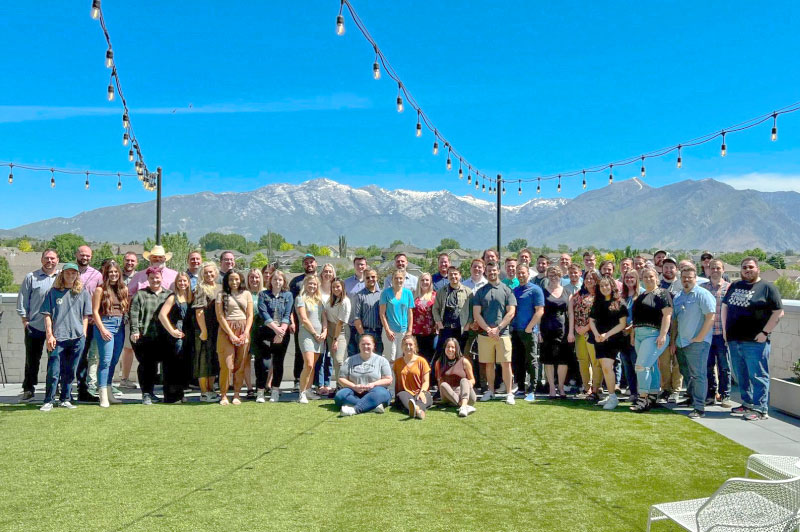
The culture wraps that procedural seriousness in a yeti costume. Avalaunch publishes nine values, ranging from communication and integrity to “enjoy the ride,” and gives employees recurring Yeti awards. Its Gives Back program has supported community work and a student scholarship for more than a decade. This could sound like ordinary agency pageantry, but the mascots and mountain vocabulary are at least geographically honest. The office sits below the Wasatch Mountains. If a marketing firm named Avalaunch is going to invent a snow creature, Lehi is the place to do it.
The company now faces its own integration test. Amplēo bought Avalaunch to join strategy and execution at a larger scale. That is the same promise Avalaunch makes to clients. The acquisition succeeds if the expanded organization preserves the short distance between a decision and the person who has to turn it into an ad, a page or a piece of code. The gap is where marketing plans go to become expensive. Avalaunch has made a business out of standing there.