The most expensive part of marketing may be the tiny empty space between two competent people. On one side sits the strategist, pleased with a deck full of sensible arrows. On the other sits the person buying ads, writing email, designing a label, or rebuilding the website. Each can be good at the job. Yet somewhere in the handoff, the customer changes, the message drifts, and the measurement becomes a monthly ritual nobody quite believes.
ArachnidWorks has built a company around that empty space. The founder-led agency in Frederick, Maryland, is not especially interested in selling one channel as the answer. It offers branding, copy, photography, video, print, websites, hosting, SEO, paid media, email, social, earned media, CRM work, research, and sales-process development. The long list matters less than the organizing idea: all those people should be looking at the same map.
This is a more unusual claim than it sounds. Agencies usually distinguish themselves by craft or scale. The boutique promises taste. The performance shop promises numbers. The giant promises capacity. ArachnidWorks promises that the taste, numbers, and work will meet before they reach the client.
“Most marketing fails between strategy and execution.”ArachnidWorks’ operating thesis
The spider came before the system
Monica Kolbay started ArachnidWorks in 1998, fresh out of Hood College. The name came from the early web: search engines sent “spiders” to crawl and rank websites. It is a charmingly period-specific origin, from the era of AOL and Yahoo, when a business website still felt like new construction.
The studio began with branding and web design. It reached its first enterprise relationship in 2004, incorporated in 2008, and brought strategy, creative, and development under one roof as the team grew in 2011. In 2016, paid media and SEO - once separate services - were integrated. In 2021, the agency finally gave its accumulated practice a name: the AW Method.
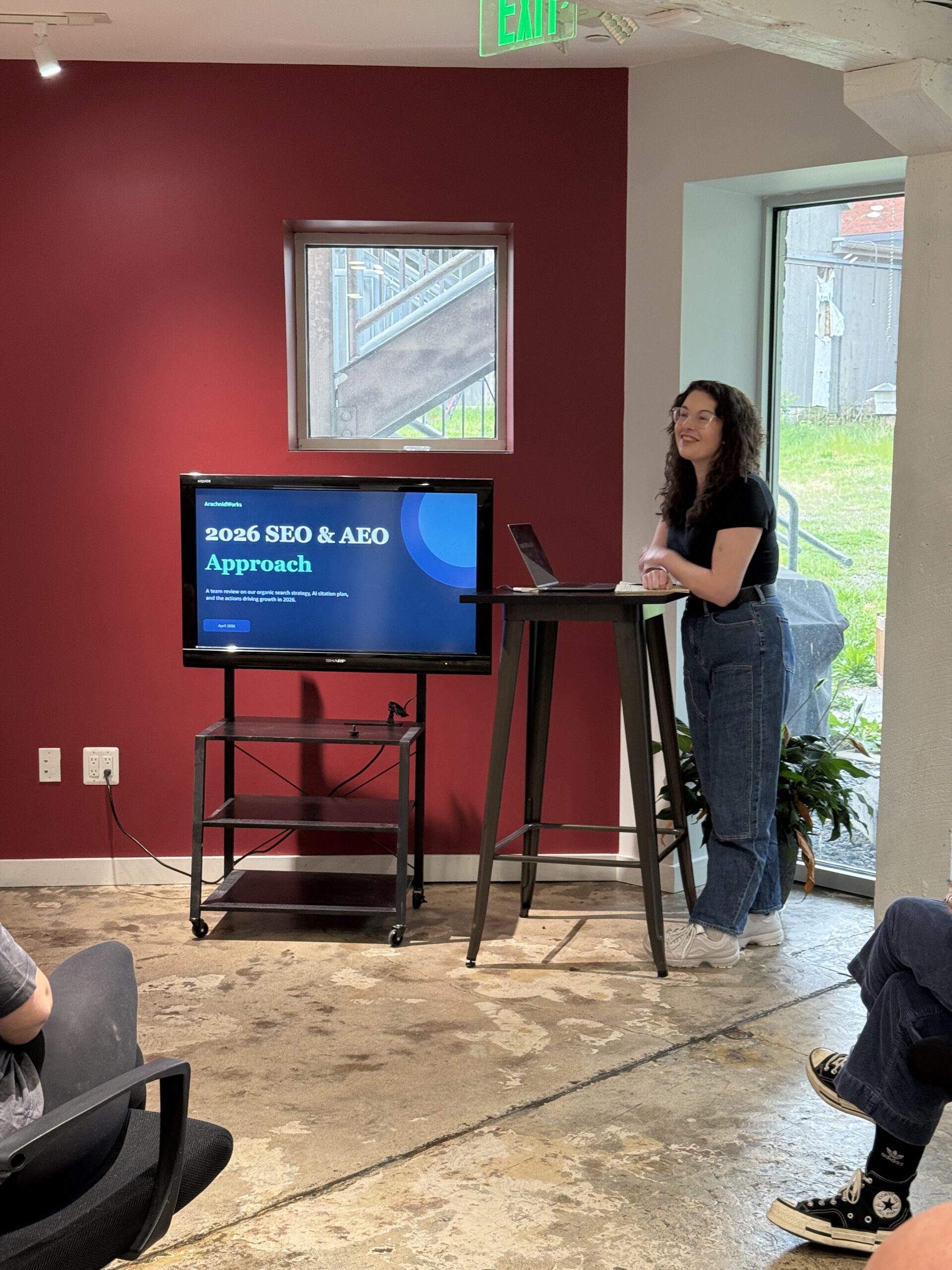
This sequence says something about how ArachnidWorks changed its mind. The company did not begin with a grand unified doctrine. It began by making things. Then the number of things grew. The turning point was recognizing that services running beside each other were not necessarily working together. Paid media could create traffic that the website squandered. A new identity could look beautiful while distribution stayed broken. Search could attract a lead that disappeared inside an unconfigured CRM.
Five verbs, in a stubborn order
The AW Method has five phases. First, understand the market: competitors, customers, gaps, and the marketing already in motion. Second, turn that research into a growth model with positioning, audiences, offers, content pillars, channels, and quarterly milestones. Third, give each chosen channel a job. Fourth, produce and distribute the work. Fifth, calibrate it as data arrives.
None of those verbs is proprietary. Their order is the product. ArachnidWorks’ complaint about marketing is not that businesses do nothing. It is that they do many reasonable things in parallel: an agency runs ads, an employee posts to social, a developer tends the website, and sales keeps its own records. Activity accumulates. Learning does not.
The agency’s own offer begins with a free 30-minute conversation about the business and budget. There is no published rack rate. A proposal follows, scoped to what the diagnosis suggests. That keeps the commercial model conventional - project and recurring service fees - while making the sales logic pointedly unlike a package menu.
The apple-label test
A method is only as interesting as the moment it changes a decision. Consider McCutcheon’s Apple Products, a multigenerational Maryland food brand. ArachnidWorks describes the starting point as a solid business with aging campaigns and a customer experience that had fallen behind. The response was not “run more ads.” The agency worked across product labels, a Shopify storefront, paid media, and social strategy.
One client, three reported movements
McCutcheon’s Apple Products, measured over the periods stated by ArachnidWorks.
ROAS sustained for six months; visits and engagement reported as year-over-year lifts. Figures are company case-study claims.
The company reports that the work sustained a return on ad spend above 200% for six months, lifted page visits 80%, and increased social engagement 98% year over year. Another case, industrial tool maker REV Drill, started with a differentiated product but an inconsistent message and sales cycle. ArachnidWorks unified digital, email, and print around a CRM; the agency says the client then met sales and marketing goals consistently, including months above $1 million.
These are company-reported case studies, not audited experiments. But they clarify the customer: an established business with something worth selling, enough operational capacity to fulfill demand, and a marketing problem that has become a coordination problem. ArachnidWorks says its clients range from roughly $1 million to $100 million in revenue and span manufacturing, retail, healthcare, and other sectors.
A local room with a national radius
The team works from a historic building along Carroll Creek in downtown Frederick. There are more than 20 people across accounts, strategy, design, development, SEO, performance media, social, and content. Clients are spread across the country, but the office is not incidental. ArachnidWorks uses proximity as an operating choice: the people doing the work can talk to one another, and clients are meant to know them by name.
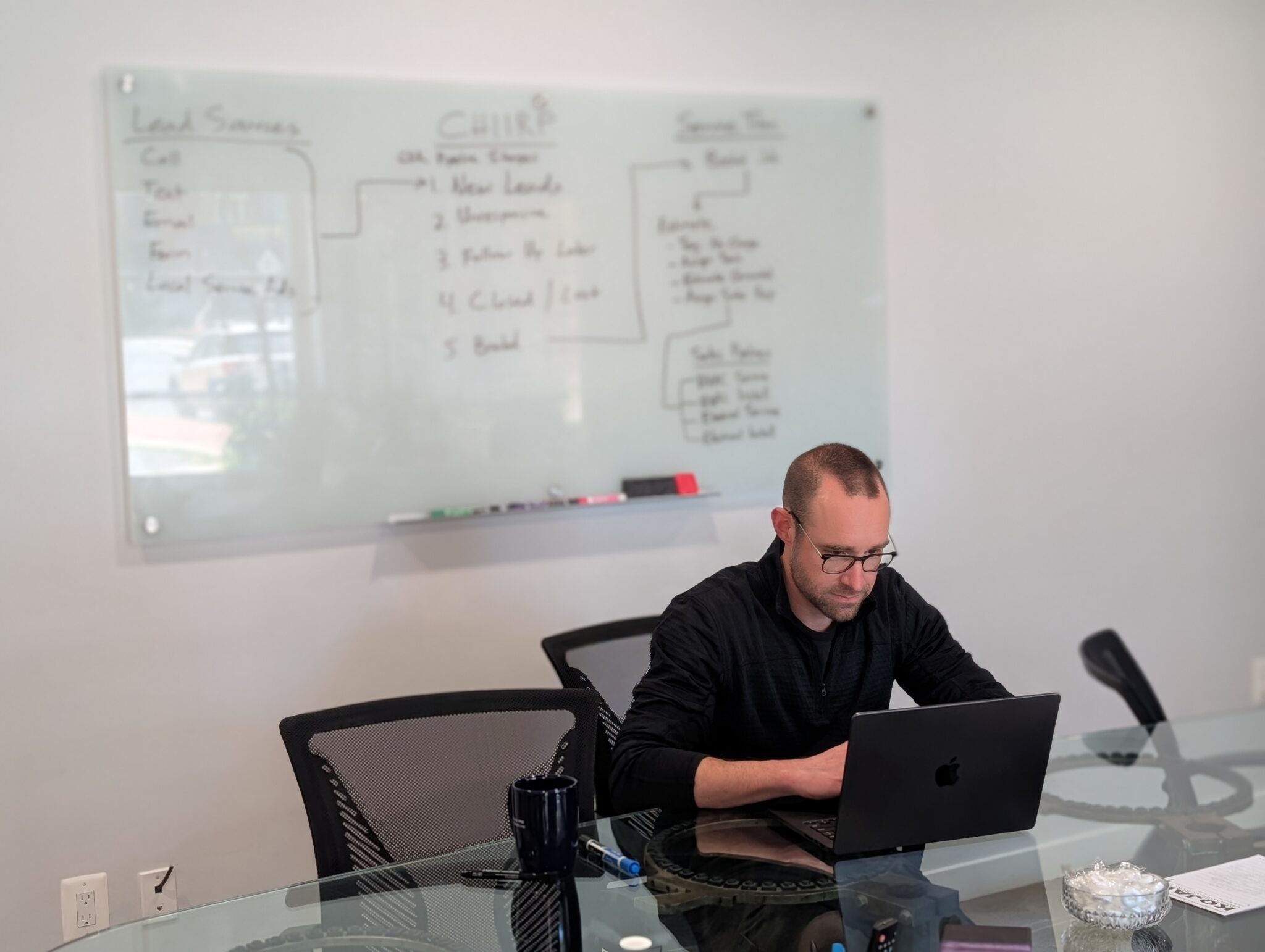
The localism is also civic. The company reports work with the Frederick Rescue Mission, Carroll Creek Rotary, and Downtown Frederick Partnership, and sponsored the 2025 techfrederick Games. The tone is earnest, then punctured by the team page, which lists 11 office dogs. Their titles include VP of Thievery, Chief Stare Strategist, and Pay-Per-Lick Ad Specialist. The joke works because the human org chart is unusually explicit.
What another company can steal
You do not need to hire ArachnidWorks to borrow its central idea. The useful part is a management habit: force each activity to explain its relationship to the same business goal. A website redesign is not complete when the site launches. It is complete when the intended customer can find it, understand it, act, and appear in a measurement system that changes the next decision.
- Write down the market diagnosis before choosing a channel.
- Give every channel one clear role in the customer journey.
- Put positioning, creative standards, and targets in documents people actually use.
- Make production and measurement part of the strategy, not an appendix.
- At every review, say what changes next - not merely what happened last month.
There is also a useful filter. This approach assumes the product works, customers are happy, the company can fulfill more demand, and leadership is ready to invest. If the product is still searching for a market, operations cannot keep up, or nobody can own the decisions, an integrated marketing machine may only distribute confusion more efficiently. A solo specialist may also be the better buy when the problem is genuinely narrow.
ArachnidWorks occupies the middle ground between the freelancer wearing six hats and the enterprise agency delivering a plan months before anything ships. Its competitors are both of those options, plus in-house teams and specialist shops. Its answer is neither cheaper labor nor a secret platform. It is a small institution built to remember the whole story.
That may explain why a company named for an old search-engine metaphor has lasted through so many new ones. Channels age quickly. The handoff remains.
Keep pulling the thread