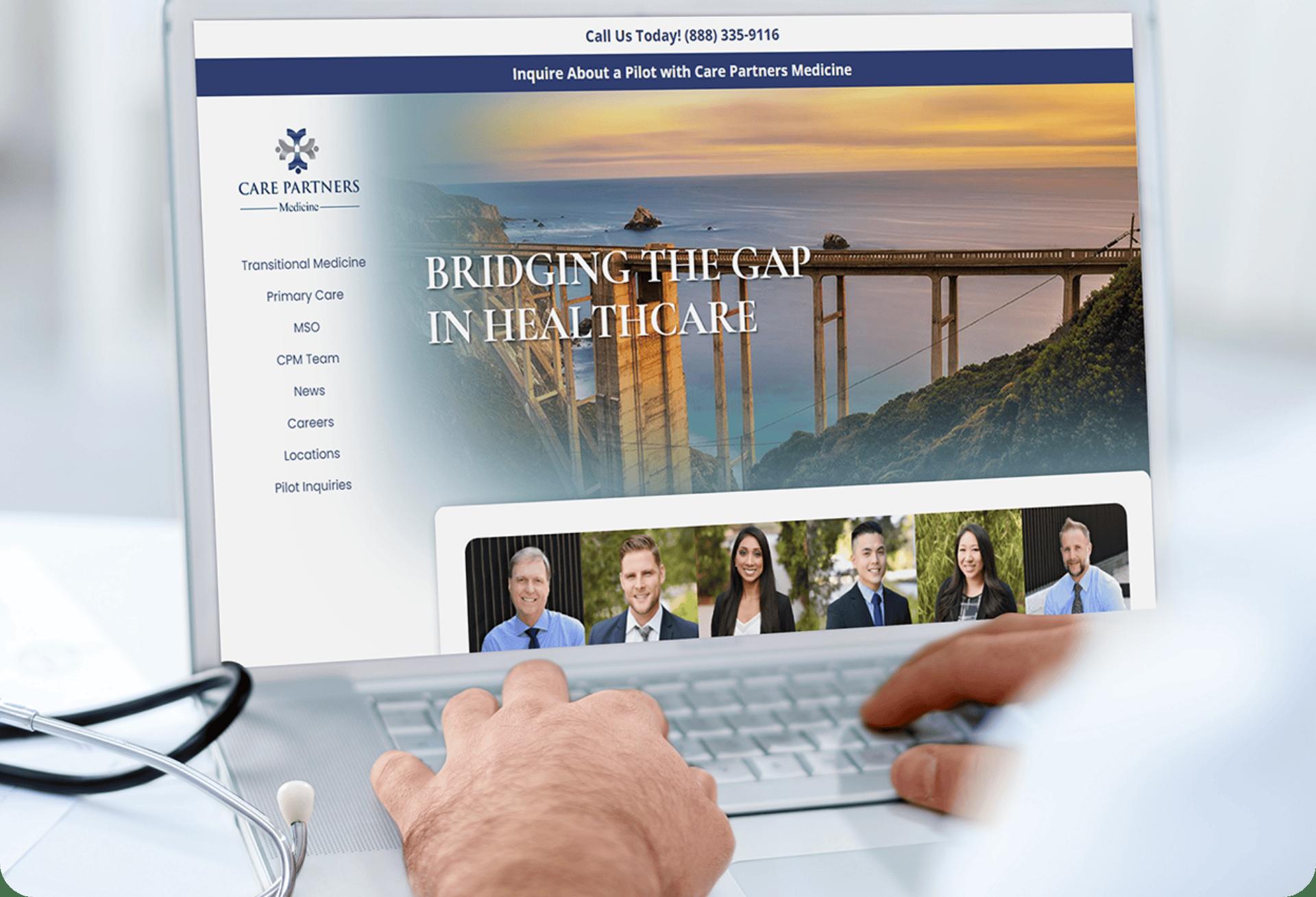
A website can fall behind a business without ever going offline. The staff changes. Services multiply. The company becomes harder to explain. Visitors still arrive at the old front door. For Care Partners, a care provider in LightHouse Graphics’ portfolio, the agency describes precisely that mismatch: an expanding organization represented by a site that had gone more than two years without an update.
The assignment involved graphic design, web design and development. LightHouse Graphics says it reconsidered imagery, navigation and the experience of adult children researching care on their phones. The objective was to make the organization easier to understand and approach. A new visual style belonged to the job, but so did the route to the services.
That project offers a useful introduction to the Irvine agency. Its business occupies the space where a company’s identity, website and marketing overlap. The customer may arrive asking for a logo or a redesign. The underlying question is often larger: how should this business present itself, and what should happen when somebody takes an interest?
A logo with somewhere to go
Coastal Getaway supplies a smaller, sunnier version of the same story. The vacation business commissioned logo work while thinking ahead to a website where travelers could narrow their property search and book directly. LightHouse Graphics describes choosing cool colors and a tropical mood. Those decisions were supposed to communicate the experience the company wanted to sell.
The relationship subsequently expanded into a website commission, according to the agency’s account. That sequence is revealing. An identity assignment can open the door to a larger technical project because the designer has already learned what the business wants customers to do.
For buyers, the lesson is practical: tell the logo designer where the logo will live. A mark destined for a booking interface has to share space with prices, property photographs and buttons. The vacation may promise leisure; the interface still has work to do.
LightHouse Graphics also offers brand guidelines, voice and messaging, partial identity refreshes and print materials. Its published branding process runs from understanding the business through concepts and revisions. A client can commission a focused change instead of treating every engagement as permission to replace everything.
The name undersells the job description
Founded by Josh Wilhelm in 1998, LightHouse Graphics has a name that sounds comfortably at home on a printer’s invoice. Its present service list stretches further: custom development, software applications, website redesign, identity and marketing. The company marked its twenty-fifth anniversary in August 2023, describing an evolution toward design informed by marketing strategy.
Its portfolio includes technical businesses, too. The agency describes building a mobile-compatible website for Menlo Micro to present its switch technology, and website and branding work for OrangeMed that acknowledged its parent organization while preserving a separate identity. FMH Engineering’s assignment included a website and business cards. These are different communication problems, even when the deliverable is called a website.
That breadth places LightHouse Graphics among agencies selling coordinated services to businesses without a full internal design and development department. A founder, practice manager or marketing lead can bring several related assignments to one supplier. The appeal is continuity: decisions about positioning can travel into the interface, the printed material and the campaign.
There are other ways to buy the work. A client can assemble independent specialists, use a narrowly focused development firm, or manage a site internally. LightHouse Graphics’ proposition makes particular sense when the owner needs the disciplines to agree with one another and wants help managing that conversation.
The meeting before the proposal
One healthcare customer’s account makes the agency’s consultation style more concrete. In a testimonial published on an older company homepage, Rodney B. describes spending seven months evaluating web-development and SEO providers. The problem was combining three organizational websites into a unified brand serving both business and consumer audiences.
He credits LightHouse Graphics with asking to meet before presenting a proposal. In his telling, the visit helped the agency understand the organizations and their people. It is a customer’s retrospective, selected by the agency, but the sequence matters: understand the business before deciding what the website ought to contain.
Organizational websites into one brand: the challenge described by a healthcare customer in an agency-published testimonial.
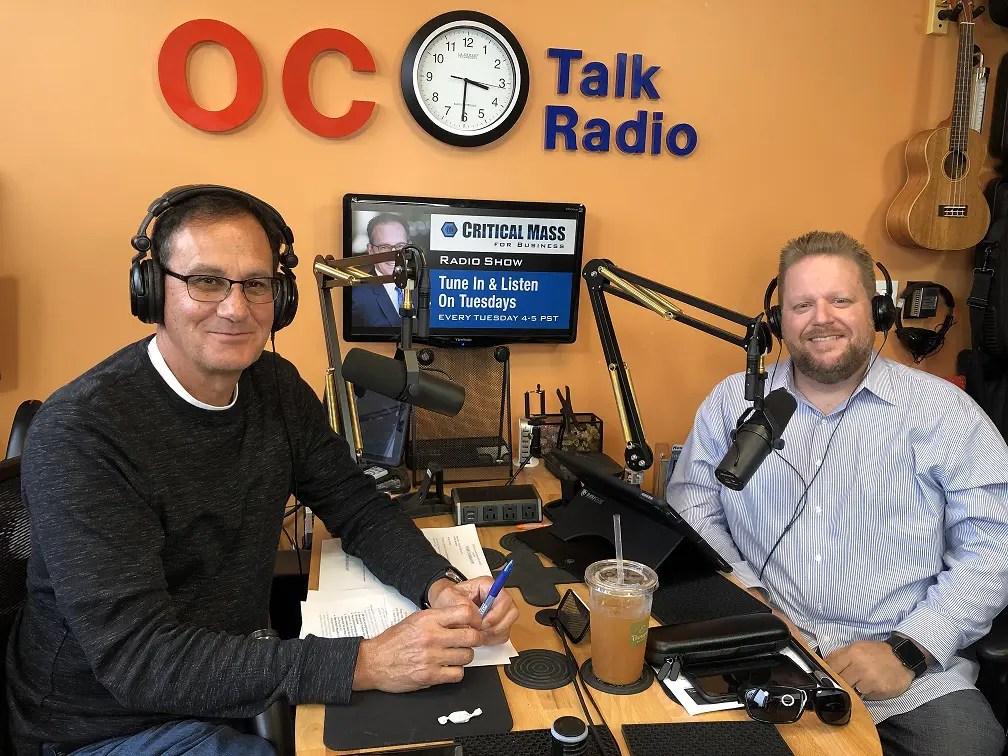
Wilhelm’s management advice follows a similar line. A company recap of his 2019 Critical Mass radio appearance emphasizes knowing customers, asking why they chose the business and using their feedback. It also advocates patience in hiring and choosing someone for the role. Those are stated principles; they explain the kind of working relationship the agency wants to sell.
The useful idea is easy to borrow. Before commissioning a redesign, write down which audiences currently share the site, where their needs diverge and who inside the company can approve a decision. A merged website needs a shared editorial purpose. Otherwise, the old organizational confusion can simply acquire new typography.
What the calendar tells you about the bill
LightHouse Graphics quotes custom development after assessing requirements. Its stated cost drivers include features, design complexity and integrations. That makes the specification part of the commercial conversation. A site displaying services and a site exchanging data with business systems should not begin with the same assumptions about effort.
The agency publishes different time ranges for different assignments: four to eight weeks for branding, four to twelve for a redesign, and eight to sixteen for custom web development. These are indicative ranges dependent on scope. They give buyers a better starting point than treating every new website as an identical purchase.
There is also a telling price anecdote in the company’s testimonials. Nicole N., identified with OC Divorce Attorney, says other developers had charged her hundreds of dollars while a malicious link continued to prevent advertising approval. She says Josh then helped resolve the issue without charging her. This describes one customer’s experience, not a free-support policy.
For a prospective client, the useful budget discussion separates the initial assignment from later work. Ask what the proposal covers, which integrations require outside subscriptions, how revisions are handled and who pays for changes after approval. Those questions turn a broad ambition into something both sides can price and schedule.
The website has to survive its launch
A company-published testimonial from NKCF highlights an easily overlooked part of a rebuild: helping the people who inherit it. The customer describes data recovery, migration, a refreshed identity and instruction for the administrative team, followed by continuing assistance. Launch day was one event in a longer working relationship.
LightHouse Graphics’ redesign offering likewise includes reviewing existing content and making the content-management system usable for future updates. Its stated approach to navigation, responsive layouts and search preservation recognizes that an established website already contains material worth carrying forward. Replacing a page should be a considered decision.
The practical test is whether staff can perform the ordinary jobs afterward. Can they change a service description, add a new colleague or publish an announcement? Put those tasks into the handoff discussion. A website that requires a support ticket for every routine edit creates a very different relationship from one the customer can comfortably maintain.
“We believe that the next 25 years hold even greater opportunities for innovation.”
Josh Wilhelm · 2023 anniversary announcement
Marketing has to meet the website halfway
The agency’s marketing services include search optimization, paid advertising, social media, content, email and analytics. It says strategy begins with business goals and audience analysis, while reporting uses agreed performance indicators. The important buying question is which customer action those indicators represent: an inquiry, an appointment, a purchase or something else.
Its April 2025 ecommerce article shows how this thinking connects to development. The discussion covers product discovery, checkout forms, payment choices, clear costs and the systems behind content updates. It also addresses connections to analytics and marketing tools. In that account, the site participates in the sales process well beyond the first attractive screen.
A May 2025 article on SEO-friendly design, alongside other development writing, reinforces the agency’s emphasis on connecting the parts of a digital presence. This is useful territory for a business whose advertising, website and content have grown separately. Bringing them into one brief can expose contradictions before a campaign sends visitors into them.
Custom work still needs a reason. A straightforward business with settled messaging and ordinary requirements may find a simpler implementation sufficient. A company unwilling to supply content or make decisions will also struggle with a collaborative engagement. The right question is whether the proposed work removes a specific obstacle worth the time and expense.
LightHouse Graphics’ most instructive projects make that obstacle visible: a care provider’s outdated presence, a vacation brand preparing for bookings, several organizations trying to speak together. Start there. Describe what customers need to accomplish and what currently gets in their way. The design conversation becomes much more interesting once it has a job.
Follow the work
Explore the agency’s projects, writing and conversations.