The first evidence that Lucas Rohm had a business arrived after his working day was supposed to be over. He was answering Craigslist requests for web designers in the evenings, adding paid projects to a day job. Eventually, he told SDVoyager, the moonlighting earned more. The practical argument for doing it full time had made itself.
That experience became Mission Bay Media, a San Diego agency whose proposition is easy to understand once a website starts causing trouble. The company designs and builds sites, connects them to business systems, improves their performance and helps keep them running. Its portfolio stretches from consumer foods to biotech, education and event rentals. The common customer need is a website that does a particular job well.
Rohm’s shorthand for his approach is disarming: “I’m not a salesman.” He learned to make websites as a teenager. Today, the more revealing sales pitch is in the agency’s project descriptions: a store locator, a rental-software connection, an older site made usable on a phone. These are modest-sounding features with quite specific business reasons to exist.
Before the portfolio, the evenings
Mission Bay Media dates its founding to 2010. On his personal website, Rohm describes graduating that year from UC San Diego with a degree in Interdisciplinary Computing in the Arts. A stint at Sony PlayStation and freelance web work followed. His background joined visual design to programming, a combination that still describes the agency’s range.
Building evidence that people should hire him took time. In a Shoutout SoCal interview, he put the difficult early stretch at two to three years of financial, professional and personal compromises. Some projects were valuable because they strengthened the portfolio, even when they were less useful to the immediate finances. Experience had to be accumulated before it could be sold convincingly.

Rohm’s account favors small, calculated risks. He also credits an early opportunity from technology executive Jeffrey Krauel with helping him trust his abilities. The copyable lesson is fairly unromantic: make the next piece of work demonstrate something the next client will need. A portfolio is more persuasive when it contains solved problems rather than a row of attractive rectangles.
A lentil launch, a lab and a familiar face
Seapoint Farms gives that principle a concrete form. The food company approached Mission Bay Media with a dated website while preparing a new lentil-based product line. MBM worked with its marketing department on a responsive redesign, product presentation, an extensive store locator and a press page. The portfolio dates the launch to June 2020.
A store locator is a revealing choice for a food brand. Someone who has discovered a product may want to buy it at a nearby shop. Helping that person find a retailer gives the website a practical role beyond announcing that the company exists. The brief ties the design to a purchase journey that continues elsewhere.
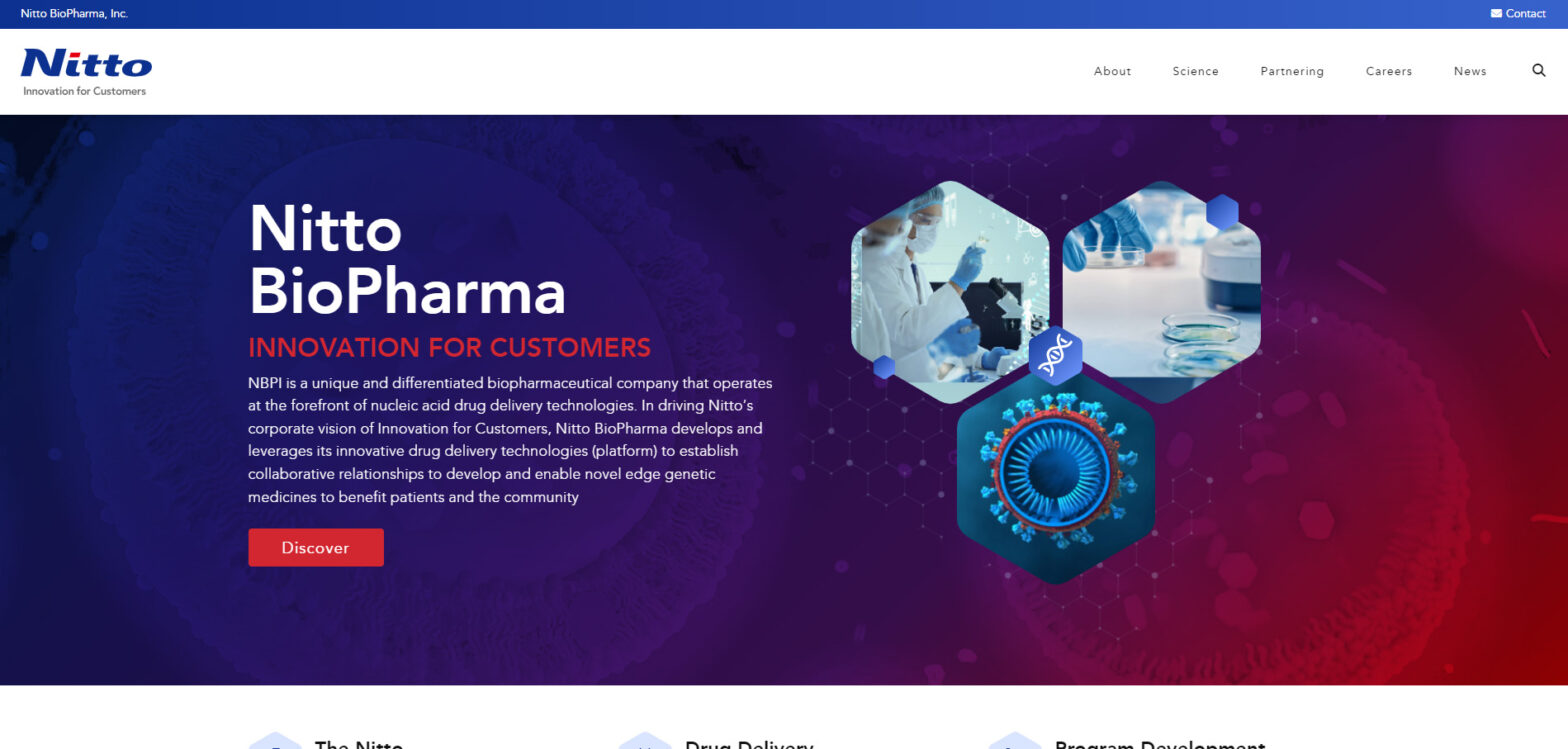
For Nitto BioPharma, the constraints were different. The agency describes redesigning the company’s website while respecting both its own brand guidelines and those of parent company Nitto Denko. The October 2024 project used new graphics and integrated layouts to present its technology. Here, custom work meant creating room for a distinct scientific business inside an established corporate identity.
SpecialCare, a medical-supplies provider, offered another kind of design problem. Its older website lacked mobile responsiveness, but familiar branding mattered to its audience. MBM describes retaining original design elements while adapting the site to phones, tablets and computers. A redesign can earn its keep by preserving recognition as carefully as it improves usability.
The agency’s graphic-design work extends that thinking across formats. For Jiu Jitsu Elite, it describes creating a website, versions of the logo for different uses and print materials. The job connected the academy’s public-facing pieces. For a smaller organization, having one team handle those pieces can reduce the work of explaining the same identity several times.
The useful work below the homepage
Mission Bay Media’s development service reaches from the interface visitors see to databases and administration tools behind it. That breadth matters when the website has to participate in the business itself. An employee updating content and a customer completing a transaction are using different parts of the same system. Both experiences need attention.
Big Dawg Party Rentals shows how those layers meet. For the New York company’s January 2026 website rebuild, MBM says it integrated TapGoods, the rental software the business already used. The brief also covered presentation, pages intended to support search visibility and customer conversion, and an appearance suited to the company’s target audience.
The consequential choice was to work with the existing inventory platform. A rental business has products to display and an operating system behind them. Its public website cannot be considered in isolation. This project suggests a useful question for any redesign brief: which systems must the new site continue to work with, and which customer actions depend on those connections?
A conceptual view of the documented Big Dawg project, not a measured conversion funnel.
Performance work can be equally specific. For the University of Wisconsin alumni association website, MBM describes replacing a substantial portion of code and refactoring JavaScript to remove dependencies, including jQuery. The account is about changes underneath the design. Rohm’s own portfolio also identifies custom PHP plugin work for the university.
The agency’s general speed service starts with code analysis and a prioritized task list. It names image optimization, smaller script and stylesheet files, content delivery networks and caching among its tools. The useful principle is diagnosis before reconstruction. A business with an existing website may need targeted engineering work rather than a completely new visual identity.
Search problems can demand both. Together We Grow, a pediatric-care provider, had an aging site and difficulty being distinguished from similarly named organizations, according to MBM’s case study. The agency describes a rebuild, technical improvements, keyword research and additional pages focused on its services. Finding the right organization and understanding its offer were part of the same assignment.
The price of getting specific
Custom work requires a budget. Mission Bay Media’s DesignRush listing puts its minimum-budget band at $10,000 to $25,000 and its average hourly rate at $100. Those are directory figures, not a quote for the projects above. They do, however, locate the buying decision: commissioning professional design and development requires a different calculation from picking a theme and entering some text.
Minimum-budget band listed by DesignRush.
$100 average hourly rate. Scope requires an estimate.
The agency argues that custom ecommerce can move platform-development expense into the initial investment instead of an ongoing platform subscription. Its March 2026 article also acknowledges that payment processing continues to carry charges. The distinction is useful: paying to build a selling system does not eliminate the costs of accepting payments or running the business around it.
Nor does a finished website take care of itself. Mission Bay Media separately offers monthly website-management packages and content-management systems for clients who prefer to make their own updates. Its PerfectSwell engagement includes hosting, updates, backups and security checkups. Those are ongoing services with ongoing work attached.
This makes the agency’s positioning more precise than a promise of “no monthly costs.” Its custom-build pitch objects to compulsory platform or theme fees; its service menu still includes paid continuing support. Buyers should separate the build, hosting, transaction costs and future work when comparing proposals. A smaller first invoice is only one part of the decision.
Write down the job your website must do before shopping for its new face.
THE BUYER’S TAKEAWAY
Give the brief a real job
Mission Bay Media competes with other custom agencies and freelancers, as well as the decision to use a website builder. In a March 2026 essay, it makes a forceful case against premade themes. But it also identifies situations where templates make sense: personal projects, temporary prototypes and short-term needs where cost matters more than precise control.
That admission gives buyers a useful boundary. If the immediate job is a temporary page with ordinary features and room for compromise, extensive customization may be hard to justify. Where a business needs established software connected, a particular editing workflow or careful brand continuity, the agency’s case studies become more relevant. Match the complexity of the commission to the complexity of the problem.
The practical starting point is a list of tasks: find a stockist, request a rental, understand a scientific platform, update a service page. Then identify the content, software and staff involved in each task. The resulting brief gives a developer something concrete to price and gives the client something concrete to evaluate.
MBM’s portfolio continued to add work in 2026, including Kinovate Life Sciences in April and AOX Unwrapped in May. Its business remains recognizable across those changing clients: make the website fit the organization’s requirements. The best question to bring to that first conversation is a specific one about what the site needs to help someone do.
Explore the work
Visit the agency website, browse the project portfolio or read its web design essays. Meet Rohm in his SDVoyager interview and Shoutout SoCal conversation.