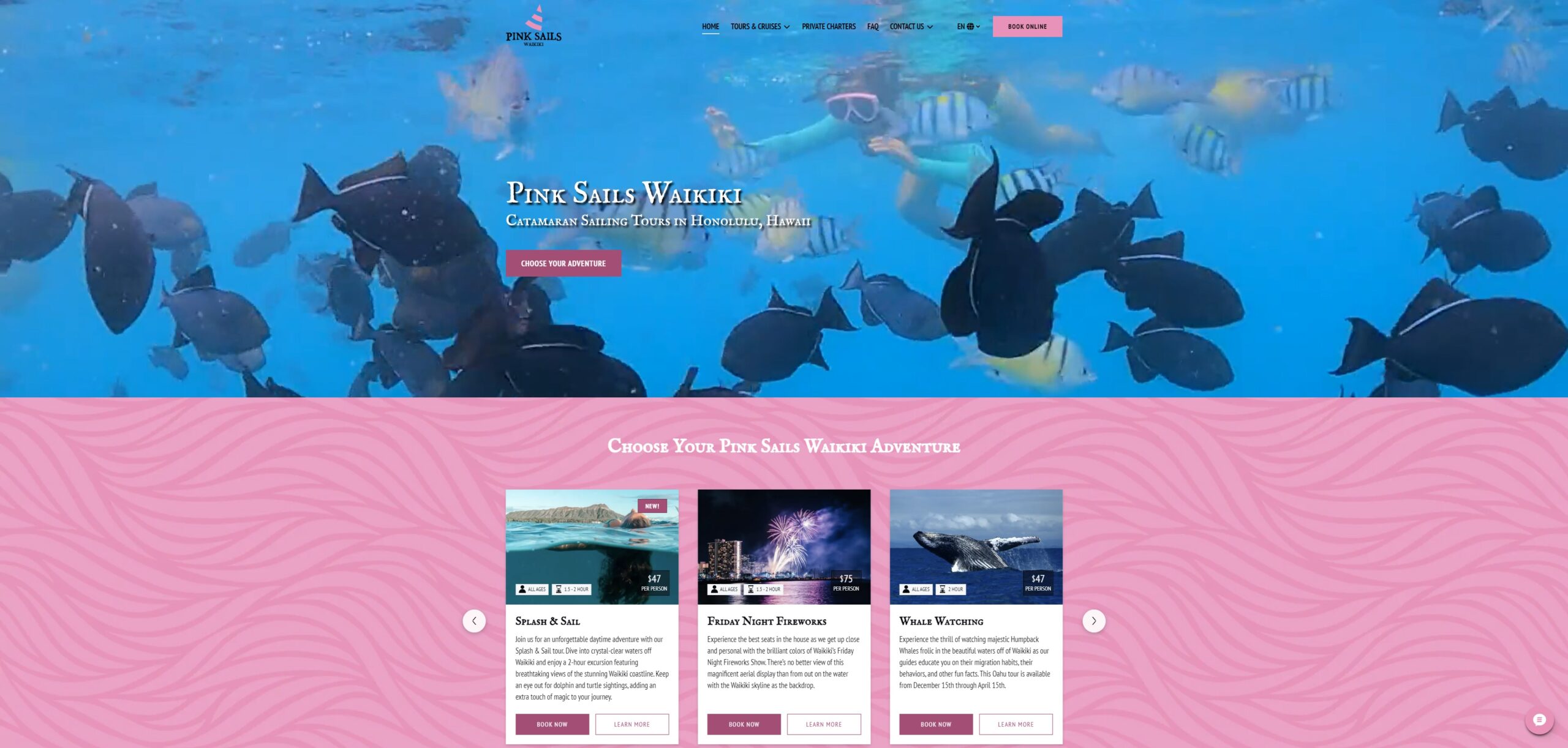
There is a fish problem in advertising. The fish is beautiful - midnight black, gliding through blue water off Waikiki - but it is also in the way. A tourist sees it, imagines the warm ocean, and then must somehow travel from feeling to itinerary to credit card. Every extra click gives the fish a chance to swim away.
Team Vision Marketing’s work for Pink Sails Waikiki makes the problem literal. The Honolulu agency refreshed the tour operator’s brand, built a site around large underwater pictures, wrote the copy, optimized the pages for search and connected the whole thing to FareHarbor’s live inventory. According to Team Vision, direct bookings increased in the first month and the site continued to beat its predecessor’s analytics. The memorable creative was the fish. The useful creative was the plumbing.
The connective-tissue business
One idea, all the way to the cash register
Most agencies eventually announce what they are not. A creative shop is not a media shop. A brand consultancy is not a development studio. A software firm certainly does not want to discuss brochure stock. Team Vision, founded in Honolulu in 1997, has built its identity around the opposite claim. It will name the development, draw the logo, scout the photo location, buy the ad, design the sales office, build the website and wire up the reporting.
This breadth can sound like the menu at a diner that also repairs watches. But Hawaii gives the model a logic. Team Vision’s strongest categories - resorts, visitor attractions and residential real estate - sell expensive experiences to people who may be thousands of miles away. A luxury lot on Hawaii Island has to be understood before it can be visited. A catamaran seat expires when the boat leaves. In both cases, the customer’s journey crosses pictures, maps, search results, social feeds, booking systems and physical spaces. Splitting those moments among strangers creates seams.
The Team Vision handoff
For Ke Kailani, an oceanfront residential community at Mauna Lani, the agency refreshed the brand and extended it across national print, paid social, collateral, a sales office and a website. The site included interactive galleries, floor plans and a map where a potential buyer could inspect lots, renderings and 360-degree views. The pieces did not merely match. Each answered the next question.
The advantage is not that one agency can make everything. It is that the customer does not feel the handoff between the things it makes.
Built between waves
A surfer’s agency learns to prototype
Craig Carapelho came to Hawaii from the East Coast at 19 to attend the University of Hawaii and surf. After five years at one of the state’s larger agencies, he started Team Vision. His timing placed the company at an awkward and useful threshold: old enough to learn television, print and radio properly; young enough to be formed by the commercial web.
The revealing episode arrived when Carapelho saw Google Earth. He spent three years turning over an idea for three-dimensional travel planning, then worked nights and weekends while Team Vision’s technical staff built a prototype. Money was tight and the recession was on. The related venture, eventually called 3D Travel, raised a multimillion-dollar investment led by Ohana Holdings in 2010. Its Hawaii portal let travelers fly through modeled destinations, inspect hotels and book. Hilton, Hyatt and Starwood properties had signed before launch.
The technology was not perfect. Contemporary coverage said as much, and competitors could build their own versions. That imperfection matters. The bet was not a magical tool; it was a new interface attached to local photographs, local writing, advertising and booking commissions. The grand 3D portal belonged to its moment. The agency habit behind it - test the interface, add context, connect commerce - survived.
Today the toolkit includes ecommerce stores, custom software, customer-management systems, surveys, search advertising, remarketing, social content and what the agency now calls AI-search optimization. The vocabulary changes. The job remains moving someone from uncertainty to action.
Local is operational
Hawaii is not a stock photograph
“Local knowledge” is an easy phrase to decorate a pitch. Team Vision’s portfolio makes it concrete. A visitor-attraction campaign can target travelers already staying in Waikiki. A real-estate launch can extend from a groundbreaking blessing to a sales-center display. Work for Four Seasons Lana‘i, Paradise Cove Luau, Honua Kai Resort and Castle & Cooke sits beside hospital brochures, credit-union commercials, chocolate packaging and ukulele ecommerce.
The Islander ‘Ukulele project is a small proof of patience. Team Vision says it has worked with Islander and its sibling brand Kanile‘a for more than 15 years. The newer site added WooCommerce, artist videos, event calendars, parallax motion and search optimization. Client retention is not as photogenic as a campaign launch, but it reveals the agency’s business model: become useful across enough problems that the relationship can outlive the platform.
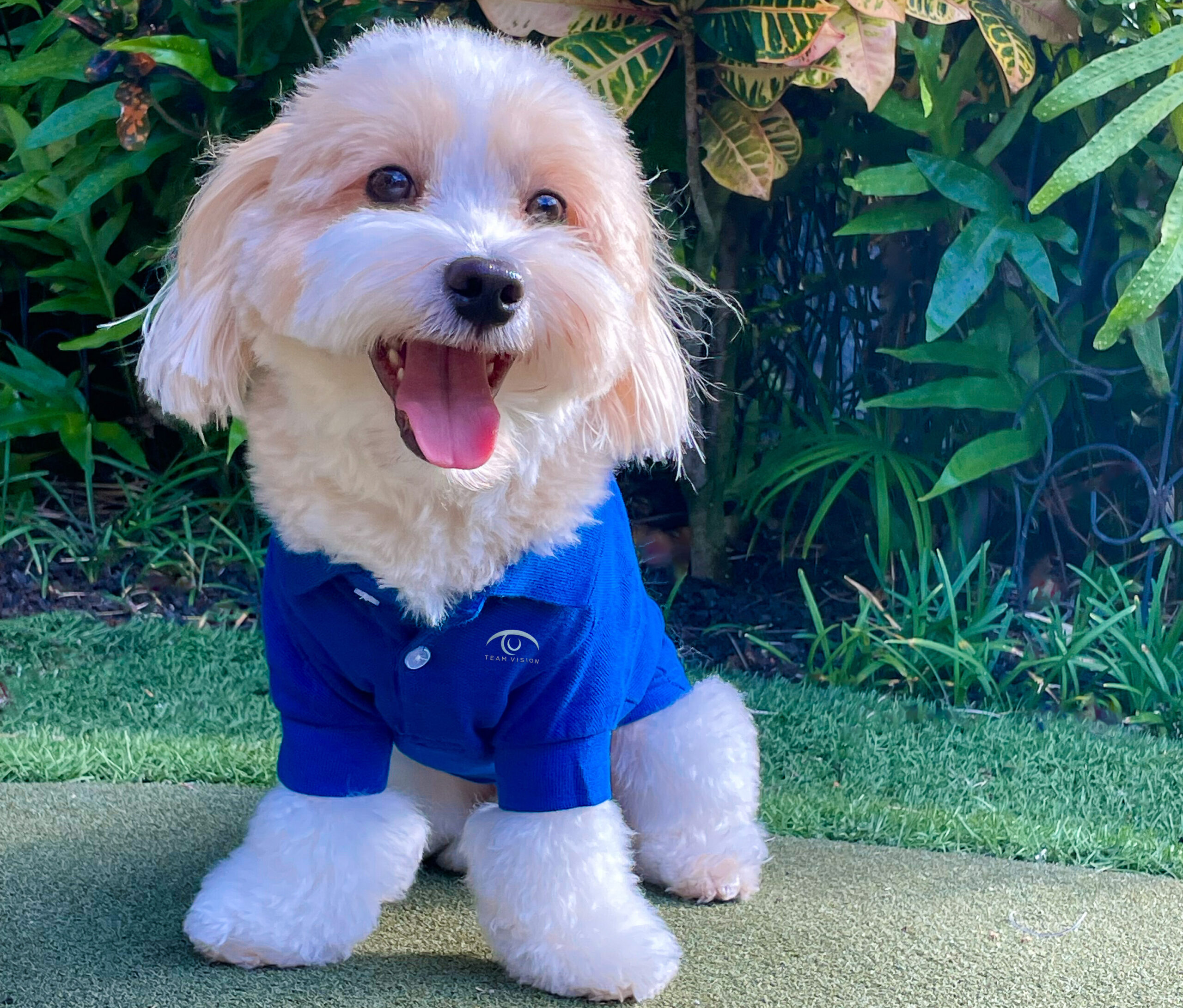
The public roster carries the same mixture of specialties: account management, production, graphic design, programming, media and social. It also includes Cody, a small white dog whose biography cites a degree in Tail Wagging. The joke works because the surrounding biographies are specific. Production manager Kyle Osaki has worked across print, radio, television and signage. Web specialist Kai Holland has more than 25 years in development and project management. Vice president Tori Carapelho handles strategy, finance, business development and workflow.
What another team can copy
Map a campaign from first impression to completed transaction before commissioning the pieces. Give one person authority over the seams. Make the website answer the question raised by the ad. Put inventory or a sales action as close to the idea as possible. Then report on the whole route, not the applause for one channel.
The price of breadth
Integration is a discipline, not a shopping list
Team Vision does not publish its fees. Nor does it publish enough detail to audit its largest performance claim - monthly return on ad spend above 2,000%, reaching 3,000% in one month. Treat that number as the agency’s claim, not a universal benchmark. The more persuasive evidence is narrower: Pink Sails reports a better direct-booking path; the portfolio shows the same identities carried across many surfaces; long relationships produced new work as technology changed.
There are conditions where this model loses its edge. A company seeking only a narrow enterprise-software specialty may prefer a specialist. A brand with no meaningful Hawaii audience will not receive the same return from island knowledge. And breadth becomes expensive clutter when no one owns the central idea. Buying twelve services from one vendor is not integration; it is merely consolidated invoicing.
The right client is the one Team Vision describes itself: an organization willing to try fresh technology but grounded in a real market problem. The agency’s partnerships with Genergraphics for generational research and BeyondROI for search and paid media also show a sensible boundary. Full service need not mean pretending every skill lives at the same desk.
Back in the water, the fish still has one job: make a future traveler pause. The typography has one job. The tour card has one job. The booking engine has one job. Team Vision’s wager is that these jobs should be designed as a sequence, not held as separate meetings. The internet has spent 29 years inventing new places for a campaign to break apart. In Honolulu, this agency has made a business out of joining the pieces.