A mooncake, a surgeon and a piece of theatrical rigging have an unlikely point of connection: the name at the bottom of a website. Kee Wah Bakery credits Ishkaster Inc. Steven D. Lin, an orthopaedic surgeon, credits Ishkaster Media. So does Tru-Roll, which sells theatrical rigging and hardware. Follow those small signatures and a particular kind of creative agency comes into view: one whose work lives in the everyday places where businesses explain themselves and make a sale.
Ishkaster Media’s offer stretches from the first impression to the transaction. It designs websites and logos, produces printed materials, manages advertising, makes visual content and offers payment-processing services. A business can arrive needing a website and find help with the brochure, the product photographs and the route to checkout. The breadth is the story. The agency’s menu reads like the accumulated shopping list of someone trying to run a business.
Its LinkedIn slogan compresses that proposition into seven words: “YOUR IDEAS + OUR TEAM.” The useful question is what that team actually makes. Here, the answer is unusually tangible: online shops, professional-practice websites, business cards, promotional graphics and the other materials that turn a name into a business people can recognize.
A bakery is a better introduction than a slogan
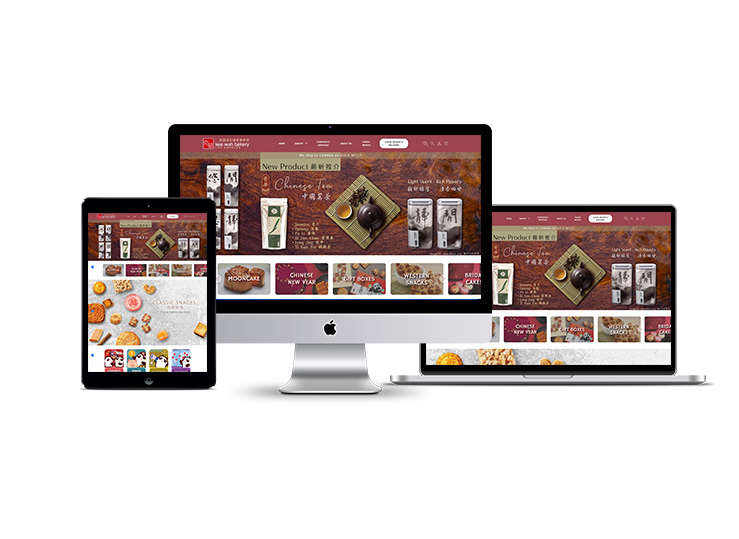
Start with Kee Wah. The agency’s portfolio presents the bakery’s website across a desktop, a laptop and a tablet. Tea tins and baked goods share space with product categories and promotional messages. It is an e-commerce composition with a clear job: help a shopper understand the range and find something to buy. The live bakery site’s design credit provides a separate connection to Ishkaster.
Shop Sari Sari, an online Filipino grocery business, also carries an Ishkaster Media web-design credit. Its site offers a different shopping context, with a cart, product comparisons and customer-contact information. These are modest details, but they are the details a customer actually uses. An attractive homepage has to connect to the rest of the shopping experience.
The surgeon’s site makes the contrast useful. Steven D. Lin’s homepage introduces his specialty and directs visitors toward scheduling an appointment, learning about him or making contact. Tru-Roll’s product page presents a hardware item and a request-for-quote option. Each site asks its visitor to do something different. That variety suggests a practical way to judge the agency’s work: look at the action the page needs to support, then inspect how plainly it presents that action.
The founder also knows the merchant’s side
Ishkaster dates its beginnings to 2007. A résumé included in an NGA911 regulatory filing in 2019 identifies Charmaine Francesca “Ishka” Villacisneros as its founder and chief technology officer, with an October 2007 start. The document places digital marketing and process development alongside her wider experience in finance and operations. It supplies a more concrete origin marker than an agency anniversary banner.
Villacisneros also founded Californila, a personal-shopping business serving customers in the Philippines who wanted goods available in the United States. An interview republished on her personal site describes an informal beginning: shopping for friends and relatives, then organizing the activity into an online business. That history belongs to Californila, but it helps explain why commerce is an interesting thread to follow through her agency.
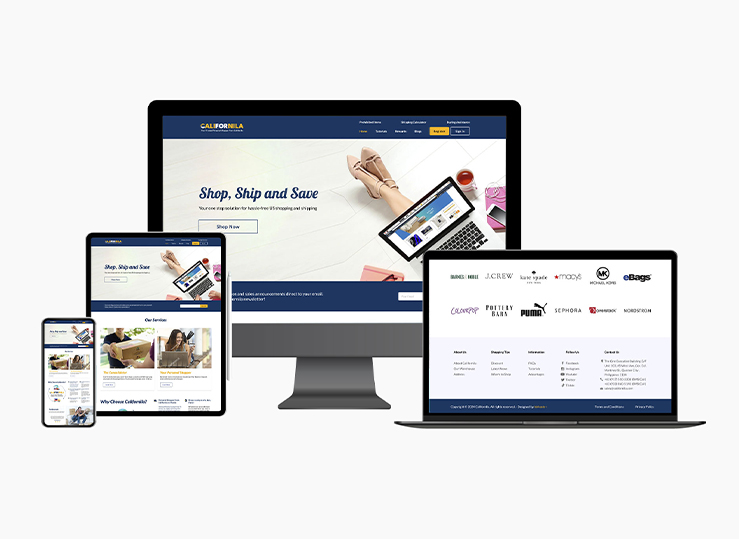
Californila appears in the creative portfolio too, in website mockups and promotional work. The connection gives Ishkaster an example of a founder operating on both sides of the brief. A merchant has to think about the offer, the product and the customer’s next step; a designer has to make those choices legible. The overlap is useful context, even without treating a founder-related project as proof of results for every client.
Pixels, paper and the payment button
The website service starts with familiar building blocks: WordPress, e-commerce development and responsive layouts. The published offer also includes analytics, email capture and content-management tools. Maintenance covers updates, backups and security patches, while hosting and domain registration sit alongside the design work. This makes the ongoing life of a website part of the sales conversation, rather than leaving the discussion at launch day.
Graphic design extends the same conversation into physical space. The agency lists corporate identity, logos, packaging, uniforms, event graphics and signage. Its print menu includes brochures, stationery, business cards and promotional merchandise. For a shop or professional practice, those materials can meet the same customer at different moments. A printed menu and a mobile page still need to describe the same offer clearly.
Photography and video fill another practical gap. The service description covers product styling, retouching, compositing and delivery of files for screen and print, alongside motion graphics and explainer material. Buyers can use that combination to commission assets for several formats. The sensible brief would specify those formats early: a photograph intended for a large printed display has a different job from a tightly cropped social post.
Payment processing is the less expected item on a creative agency’s menu. Ishkaster’s page describes merchant gateways, online transaction reporting and integration with e-commerce or point-of-sale systems. It references Authorize.Net transactions and QuickBooks synchronization. The attraction is straightforward: the visual storefront and the payment workflow can be discussed together. A buyer should still distinguish the agency’s integration work from the underlying processor’s service and terms.
Getting found is another piece of the job
The marketing offer spans search optimization, paid advertising, social media and email. Its SEO page describes an initial website analysis followed by on-page and off-page work. The advertising page lists campaign audits, paid social, search ads and retargeting. These are separate ways of reaching a prospective customer, even when one agency coordinates them.
On email, the service description emphasizes campaign scheduling and reports covering opens, bounces, unsubscribes and clicks. That points toward a repeatable routine: publish, examine the response and adjust the next campaign. A useful client conversation would connect those reports to an actual business objective, such as an inquiry or a repeat order. A report is most valuable when the people reading it have already agreed what they hope to learn.
This is where the generalist proposition becomes most plausible. Someone has to coordinate the image in the advertisement, the wording on the landing page and the offer customers encounter when they arrive. Giving those tasks to one agency can reduce the number of handoffs. The benefit depends on how well the work is coordinated; the length of a service menu alone cannot establish that.
“We work within your budget”
Ishkaster’s public Freelancer profile
The quote is part of the product
Ishkaster’s marketplace profile pitches budget flexibility. Its current public site directs prospective clients to request a quote, making the engagement a conversation about scope. For a buyer, that is the moment to turn broad service names into specific deliverables: how many pages, which product records, what photography, how many revisions and who supplies the copy.
The refund policy adds a concrete commercial detail. It says payments are final and non-refundable, including deposits, milestone payments and fees for completed work or delivered assets. That makes the agreement before work starts particularly consequential. Buyers can ask for written milestones and clear acceptance criteria so both sides understand what each payment corresponds to.
A practical budget should also distinguish the build from the costs of keeping it useful. Hosting, maintenance, creative production and advertising spend serve different purposes. Asking for them to be separated in a proposal makes competing offers easier to compare. It also lets a business decide what to commission now and what can wait until the first version is in use.
A new name on a familiar kind of business
The public trail now leads to iMedia Ideas. Wyoming’s trade-name list records Imedia Ideas under Ishkaster LLC on June 19, 2025. The current site carries the portfolio and service descriptions, while several pages still refer to Ishkaster. The registration connects the names; the work supplies the continuity.
There is a cross-border dimension as well. The company describes clients in the United States, Europe and Asia. A public sales vacancy in Quezon City specifies an on-site role, salary plus commission, collaboration with the creative team and client feedback intended to inform future services. Those are concrete clues about how the agency presents its working expectations, beyond the usual declarations about creativity.
Its place in the market is clearest beside the alternatives: a specialist hired for one channel, individual freelancers assembled by the client, or an internal marketing team. Ishkaster’s broad offer is appealing when a business needs several connected outputs and someone to coordinate them. A narrowly technical assignment may call for deeper specialist evaluation; a generalist brief still needs someone on the client side who can make decisions.
The lesson a reader can copy is refreshingly ordinary. Start with the customer’s task, carry the same offer across the materials, and decide how to judge the result before commissioning it. Ishkaster’s portfolio keeps bringing the discussion back to those things: the appointment button, the product page, the card in someone’s hand. The storefront is wherever the customer meets the business.