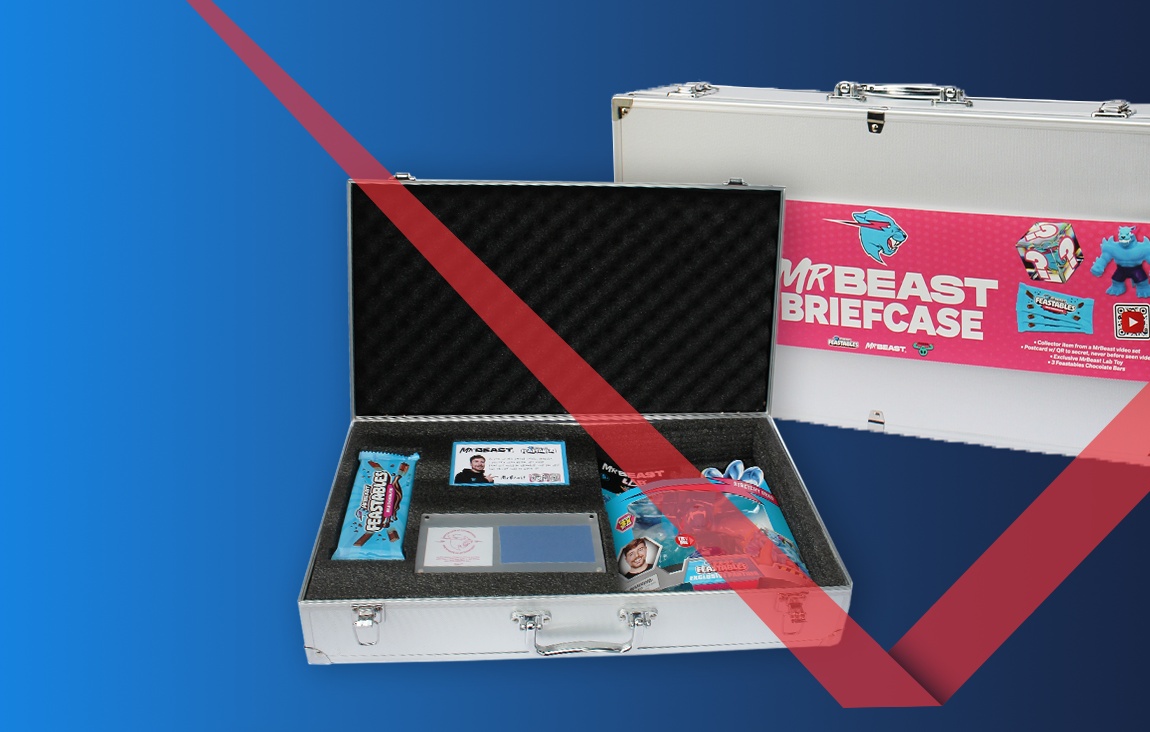
Black Friday is an unforgiving appointment. Arrive a week early and you have inventory. Arrive a week late and you have an explanation. In 2024, Trusted Influence needed MrBeast’s Feastables briefcase delivered to 3,574 Walmart stores. The product was playful; the itinerary was less so. Manufacturing started in China in August. Final assembly would happen in New Jersey. Between them stood an ocean and the threat of an American port strike.
- Freight, customs, warehousing, and delivery.
- Value grows with complicated handoffs.
- Lenders took majority control in 2024.
SEKO Logistics coordinated 30 container shipments, adding air freight to protect the schedule. Components reached the United States within 30 days; assembled briefcases reached stores for November’s shopping rush. The telling detail is the combination of transport modes. A shipping plan that depends on everything going right is merely a wish with a tracking number.
Trusted Influence subsequently expanded into last mile and domestic ground transport.
- 01ChinaManufacture
- 02Ocean + airMove components
- 03New JerseyFinal assembly
- 043,574 storesBlack Friday
02The business lives between the handoffs
SEKO is a third-party logistics provider: companies hire it to organize the movement, storage, clearance, and delivery of goods. Its menu covers air and ocean forwarding, ground transport, warehousing, ecommerce fulfillment, returns, and specialist delivery. It can move stock toward a distribution center, pick individual orders, or help get a complicated piece of equipment through the final door.
The breadth matters because a shipment rarely fails neatly inside one department. The warehouse waits for customs; the installer waits for the truck; the customer waits for everyone. SEKO’s proposition is to connect those responsibilities, using local operations and technology to keep information moving alongside the cargo.
That places it among freight forwarders and contract logistics providers, rather than a parcel carrier selling only a label. Buyers can also consider DHL Global Forwarding, Kuehne+Nagel, DSV, or AIT Worldwide Logistics, depending on the lane and task. SEKO’s pitch centers on hands-on account service, configurable systems, and specialist handling. Those are promises to test against a real shipment, rather than reasons to award a contract unseen.
The business earns money by delivering contracted logistics services. Pricing is shipment-specific and requested by quote. The sensible comparison is the entire job: transport, clearance, storage, handling, delivery requirements, and the consequences of lateness. A cheap ocean booking can become an expensive decision if the rest of the chain is unprepared.
“SEKO went from being a simple shipping vendor to a true strategic partner for us.”
Ryan J. Shaver · COO, Trusted Influence
03A bicycle needs space. A medicine needs procedure.
The customers make the distinction tangible. Canyon Bicycles describes SEKO adapting warehouse racking and speeding online order processing as the bicycle company launched in the United States. The requirement was physical as well as digital. An ecommerce integration is of limited comfort when the product does not fit comfortably on the shelf.
Peli BioThermal presents a different problem. Its reusable temperature-controlled shipping containers need servicing, repair, refurbishment, and conditioning before another journey. In Dublin, SEKO expanded its facility and services around that recurring cycle, adding freight forwarding and customs capabilities. GDP-trained drivers distribute prepared containers across Ireland; the operation also handles Crēdo Cube refurbishment.
SEKO reports a 150% increase in Peli conditioning units stationed in Ireland since the partnership began. That measures expanded capacity, rather than an equivalent increase in sales. The useful lesson is that specialized logistics often consists of preparing an asset to travel again. Pharmaceutical supply chains need procedures as much as they need departures.
Peli BioThermal conditioning units stationed in Ireland: growth since the partnership began, reported by SEKO.
04The dashboard must know where the box is
MySEKO gives customers a portal for booking, tracking, and reporting. SEKO 360 manages warehouse inventory down to product identifiers and storage details. SEKO IMS addresses another category altogether: serialized assets circulating through loaner or demonstration programs, including medical devices. An asset can be in storage, travelling, with a customer, or quarantined; those states should never become interchangeable in a spreadsheet.
SEKO Live extends the information loop to the delivery site. Field staff can stream video to operations teams for advice when a job becomes difficult. Think of a specialist viewing the problem with the person standing beside it. The software is useful because the physical world keeps producing questions that a delivery status cannot answer.
Collaboration partners include ShipStation for ecommerce shipping workflows and Hurricane Commerce for cross-border data, classification, and screening. SEKO’s technology story combines its own tools with outside expertise. For a customer, the test is whether those tools reduce re-entry, unanswered questions, and uncertainty at each handoff.
05The balance sheet missed its own appointment
The company’s operational competence did not spare it a financial reset. Ridgemont Equity Partners led a majority recapitalization in January 2021, with earlier investor Greenbriar retaining a stake. By September 2024, SEKO announced another recapitalization agreement. Then-CEO James Gagne pointed to the freight recession and the need to address the balance sheet.
The December closing gave existing lenders majority ownership and brought new investment. Adviser Davis Polk described the deal as a comprehensive out-of-court recapitalization. The practical cost was a transfer of control. Customer service achievements and financial health belong on separate scorecards.
Leadership changed too. Philippe Gilbert became chairman and interim CEO in January 2025. Gordon Branov, previously responsible for LTL and final mile at Maersk North America, took over as CEO that April. The sequence shows a business revising its financial foundation while continuing to sell the same essential service: getting other people’s goods where they belong.
06What to borrow before the next rush
A satisfaction measure, not a delivery success rate.
In September 2026, SEKO reported a first-half Net Promoter Score of +81, drawn from 139 client reviews collected through Clientshare. That is encouraging customer feedback, with a defined sample; it is neither an on-time delivery percentage nor a guarantee for the next account. Its third annual ESG report also described an in-house carbon calculator developed in 2025, giving customers another question to ask about a shipping plan: what emissions come with it?
The briefcase offers a repeatable habit. Work backward from the immovable date, identify the slowest handoff, reserve alternatives, and give someone responsibility for the whole journey. Before hiring SEKO, bring shipment volumes, dimensions, destinations, system requirements, and service expectations. Ask where tracking becomes actionable and who handles an exception.
The economics still have to fit. A routine parcel may need a straightforward carrier service. Complex coordination earns its keep when delays, specialist handling, or repeated asset movements matter enough to justify it. Even then, customs decisions and transport disruption remain external constraints. The pleasure of a well-run supply chain is modest: the product arrives, and nobody needs to admire the machinery.