The buy button is a small act of optimism. A shopper taps it and assumes that inventory records are true, a product can be found, a box can be packed, a carrier can be booked and an address can be reached. The retailer has already promised a date. Somewhere behind the screen, however, six organizations may be holding six different versions of reality. Promologistics Supply Chain makes its living in that gap.
Based in Mexico City, the privately held company calls itself a 4PL, or fourth-party logistics provider. The label matters. A carrier moves a shipment. A warehouse stores it. A 3PL may do both. A 4PL sits above those activities, designing the operation, connecting systems and coordinating its own resources with outside specialists. Promologistics wants to be the party a brand calls when the entire chain, rather than a single delivery, has to work.
That means receiving imported goods, controlling inventory, picking orders for retailers and individual buyers, packaging products, booking transportation, following the last mile and processing returns. It can also develop and administer an online store, integrate marketplaces and operate loyalty-reward catalogs. The pitch is not glamorous. It is useful: one accountable partner for the handoffs where errors multiply.
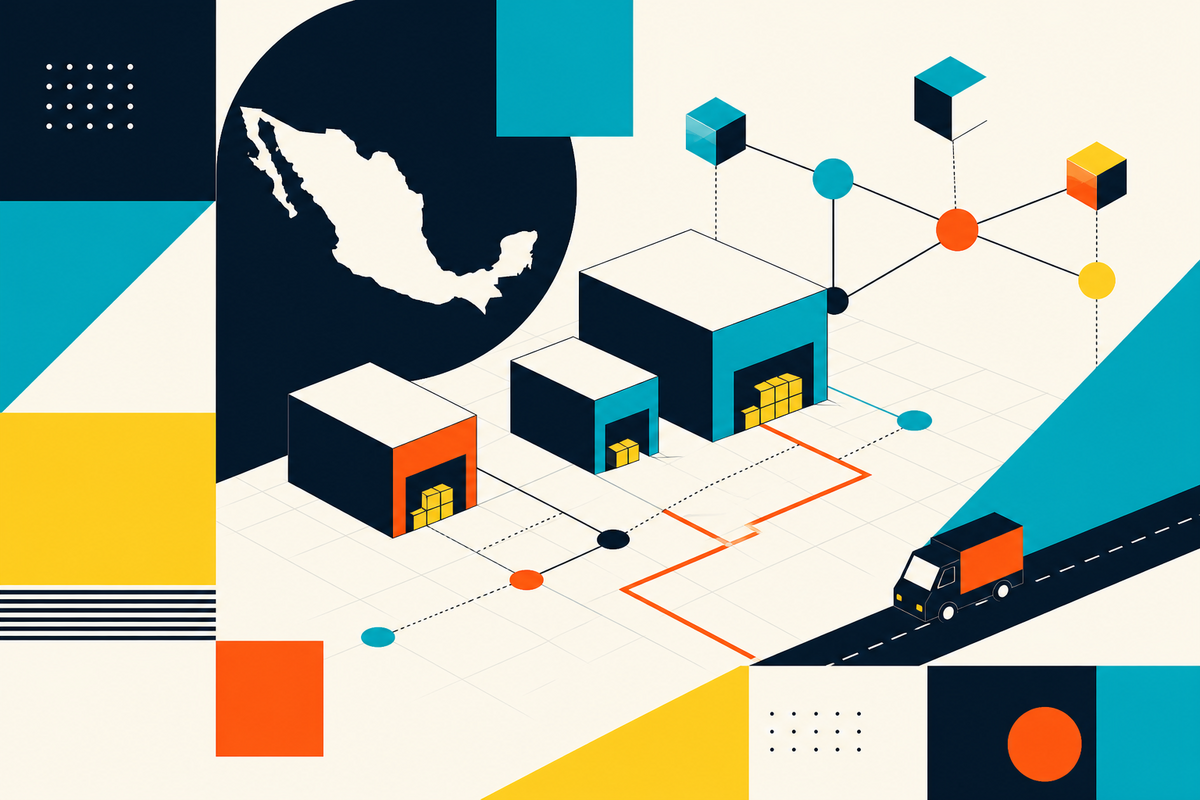
A warehouse learned to conduct an orchestra
Promologistics began operations in 2004 as a family venture. A business profile published around its twentieth anniversary described an opening warehouse of roughly 400 square meters. At the company's fifteenth-anniversary gathering in 2019, then-director Marcos Sulkin Cung used slightly different starting figures - 500 square meters and 20 people - before describing what came next: two distribution centers totaling more than 20,000 square meters, about 300 employees and service across seven sectors.
The expansion was not only physical. The company added warehouse-management software, API connections, real-time visibility and a client app for orders, shipments, inventory, purchases and returns. It also moved sideways into freight forwarding, fiscal warehousing, e-commerce and loyalty programs. Each addition closes another seam in the journey from supplier to buyer.
Consider the ordinary return. A parcel must be authorized, collected, inspected, credited and either restored to sellable inventory or routed elsewhere. If the shop, carrier, call center and warehouse do not share status, the customer waits while stock ages. Promologistics treats that reverse trip as part of the original sale, not as an unfortunate epilogue.
The economics explain why clients outsource. A warehouse requires leases, equipment, supervisors and systems before the first order ships. Demand then refuses to remain level. Hot Sale, Buen Fin and December compress weeks of volume into a few days, while a new product launch can turn last month's sensible layout into this month's bottleneck. A shared operator can spread infrastructure and expertise across programs, then redesign labor, storage positions and carrier capacity around peaks. The client trades some direct control for variable capacity and a team that has already seen the failure modes.
Promologistics' own warehouse guidance is revealingly practical. It recommends classifying inventory, mapping fast-moving items, scheduling carrier appointments, making urgent orders visible and using return notifications. None is a science-fiction breakthrough. Together, however, they determine whether an employee walks an efficient route or crosses the building repeatedly, whether an apparent stockout is real, and whether a rush order jumps the queue without making every other promise late.
“We went from being a family of twenty people to a community of three hundred.”Marcos Sulkin Cung at Promologistics' 15th anniversary02 / The customer
For brands whose channels refuse to stay in their lanes
The ideal Promologistics client sells physical goods through several channels at once. A fashion company may replenish department stores, fulfill marketplace orders and ship from its own website using the same pool of stock. A bank may operate a rewards catalog with thousands of items. An overseas beauty brand may need customs coordination, careful handling and national B2C delivery before it has a local logistics staff.
The company's public customer display spans consumer goods, apparel, financial services, electronics and hospitality. It includes names such as Under Armour, Foreo, Club Premier, Liverpool, Pepsi, Nescafé, MasterCard, Santander, Banorte, Scotiabank, Citibanamex, Grupo Salinas and Telmex. A logo wall is not an operating audit, but published testimonials explain why the service can become sticky.
One sportswear client said its Mexico project started in 2009 with 100,000 pieces and eventually exceeded 1 million pieces a month. Promologistics developed and administered the brand's first e-commerce operation while delivering both to consumers and retailers including Liverpool and Palacio de Hierro. The attraction was capacity that could stretch without forcing the brand to assemble a new vendor stack every time demand changed.
Club Premier described a different use case. Promologistics helped develop a B2C platform where members could exchange miles for products from a catalog of more than 5,000 items. Logistics was attached to the proposition from the start: the reward had to be sourced, shown, redeemed, packed and delivered. A loyalty idea only feels generous when the promised object arrives.
Reading the graphic: This is a map of responsibility, not a ranking. A parcel network can be broader and larger than a 4PL. Promologistics differentiates itself by coordinating more kinds of work around the shipment, including outside carriers, rather than claiming to own every truck.
03 / The differenceCustomization is expensive. Rigidity costs more.
Promologistics competes in a crowded field. Global operators such as DHL Supply Chain, CEVA, GXO and Ryder bring large networks. Parcel specialists such as FedEx, UPS and Estafeta own familiar delivery infrastructure. Local fulfillment companies may offer fast onboarding and simpler software. A brand can also build the operation itself.
The company's answer is configurable depth. Its service list reaches from air, sea and ground freight to bonded storage, inventory controls, marketplace connections and last-mile monitoring. Inside the warehouse, it offers work that does not fit neatly in a rate card: labeling to Mexican standards, applying tax stamps, bagging, shrink-wrapping, bundling and reconditioning. Those fiddly jobs are often what allow an imported product to become sellable inventory.
Technology is the connective tissue rather than a standalone software subscription. Promologistics discusses WMS tools, APIs and its Next-Cloud platform as ways to join client channels and expose operating status. The company earns money from the designed operation - storage, handling, transport coordination, integrations and service work - with software helping the physical system behave coherently.
That distinction also clarifies what the company is not. It is not selling a dashboard and leaving the customer to negotiate every dock appointment. Nor does the 4PL label mean that it must own every asset. Promologistics explicitly describes integrating internal and third-party resources, and its service material refers to courier and dedicated-transport alliances. Asset ownership can guarantee capacity, but a coordinated network can offer choice. The test is whether the operator has enough data and commercial leverage to change a weak link before a client feels the damage.
Customization has boundaries, too. Regulated labels, fragile devices, apparel assortments and rewards catalogs require different handling, yet each extra branch in a process can create another place for quality to drift. Promologistics emphasizes ISO 9001:2015 certification, standardized procedures and continuous improvement for a reason. The promise of flexibility only survives at scale when an unusual request becomes a documented routine rather than a favor remembered by one experienced supervisor.
That business model favors longer relationships. A custom workflow takes discovery, integration and process discipline. Once it works, the provider holds operational knowledge that is hard to move overnight. The risk is the mirror image: every unusual exception can add complexity. A 4PL has to standardize the plumbing while keeping the client's experience specific.
The real product is not the warehouse. It is a credible answer to the question: “Where is the order, and who fixes it next?”04 / The market
Sitting above the truck, below the promise
Mexico's role in North American trade and the growth of domestic online shopping pull logistics in two directions. Cross-border flows demand customs knowledge, transport options and inventory planning. Consumers demand a simple checkout, a believable date and an easy return. Omnichannel retail then mixes wholesale cartons and individual parcels inside the same building.
Promologistics occupies the coordination layer between those pressures. It is not trying to look like a global public carrier. It is a roughly 300-person Mexican operator whose management is active in industry groups, including ConaLog and the Mexican Association of Logistics Operators. Its sites also point toward Spain and the United States, while its freight offer reaches Canada and Central America. The footprint suggests an ambition to help brands cross borders without pretending borders have disappeared.
The company marked 20 years in 2024 and returned to The Logistics World Summit & Expo for a fourth consecutive appearance in 2026. More recently it has presented a broader Promologistics Group identity, joining supply-chain operations with e-commerce marketplaces and loyalty work. That grouping makes strategic sense: all three businesses depend on the same underlying ability to keep a promise across databases and loading docks.
Its range also creates a useful commercial loop. International transport can bring a brand's inventory into Mexico. A fiscal warehouse can delay duties until goods are nationalized. Fulfillment can feed retail and direct orders. The e-commerce team can connect demand, while loyalty programs can introduce products to millions of reward members. Each service can stand alone, but together they make Promologistics harder to compare with a rate-per-parcel quote. The buyer is choosing an operating architecture as much as a vendor.
There is no public funding narrative to make the story tidy, and no disclosed revenue figure to turn into a valuation exercise. Promologistics is privately held. Its more revealing metrics are operational: pieces handled, orders sent, square meters managed and client processes retained. This is a company built around repetition, where a million small correct actions matter more than a single launch-day flourish.
That returns us to the optimistic shopper. The buyer will never applaud a clean inventory reconciliation or a correctly applied label. They will notice only when something fails. Promologistics works in that asymmetry, coordinating a complicated system whose best performance looks like nothing happened at all: the cart became a box, the box found a door, and the promise kept its date.