A returned package is commerce with its tie loosened. The barcode may still scan, but the box is bruised. One cable has wandered off. The instruction sheet has entered private life. Somewhere, a refund is moving at digital speed while the physical product waits under warehouse lights for a slower and more consequential decision: what is this thing worth now?
Eric Williams built a company in that pause. After more than two decades in logistics and operations, he co-founded Louisville-based eJOOV in 2020 with Mike Lewis and Brendan Manion. The starting proposition was reverse logistics for ecommerce - receiving customer returns, checking their condition, and deciding whether to rework, repackage, restock, liquidate or dispose of them. It was a narrow door into a very large room.
Williams had spent his career studying rooms like that. His public record begins in 1998 at Cummins Cumberland, followed by material planning and logistics management at Ford Motor Company. At CNH, he worked across depot management, operations and North American logistics leadership. Chegg brought him into distribution operations for education. Williams Industries gave him a president and operating partner's view. By the time eJOOV began, the founder had already lived several professional lives, all joined by inventory that needed to be somewhere else, correctly and on time.
The education of an operator
The initials Williams places after his name are unusually relevant to the work. MSIE marks a master's degree in industrial engineering from the University of Louisville. LSSBB marks the Lean Six Sigma Black Belt he earned in 2012. He also holds a business administration degree from Spalding University and attended a strategic leadership series at the University of Wisconsin-Milwaukee's Lubar School of Business.
The combination is visible in his subject matter. Industrial engineering asks how a system behaves. Lean practice asks where it wastes motion, time or material. Business asks whether fixing any of that produces value. A return box is all three questions wearing packing tape.
Colleagues have publicly described Williams as hands-on, able to simplify complicated operations and inclined to lead by example. Those observations matter because logistics loves abstraction right up to the moment a truck is late. A polished dashboard can describe a problem beautifully. Someone still has to decide what to do before the next cutoff.
“There has to be a better way. Enter reverse logistics.”Eric Williams, writing on reverse logistics
Product triage, without the drama
Williams calls the return process “a kind of product triage.” The phrase is useful because it refuses to treat every box alike. Some products can go straight back to stock. Some need a new carton or a cosmetic clean. Others need a small repair, missing component or fresh kit. A few have reached the end of their useful commercial life. Good reverse logistics makes those distinctions quickly and against the client's standards.
In his published estimate, roughly 80 percent of returned goods across merchandise types are already fit, or can be made fit, for retail resale. The exact economics vary by product, naturally. Nobody should lovingly refurbish a trinket at the cost of a piano. But higher-value goods can justify inspection, repair and repackaging, especially when replacement stock has a long overseas journey.
The return also reveals something the outbound shipment can hide. Sending a sealed product from shelf to customer is movement. Opening it on the way back requires judgment. The logistics provider becomes responsible for condition, presentation and, in many cases, whether the product may represent the brand again. A warehouse worker with a checklist is suddenly standing at the border between a write-off and a second sale.
The wedge gets wider
A good wedge solves one painful problem, then introduces its owner to nearby ones. eJOOV began with returns and expanded into customized B2C and B2B fulfillment, subscription boxes, kitting, packaging and inventory management. Its work now reaches automotive support, distilled-spirits storage and shipping, and temperature-sensitive products. The list sounds eclectic until one notices the common thread: goods that require rules, care and information in the same place.
Automotive work returns Williams to familiar terrain. eJOOV describes same-day transfers, line staging, part repacking and rework facilitation for original-equipment and supplier operations. Spirits add a different regulatory choreography, including licensed storage and compliant direct-to-consumer shipping. Cold chain adds temperature and time. Each new lane raises the cost of casual handling.
The technology language around the company is practical rather than mystical: portals, integrations, real-time data and customized tools. The aim is fewer errors and clearer visibility. eJOOV says its customer-service staff works in the warehouse rather than an off-site call center. That proximity is an operating choice. A person answering a question can be one degree from the pallet instead of several tickets from reality.
Automation after observation
In December 2021, eJOOV secured $936,200 through a convertible note as it pursued automation. The order is worth noticing. The company had already begun doing the work. Automation was introduced into a learned process rather than waved over an imaginary one. In physical operations, that sequence can be the difference between removing friction and merely mechanizing confusion.
Williams' career supports the same reading. Ford, CNH and Chegg are very different businesses, yet each can punish a sloppy handoff. An automotive line feels a missing component immediately. Education fulfillment turns seasonal peaks into an exam of capacity. Ecommerce creates volume and impatience at once. Experience across those environments gives a founder a library of failure modes. It also teaches the less glamorous founder skill: knowing which problem deserves a system and which requires a person with authority.
eJOOV's own claims are framed around flexibility: integrate with a customer's systems, use those systems when appropriate, and customize the workflow. The company advertises month-to-month contracts and says it aims to earn the business twelve times a year. There is a slight menace in that promise, but it is directed inward. The provider must keep proving useful.
Louisville, then the port
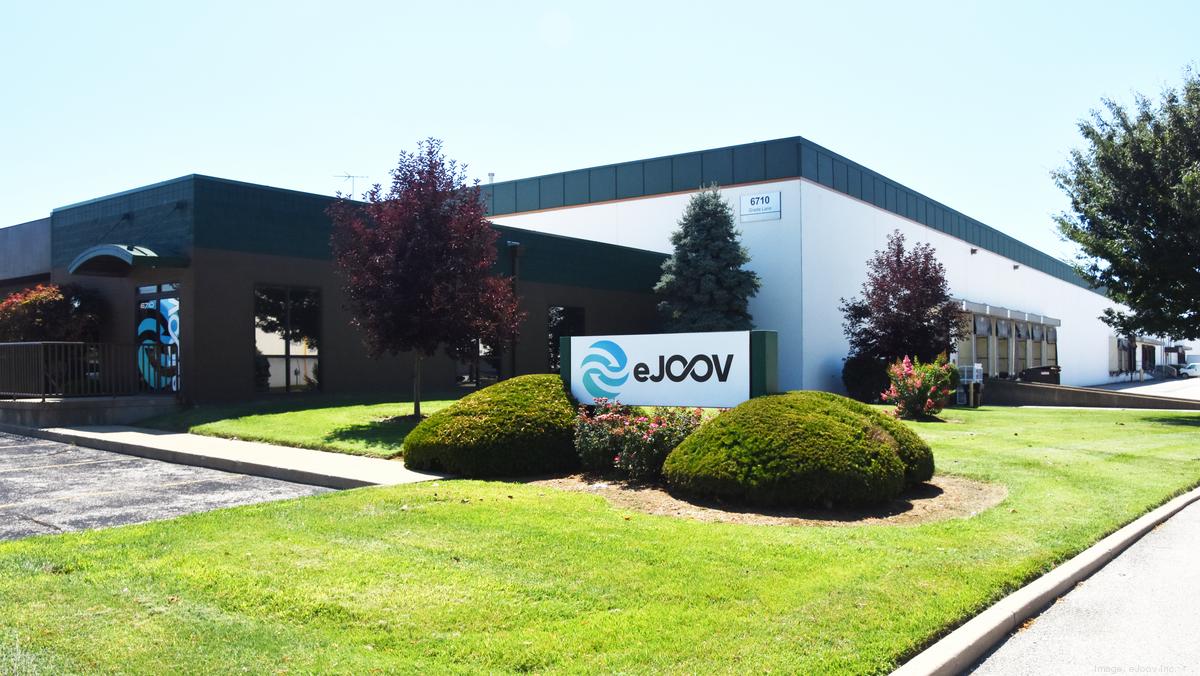
Louisville is not incidental to the story. Parcel networks, manufacturing, healthcare distribution and Kentucky's bourbon economy all touch the region. It is a city where a logistics company can find both scale and specialization without inventing either. eJOOV's Grade Lane address put the business near the airport corridor. In 2026, the company announced a new warehouse on Intermodal Drive in Louisville's Riverport area.
Williams shared the move in five words: “Expanding into our newest footprint at Riverport.” Then came three more: “More to come!” Brevity may be the natural dialect of someone used to shipping notices. Around the same period, he attended a Virginia Maritime Association gathering as eJOOV strengthened relationships near the Port of Virginia. The association's public member list names EJOOV Holdings and Williams among warehouse and distribution-center members.
The cold-chain work offers another glimpse of where the company is heading. Recent updates show gel-pack production being tested and expanded in Louisville, with applications across food, pharmacy and pet-care logistics. It is a sensible adjacency: a fulfillment company already responsible for inventory adds the ability to protect temperature-sensitive inventory. The humble box acquires a climate.
Responsibility as a growth strategy
Williams' most interesting argument is not about returns at all. It is about responsibility. When a logistics provider inspects, repairs and repackages a product, it takes custody of more than the item. It helps maintain the manufacturer's reputation. In industrial work, that role can grow toward representation, particularly when an overseas supplier needs a capable hand near an American customer.
This turns a routine vendor relationship into something stickier and more demanding. Storage is easy to describe. Judgment is harder to replace. The company that can determine whether a returned camera deserves a new box may be trusted with the outbound order. The operator that can inspect a rejected casting near the assembly line may prevent an expensive journey across an ocean. Responsibility earns complexity; complexity, handled well, earns a broader relationship.
Williams also maintains a public service life around Louisville. His profile records board service with Dismas Charities beginning in 2020. BLUE LLC, an initiative focused on exposing young adults to construction trades and entrepreneurship, lists him as treasurer. These roles sit quietly beside the CEO title, consistent with a career that has favored useful systems over loud ones.
A return is a verdict waiting to happen. The value lies in making it quickly, visibly and well.The operating lesson inside eJOOV's story
What comes back
There is a neat symmetry to Williams' path. He spent years helping goods move forward through manufacturing and distribution. The entrepreneurial opening arrived when he took the backward journey seriously. From there, eJOOV widened its map: returns to fulfillment, fulfillment to specialized industries, Louisville to Riverport and Virginia, room temperature to cold chain.
None of it makes the returned box more glamorous. It remains cardboard bearing the consequences of a customer's change of mind. But glamour is a poor test for a business problem. Friction is better. Frequency helps. An unresolved decision with economic value attached is better still.
The box comes back. Williams' career suggests the operator should lean closer. Inside may be a product worth saving, a process worth redesigning and, if one is patient enough to notice, the first draft of a company.