A warehouse is a demanding place to test an idea. A parcel must leave. An inventory count must agree with the shelf. A customer who has paid for something expects it to exist. Vaibhav Dabhade’s software company, Anchanto, spent part of its early life running just such an operation in Singapore. The warehouse eventually grew to 55,000 square feet. That is a considerable amount of room in which to discover that a neat theory has overlooked something.
Today, Dabhade leads a company that sells software for the work behind online shopping. Its products help businesses coordinate orders, inventory, warehouses and delivery information. The buyer sees a confirmation screen. Dabhade’s working territory begins around the point where that screen stops explaining very much.
The warehouse episode gives his career an unusually practical centre. Anchanto put its own technology to work while handling fulfillment for brands. The people making the software also had an operation depending on it. A flaw could become somebody’s afternoon, rather than somebody’s entry in a feature-request queue.
A family business, with a different set of tools
Dabhade’s interest in logistics began well before Anchanto. He grew up watching two generations of his family build and run businesses in the industry. Entrepreneurship was familiar work, something people around him actually did. Engineering gave him another way to approach it.
He studied electronics and telecommunications engineering. Pune Institute of Computer Technology lists him among its 1999 alumni. He later undertook executive education at Harvard Business School and the Indian Institute of Management Calcutta. His Harvard programme, listed for 2009, concerned leading product innovation. These were stages in a technical and managerial education that preceded his own company.
His earlier professional experience included payment software and a software-development leadership role at Welcome Real-time. That work involved the systems surrounding payments, including chip and point-of-sale technology. There is a useful continuity here: a transaction can look effortless to the person making it while requiring considerable coordination underneath.
Singapore became home. In a personal reflection published in March 2025, Dabhade recalled arriving from India 22 years earlier and building his career, family and startup there. He also described becoming Singaporean. His gratitude was specific: the country had given him stability, opportunity and a place to belong.
The decision to start a business had a domestic supporter, too. His conversation on Asia Tech Podcast included his wife’s encouragement to venture out on his own. Anchanto’s origin belongs partly to that familiar entrepreneurial setting: an ambition discussed at home before it becomes a company other people can join.
First, learn what the boxes require
Anchanto began in June 2011. By early 2013, it had developed its first e-commerce warehouse management system and secured initial customers. As customer requirements grew, the company established a Singapore warehouse, then moved to a larger one. Software development and the physical demands of fulfillment had become intertwined.
That experience matters because warehouse work offers very little indulgence to ambiguity. An order can contain several products. Stock can be promised through different selling channels. A useful system has to help people complete the job in front of them. The elegance of the interface receives a rather stern review from the dispatch deadline.
Dabhade later explained that operating fulfillment services helped Anchanto understand the problems its software needed to address. The company ultimately concentrated on technology. By 2017, he described Anchanto as entirely a software-services business, with warehouse management and online selling platforms at its core.
Leaving the warehouse operation behind gave the company a different way to grow. It could sell systems to businesses that owned or operated the physical infrastructure. The accumulated operational experience remained part of the product’s education, even when handling parcels ceased to be the company’s business.
- 2011Anchanto begins in Singapore
- 2013First warehouse software; fulfillment operations follow
- 2017Dabhade describes a fully software business
- 2020Company announces profitability and Series C funding
The expansion that began with a reality check
Building an international company required a second sort of education. Anchanto worked with International Enterprise Singapore, the agency now part of Enterprise Singapore, on overseas connections and market understanding. In 2016, it built logistics networks in nine countries. Behind the geographical spread were decisions about which customers it could usefully serve.
China provided a revealing example. With help from the agency’s Shanghai team, Anchanto focused on businesses seeking to sell into Southeast Asia and India. Dabhade described the advice as a reality check. An attractive market still required a precise answer to the question of where his company belonged.
South Korea supplied a different answer. In 2015, after exploring partners and possible approaches, Anchanto decided against entering at that point. It subsequently established a presence there. The earlier decision captures a useful distinction between having international ambitions and assuming that every country needs an immediate office.
These episodes suggest a founder willing to have the plan corrected by local knowledge. There is something reassuringly uncinematic about a successful expansion meeting that ends with the decision to wait. The money remains available for another meeting, in another market, where the fit may be better.
When the customer buys a seat at the table
By August 2020, Anchanto announced that it had become profitable and had raised S$16.6 million in its ongoing Series C round. Asendia and MDI Ventures participated. The amount needs its currency attached: Singapore dollars, a detail easily lost as funding announcements travel.
Dabhade treated profitability as an achievement worth discussing alongside the investment. The company said its revenue came entirely from software subscriptions. Having once run a warehouse, it now emphasised that it did not buy inventory or operate warehouses. The change in the business was concrete enough to describe through the assets it needed.
Asendia also continued a pattern: customers becoming shareholders. The announcement named it as the fourth such relationship, following MDI through Telkom Indonesia, Transcosmos and Luxasia. A customer investing in its supplier brings an unusually informed opinion to the transaction. It has already had opportunities to learn how the product behaves.
The commercial work was becoming more complex. In October 2020, Valiram selected Anchanto to support a retail operation spanning more than 400 stores and nine warehouses, with a portfolio exceeding 200 international brands. Dabhade’s company was being asked to connect an existing retail world, with all its accumulated systems and relationships.
For a luxury retailer, the shopping experience does not end with a handsome storefront. Orders, available stock and fulfillment still have to agree. The connection between those ordinary tasks and the customer’s impression of a brand is precisely the territory Anchanto had been learning to navigate.
The price of a wrong parcel
Dabhade often explains commerce through its consequences. In a 2021 discussion of Malaysian retail, he described the chain reaction from an incorrect delivery to a poor review and lost sales. He also questioned the impulse to choose software solely because it reproduces a business’s existing procedures.
That is a slightly uncomfortable proposition for a buyer: installing technology may require reconsidering the way the work is done. Digitising a habit can preserve its shortcomings with impressive efficiency. His argument was that businesses should pay attention to established operational practices when selecting their systems.
He also expected online and physical shopping to coexist, pointing to arrangements such as click-and-collect. This view gives the logistics problem a human scale. Customers have preferences about how they discover, purchase and receive things. A retailer’s organisational chart is unlikely to feature prominently among them.
The company inside the software company
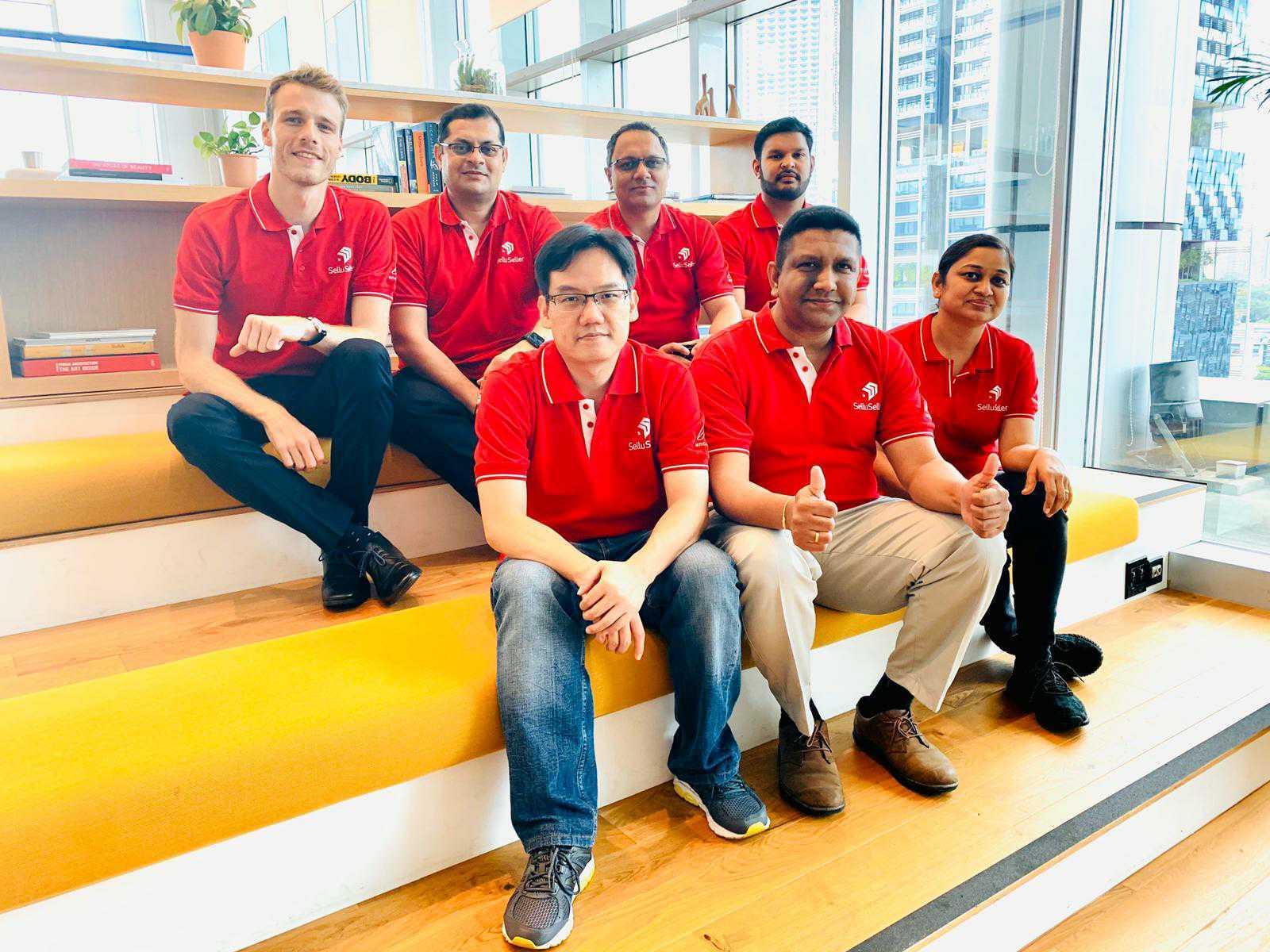
As Anchanto expanded, Dabhade’s attention also turned inward. By 2024, he was describing the communication effort required across an international workforce and a market-entry routine: an experienced launch team establishes the operation, local management is hired, and the launch team eventually moves on.
People accounted for around 80 percent of costs, he said then. The figure helps explain why hiring and employee development occupied so much of the discussion. For a software business, the people doing the work are a large part of what the investment actually purchases.
“You cannot grow a company where the people do not grow.”Vaibhav Dabhade, 2024
His concern with spending extends to less glamorous details. In a public LinkedIn request, he sought help cutting cloud costs by examining deployment, design and wasted capacity. He wanted practical changes underneath the bill. It is an engineer’s brief: find the cause, then do something about it.
A painter’s ambition, an operator’s attention
There is another ambition tucked into Dabhade’s speaker biographies. Away from the corporate role, he dreams of being a painter and has an interest in graphic design and art. It is a pleasing detail in a career otherwise crowded with stock, orders and integrations. Even a person devoted to operational coherence is allowed a blank canvas.
His more recent public thinking remains rooted in how businesses adapt. A June 2026 conversation recap emphasised responding faster to new commerce channels, choosing systems suited to local conditions, and judging new technology by practical business results. The subjects change; the demand for workable operations persists.
Anchanto’s current product range extends across order and warehouse management, parcel tracking, a control tower and operations experience. Dabhade’s stated ambition is to help businesses sell, fulfill and deliver across markets. The geographical ambition is broad. The work still resolves into individual orders that need to arrive correctly.
The warehouse is no longer Anchanto’s operating model, but it remains a useful way into its founder’s story. Dabhade has spent years working on the promises commerce makes after the attractive part is finished. Somewhere beyond the product photograph, the right item must come off the right shelf. His company grew by taking that ordinary obligation seriously.
Continue the conversation
Explore Anchanto and Dabhade’s LinkedIn profile.
- Listen: the warehouse years and D2C in Asia
- Listen: Making Decisions Together
- Watch: a conversation on e-commerce leadership
- Read: the 2021 founder interview
- Read: people, growth and frugality
- Read: the decisions behind international expansion
- Read: his recent views on resilient commerce
- Read: the Valiram partnership