Breaking

Founder · Narvar · Post-Purchase Pioneer

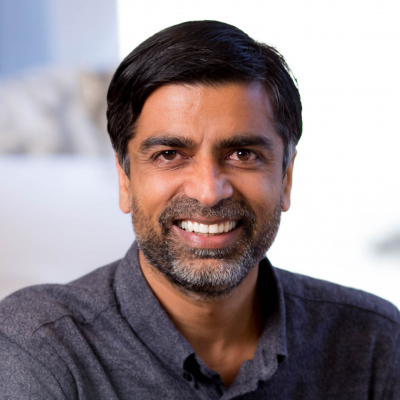
Amit Sharma

He fixed the most anxious moment in online shopping. Not checkout. Not delivery. The wait in between.

Founder Retail Tech SaaS E-Commerce Post-Purchase
Amit Sharma, Founder of Narvar

Amit Sharma — Founder, Narvar — San Mateo, CA

650+
Global Retailers Served
$64M
Total Funding Raised
12
Years as Narvar CEO
$250M+
Saved at Walmart.com

The Gap Nobody Was Filling

Nagpur is not where most Silicon Valley founders come from. It's a city in Maharashtra's interior - far from Mumbai's startup noise, far from Bangalore's tech corridors. Amit Sharma grew up there in a town of 20,000 with 24 classmates who stayed the same from elementary school through high school. The same 24 people, for years. It sounds limiting. It turned out to be the best training ground for someone who would later build a company on the premise that relationships don't end when the transaction does.

He moved to Bombay for his engineering degree at VJTI, then to the United States in the late 1990s - arriving just in time for the Y2K frenzy at Citibank, where his job was keeping distributed data systems from falling apart at midnight on January 1, 2000. They didn't fall apart. He noticed he was good at this: finding the fault line before things break.

A stint consulting for JP Morgan Chase, Credit Suisse First Boston, and Allianz Global Investors taught him how large institutions move money and data. In the early 2000s, he made his first entrepreneurial bet - building CRM databases for retail brands. The dot-com bubble had other ideas. The company failed. He enrolled at Duke's Fuqua School of Business, got the MBA in Strategy and Operations, and went back to retail - this time at Williams-Sonoma, then Walmart.com.

At Walmart, he ran shipping and delivery networks - and saved the company over $250 million in the process. The number sounds abstract until you remember it means fewer packages re-routed, fewer delivery failures, fewer customer service calls. He was optimizing the back end of retail at scale. Then Apple came calling.

"Online, after we buy, there's a waiting period. And often that waiting period is overlooked, or under-invested."
- Amit Sharma, Founder of Narvar

At Apple Online Stores, Sharma focused on something more specific: personalized delivery experiences that increased customer lifetime value. Apple customers who had great post-purchase experiences came back. They trusted the brand more. The insight was simple enough that it's easy to miss: the customer relationship doesn't peak at the moment of purchase. It continues - and it can either build trust or erode it, depending on what happens next.

He left Apple in 2013. His third child had just been born. He had an idea and no outside funding. He started working from what he called his "proverbial garage." For 18 months, he bootstrapped Narvar - testing, pitching, refining. He described the period as requiring the ability to "feel comfortable in the uncomfortable." That phrase has the ring of something said after the discomfort, not during it.

What he built was the infrastructure for what happens after checkout - a platform that lets retailers communicate proactively with customers about their orders, simplify returns, and turn what had been an anxiety-producing silence into a brand-strengthening touchpoint. The concept was so specific it didn't have a category name yet. He had to create one: post-purchase experience. The name stuck because the need was undeniable.

Narvar's early customers were a revealing mix. Warby Parker, Rent the Runway, and BirchBox - the digital-native disruptors building loyal audiences. And Home Depot, one of the largest brick-and-mortar retailers in the country. The same problem, very different scales. Sharma had built the platform to handle both, and that flexibility became a competitive moat.

The funding followed the traction. By 2018, Narvar closed a $30 million Series C, bringing total raised to $64 million, with backers including Accel, Battery Ventures, Salesforce Ventures, and Scale Venture Partners. By the time Sharma stepped back from the CEO role in October 2024, handing the position to Chief Customer Officer Anisa Kumar, Narvar was serving over 650 retailers across the globe - Sephora, Patagonia, LVMH, Levi's, Bose, L'Oreal - with offices in San Francisco, London, and Bangalore and more than 400 employees.

His statement at the transition was characteristically direct: "It's been a privilege and a pleasure to build Narvar from a mere concept to a market leader. This is the perfect time in our company's evolution to pass the reins." No nostalgia. No hedging. The company was built. Someone else would carry it further.

"Everything is 'and' now. It has to be cheaper AND it has to be faster AND it has to be on time AND it has to be an amazing customer experience."
- Amit Sharma on modern retail expectations

What made Sharma unusual wasn't just the insight - plenty of people saw the gap between purchase and delivery. What made him unusual was the 20-year run-up. He had been a data engineer, a supply chain optimizer, a product manager. He understood the technology stack, the logistics economics, and the customer psychology. The combination is rare. It meant Narvar wasn't built on a single observation; it was built on accumulated operational knowledge that competitors couldn't easily replicate.

He has been direct about the costs. "Your family sacrifices a lot," he said in one interview - acknowledging that his wife put her career on hold during Narvar's early years, and that three children require attention that a founder building a company is often not able to give. His response wasn't to pretend the sacrifice didn't happen, but to name it, and to compensate with intentionality: he maintained weekly one-on-one time with each of his three children even as CEO.

In 2017, he launched a leadership program for middle school girls - inviting select students to Narvar's offices for summer internships and to the annual company summit. The program put girls in the actual environment of a technology startup at an age when those environments feel foreign and inaccessible. It was a practical intervention, not a gesture.

Where Narvar Lives in the Customer Journey

Retailers invested billions in driving customers to purchase. The period after? Largely ignored - until Sharma built a platform to own it.

The E-Commerce Customer Journey

Phase 1
Discovery
Phase 2
Browse
Phase 3
Purchase
Phase 4 — Narvar's Territory
Post-Purchase
Phase 5
Return / Loyalty

Proactive order updates · Delivery transparency · Simplified returns · Trust-building touchpoints

Two Decades to One Perfect Bet

Late 1990s
Arrived in the US - Data engineer at Citibank, managing distributed systems during the Y2K crisis
1998-2004
Financial consulting - JP Morgan Chase, Credit Suisse First Boston, Allianz Global Investors - Singapore and New York
Early 2000s
First startup - Built CRM databases for retail brands; failed when the dot-com bubble burst. First lesson in timing.
2004-2006
Duke Fuqua MBA - Strategy and Operations; the pivot from engineer to business builder
2005-2007
Williams-Sonoma - Senior analyst for supply chain optimization; learning the language of retail at scale
2007-2011
Walmart.com - Director of Operations Innovation; shipping network optimization that saved $250M+
2011-2013
Apple Online Stores - Product Manager focused on personalized delivery experiences and customer lifetime value
2013
Founded Narvar - Bootstrapped for 18 months; created the post-purchase experience category
2018
Series C - $30M - Accel, Battery Ventures, Salesforce Ventures, Scale Venture Partners; $64M total raised
2017
Girls Leadership Program - Launched summer internships for middle school girls at Narvar; invited to annual company summit
Oct 2024
Transition to Advisory Role - Handed CEO role to Anisa Kumar after 12 years building Narvar into a category leader

His Twitter Handle Says It All

@amitbol

Extending retail beyond the 'Buy' button. The handle predates the company. The instinct came first.

The Lines Worth Repeating

"Once you buy a product, it's a chore. There are all these questions that lead to anxiety about the order you placed. The challenge is to build trust every step of the way."

"All of the data and sophistication gets applied on the acquisition side, but not much on the retention side. Returns is an opportunity for that."

"Using intelligence, the supply chain is going to get more intuitive, more consumer-friendly, and more cost-effective."

"Build features and products that scale with your customers - rather than choosing between SMB or enterprise exclusively."

What He Actually Built

🏠

Created a Category

Narvar didn't just enter the market - it defined the market. The term "post-purchase experience" exists because Sharma built the platform to serve it, then spent a decade educating retailers about why it mattered.

🏠

$250M Saved at Walmart

Before Narvar, he optimized the shipping and delivery networks at Walmart.com - one of the world's most complex retail logistics operations - saving the company over a quarter billion dollars.

🏆

650+ Retailers, 3 Continents

From Sephora to Home Depot to LVMH, Narvar became the infrastructure for post-purchase trust across enterprise and emerging brands alike, with offices in San Francisco, London, and Bangalore.

🌟

Bootstrapped to Series C

18 months of bootstrapping before the first outside dollar. $64M raised in total, with Accel, Battery Ventures, Salesforce Ventures, and Scale Venture Partners among the backers.

Girls in Tech Program

Launched in 2017, the program gave middle school girls real internship experience at a working tech startup - and a seat at the annual Narvar summit alongside the company's leadership team.

🏭

Clean Succession

In October 2024, after 12 years as CEO, Sharma handed the company to Anisa Kumar - a planned transition, not an exit. A founder who built something strong enough to outlast his own tenure in the top seat.

Details That Explain the Builder

He grew up in Nagpur with exactly 24 classmates from first grade through the end of high school. The same 24 people. It shaped how he thinks about relationships that persist over time.

His first startup failed in the dot-com crash. He's mentioned it matter-of-factly in interviews - less as a scar, more as data. He learned what timing means in venture.

Narvar was founded shortly after his third child was born. He was bootstrapping while also adjusting to life with three kids. His wife's decision to pause her own career made the company possible.

His Twitter handle - @amitbol - predates Narvar. "Beyond the buy button" was the instinct before it became the product. The insight came first; the company followed.

His mother once arrived at Narvar's India office unannounced to offer management advice. Not many founders have that story. He told it with warmth, not embarrassment.

As CEO, he kept weekly one-on-one time with each of his three children - a non-negotiable in a schedule where non-negotiables are rare. He said there's no substitute for quality time, even when you're running a company.

Share Amit's story