The Anti-ERP ERP Builder
The name came from a Ross Dress for Less. Wiley Jones kept walking past it near his San Francisco office, and one day the thought landed: DOSS. Catchy. Slightly absurd. The kind of name you remember. The company it anchors, however, is anything but accidental - it's the culmination of every bad spreadsheet, every inscrutable SAP config screen, and every missed shipment Wiley spent his twenties navigating across three industries and two continents.
Jones grew up in the Midwest watching his father's manufacturing business wrestle with JD Edwards, an ERP system that "frequently failed to deliver basic reliability." That early education in enterprise software dysfunction stuck. When he landed at Sprite Robotics in China after graduating from the University of Illinois Urbana-Champaign in 2017 - a mechanical engineering degree in hand, a robot cat toy to build - he expected to be doing engineering. Instead: "95% of my time was stuck in program management." Spreadsheets. Emails. Coordinating with contract manufacturers across time zones. He was doing operations work inside an engineering title, at a seven-person startup that didn't even know it needed an operations team.
The pattern kept repeating. At Verkada, one of Sequoia's flagship hardware companies, Jones helped deliver cameras and access control systems - and spent considerable time navigating the same fragmented data pipelines and manual workarounds. At Athelas, where he rose from founding electrical engineer to Head of Product, the problems were different (blood diagnostics, remote patient monitoring, revenue cycle management) but the underlying friction was identical: businesses bending themselves into uncomfortable shapes to fit software that was never designed for their specific reality.
Companies had to modify their business process and physical process in order to match the greatest common denominator of software applications.
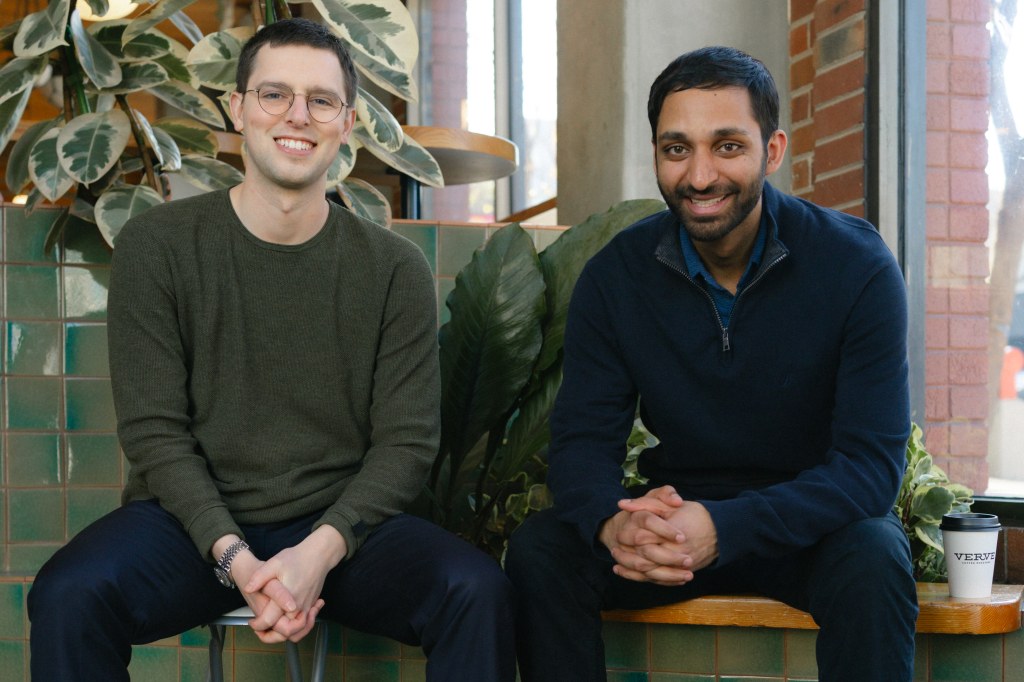
- Wiley Jones, Co-Founder & CEO, DOSSIn late 2022, Jones reconnected with Arnav Mishra - a fellow University of Illinois alumnus who had been building construction billing software as a founding engineer at Siteline - and the two launched DOSS in San Francisco. The company was incorporated as Odonata Inc. (Latin for dragonfly, chosen for its precision and adaptability). The rebranding to DOSS came later, courtesy of that clothing store on Jones's daily commute route.
The pitch was simple and deliberately confrontational: "Don't build your operations for software; Doss is software built for your operations." In an industry where every new ERP promised the same revolution and delivered the same consultant-driven 18-month slog, Jones was betting that the problem wasn't just the old software - it was the entire orientation. He wanted to flip it.
The Money Behind DOSS
Total: $73M • Investors include Madrona, Premji Invest, Intuit Ventures, Theory Ventures, General Catalyst, Contrary Capital, Greyhound Capital
The Pivot That Made Wall Street Take Notes
DOSS didn't start where it is now. The original product looked a lot like every other AI-native ERP trying to take down NetSuite - a full accounting and operations suite competing head-on with Rillet, Campfire, and the rest. Jones eventually concluded that was the wrong fight. Rather than compete with the AI accounting startups eating into the mid-market, he decided to partner with them.
The insight: AI-native ERPs are good at receivables and payables. Where they fall short is procurement, inventory, traceability, and supply chain. DOSS repositioned as the intelligence layer for the physical side of a business - the AI-powered inventory and operations cloud that plugs into existing accounting systems (both legacy ERPs and the new AI-native ones) rather than trying to replace them wholesale.
We would rather partner with them, and play a different game.
- Wiley Jones, on DOSS's relationship with AI-native ERP competitorsThe bet is rooted in a specific observation: "Businesses are 70% PDFs, typed tabular data, and table CRUD." Jones saw this firsthand across medical devices, security hardware, and consumer robotics. The back-office complexity doesn't live in the accounting ledger - it lives in the thousand small decisions that happen between a purchase order landing and a product reaching a shelf. DOSS is building the system that manages all of it.
When GPT-3 showed Jones that SQL could be generated from plain English, a larger possibility crystallized: what if you didn't need database schemas at all? What if an operations manager could say "track landed cost by SKU" and the software would just do it? That moment shaped DOSS's entire product philosophy - the idea that intent, expressed naturally, should translate directly into executable business logic.
DOSS's San Francisco headquarters has a Nicolas Cage theme. The company also has an official internal identity it calls the "Anti ERP ERP Club." Both are exactly as serious and unserious as they sound.
What Wiley Jones Actually Says
"You've taken critical business processes, moved them into an inscrutable black-box, then locked it behind a paywall."
"I think it's going to be a very intense fight inside of mid-market that ultimately will be determined by whoever rebuilds their architecture to be most legible and usable for agents."
"Operations professionals are massively under-served. There's a revolution coming."
"We're building a lot of the traceability for the supply chain, but through the lens of plugging into a finance and accounting partner."
The Pattern-Recognition CEO
Jones applies the Anna Karenina principle to enterprise software: "most businesses fail in unique ways but share a small number of root causes - fragmented order systems, disjointed inputs and outputs, and lack of integration." It's the kind of framing that comes from actually living inside operations for years, not from reading McKinsey reports about them.
His hiring philosophy reflects the same instinct. His favorite question in job interviews: "Tell me about something you genuinely love and care about." He's not fishing for the right answer. He's watching to see if the person lights up.
The DOSS operating principles - customer obsession, transparency, extreme ownership, relentless urgency, continuous quality improvement - read like every other startup's values deck until you see how they map to the product itself. Implementation in four to six months instead of the industry's twelve to eighteen isn't a marketing claim; it's the values deck running as software. Direct engineer involvement instead of consultant-driven deployment. Real-time database with flexible schema control instead of locked-down table structures.
Jones has also invented a new role at DOSS he calls "PMO" (Product Manager Operations) - a hands-on position that spans pre-sale and post-sale, sitting at the exact seam where the product meets the customer's chaos. It's the role he himself spent years accidentally doing before he decided to build the tools for it.
How You Get to DOSS
-
2017University of Illinois Urbana-Champaign - Graduates with a degree in Mechanical Engineering. Heads straight to a seven-person startup in China.
-
2017Sprite Robotics, China - Hardware Engineer building a robot cat toy. Quickly discovers that most of his job is actually operations, not engineering. Spends significant time on factory floors in China and Taiwan watching manufacturers fight legacy software.
-
2019 - 2021Verkada - Hardware Program Engineer. Helps deliver security cameras and access control products at one of Sequoia's top hardware companies. More spreadsheets. More cross-continent coordination. More of the same friction.
-
2021 - 2022Athelas - Joins as founding electrical engineer. Pivots to Head of Product. Works across blood diagnostics, IoT remote patient monitoring, and revenue cycle management software - seeing the same ERP dysfunction in a completely different industry.
-
Late 2022DOSS Founded - Co-founds DOSS with Arnav Mishra in San Francisco. Originally incorporated as Odonata Inc. The company sets out to build ERP software that adapts to businesses instead of the other way around.
-
2025Series A - $18M - DOSS closes its Series A. The company begins sharpening its focus on AI-powered inventory management as a layer on top of existing ERPs.
-
March 2026Series B - $55M - Co-led by Madrona and Premji Invest, with participation from Intuit Ventures, Theory Ventures, General Catalyst, Contrary Capital, and Greyhound Capital. Total funding hits $73M. Team reaches 120 people.