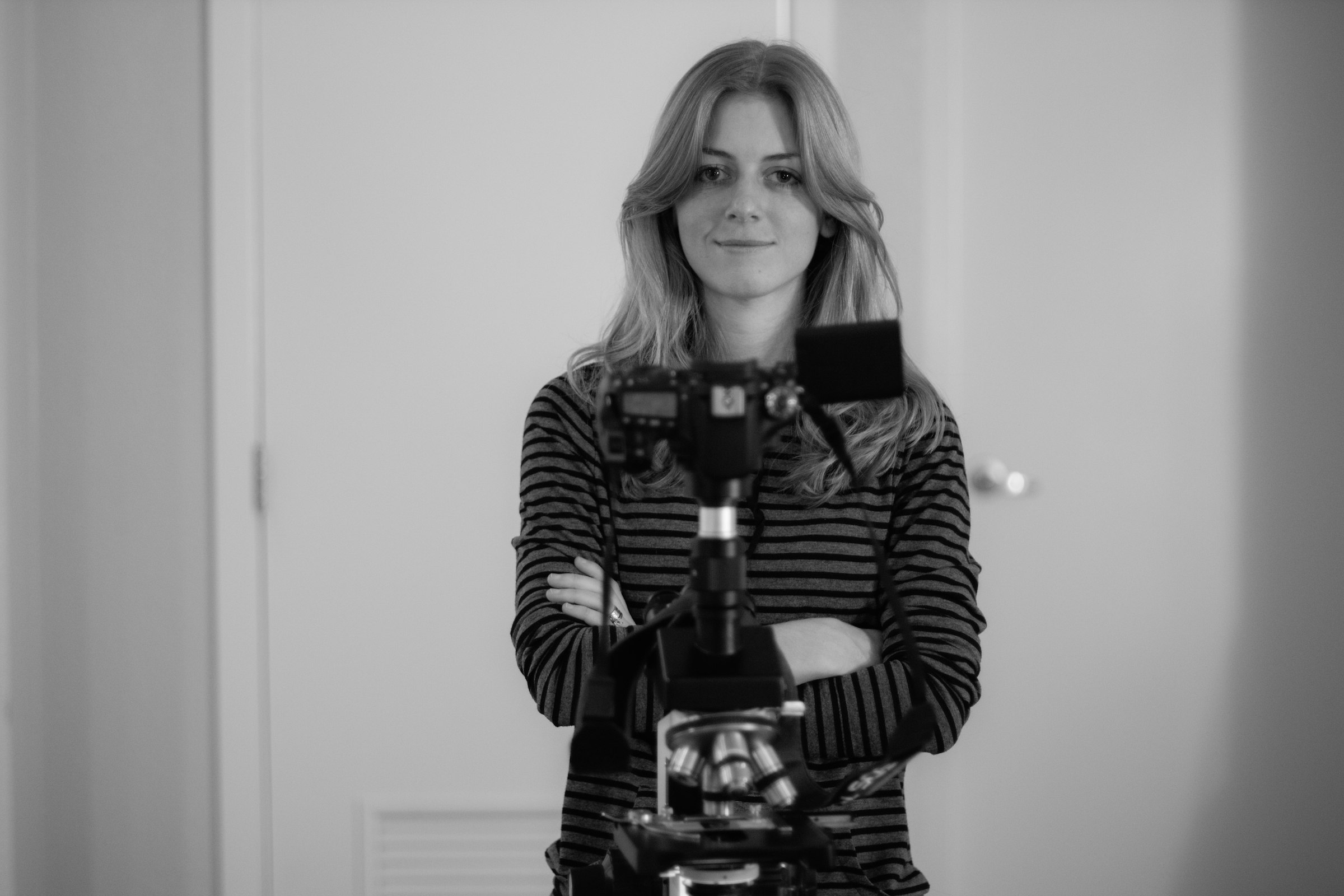
The engineer who bookkeeps
Pilot's first few customers didn't know their books were being done by an MIT computer scientist who had already sold one company to Oracle and another to Dropbox. They just knew the numbers were right, the reports arrived on time, and someone actually answered the phone. That was the plan.
Jessica McKellar co-founded Pilot in 2017 with Waseem Daher and Jeff Arnold - the same two people she'd built Zulip with, the same two people she'd sat next to at Dropbox after Zulip was acquired. When all three left Dropbox around the same time, a third company wasn't a question of whether. It was a question of what.
The answer they landed on was mundane by design. Startups were spending enormous energy on bookkeeping, accounting, and tax compliance - work that needed to be done precisely but wasn't building anything. The co-founders decided to do it themselves first, manually, before writing a line of automation code. McKellar spent weeks reconciling real transactions for real clients. "You have to understand the work before you can automate it." That deliberate detour became Pilot's deepest competitive moat.
The best time to build the financial foundation for your startup is before you desperately need it.- Jessica McKellar
Today Pilot is the largest accounting firm for startups in the US. More than 3,000 businesses trust it with their books, and the company's 100+ human accountants work alongside AI software that Pilot has spent years training on real financial data. In March 2021, the company raised a $100 million Series C, crossed a $1.2 billion valuation, and became a unicorn. Total funding now exceeds $222 million, with backing from Sequoia Capital, Index Ventures, and Bezos Expeditions.
In July 2024, McKellar moved from CTO to CEO. The shift was less about title than timing: Pilot had grown to a scale where the two roles needed to separate. She'd spent seven years embedded in the technology. Running the company is, in a sense, the same work at a different altitude.
Three startups. Same two co-founders. Every time.
There is a specific kind of trust that takes years and shared adversity to build, and Jessica McKellar, Waseem Daher, and Jeff Arnold have it. Their first company, Ksplice, came out of MIT research into rebootless Linux kernel updates - a problem that sounds niche until you remember that every second a server is down is money bleeding out. Oracle acquired Ksplice in 2011. McKellar was in her mid-twenties.
The next company, Zulip, was a group messaging platform built before Slack became Slack. Dropbox acquired Zulip in 2014. McKellar became Director of Engineering there, and then Chief of Staff to the VP of Engineering. She watched one of the most successful consumer tech companies in the world operate at scale. She took notes.
Built technology so unusual it caught Oracle's attention and became a product line that still runs inside Oracle Linux today. McKellar's experience there was so specific - and so surprising - that she shared the anecdotes with HBO's Silicon Valley writers.
The group messaging app Dropbox bought because the engineering team was that good. At Dropbox post-acquisition, McKellar got a close view of what separates a great team from a great company. She brought both lessons to Pilot.
Served as senior technical advisor for 16 episodes of the legendary HBO comedy, shaping plotlines with real startup stories. The writers needed someone who'd actually lived it. McKellar had, twice over.
Decided to do the work manually before automating it. Reconciled real transactions for real clients. Then built the software. That decision - do it first, automate second - remains the company's founding logic.
From MIT to unicorn
The community builder who changed who gets to code
In 2012, Boston's Python user group had roughly 700 members and almost no women. McKellar started showing up. Then she started organizing. She launched the Boston Python Workshop - an introductory programming pipeline aimed explicitly at getting women through the door and keeping them there. Within two years, she had grown the group to over 4,000 members and sustained female participation at 15% for more than two years straight. It became the world's largest Python user group. People from cities across the US and Europe flew in to understand how she'd done it.
Boston Python: Before and After
Source: Python Software Foundation / opensource.com
The Python Software Foundation elected her to its board of directors in 2012 - a position she held through 2014. She served as Vice-Chair of the PSF's Outreach and Education Committee and as Diversity Outreach Chair for PyCon North America. In 2013, O'Reilly Media gave her its Open Source Award. In 2015, the PSF gave her the Frank Willison Award. In 2016, Red Hat gave her its Women in Open Source Community Award. Three awards in three years. Not because she sought recognition - because the work was visible and it worked.
Python, inside the walls of San Quentin
Through The Last Mile, a job training and re-entry program that operates inside California state prisons, McKellar teaches Python programming at San Quentin. The students aren't preparing for a hackathon. They're building real skills for real employment on the other side. McKellar doesn't just teach the class - she advocates publicly for the tech industry to hire graduates from programs like this one.
Her argument is direct: the criminal justice system creates a category of people who are structurally locked out of tech employment, and technology companies have the capacity to unlock that door. She has the platform and she uses it. The same instinct that turned a 700-person Python meetup into a 4,000-person community is at work here - find the gap, fill it, bring others along.
I think it's who you surround yourself with that matters. I believe I have a tremendous amount of freedom and flexibility and respect.- Jessica McKellar
The AI accountant that doesn't call in sick
Pilot launched its AI Accountant in 2024 - a fully autonomous virtual worker for bookkeeping and financial reporting. It isn't a chatbot layered on top of accounting software. It's a system trained on years of real financial data from real Pilot clients, supervised by Pilot's team of human accountants. The CPA shortage in the US is real and worsening. McKellar's bet is that AI can handle the volume while humans handle the judgment.
$222M+ raised across four rounds
Investors include Sequoia Capital, Index Ventures, and Bezos Expeditions. Unicorn status: 2021.
At the center of Pilot's product is a core insight McKellar has articulated since the early days: founders are not accountants, and they shouldn't have to pretend to be. Every hour a founder spends on QuickBooks is an hour not spent on product, customers, or hiring. Pilot's job is to make that trade disappear. The AI Accountant is the latest chapter in that story - automation not for its own sake, but because the people who need this work done deserve to not think about it.
The record so far
O'Reilly Open Source Award
2013 - For exceptional contributions to the Python open source ecosystem and community.
Frank Willison Award
2015 - Python Software Foundation's highest honor, for contributions to the Python community.
Women in Open Source
2016 Red Hat Community Award - Recognized for expanding participation and building pipelines into tech.
HBO Silicon Valley Advisor
Senior technical advisor for 16 episodes. Startup anecdotes from Ksplice and Dropbox shaped the show.
Pilot Unicorn, 2021
Co-built Pilot to a $1.2B valuation - the largest startup accounting firm in the US.
PyCon 2019 Keynote
Keynote speaker in Cleveland, plus appearances at EuroPython, North Bay Python, SXSW, and SCALE.
Dig deeper
- Pilot.com - Official Site
- Wikipedia - Jessica McKellar
- First Round Review - 3-Time Founding Team Podcast
- Opensource.com - Prison to Python
- Faces of Open Source - Portrait & Profile
- The Techies Project - Jessica McKellar Interview
- Women in Tech Show - Leading with Values
- Stanford eCorner - Serial Co-founders
- GitHub - jesstess (34+ repositories)
- Twitter/X - @jessicamckellar
- LinkedIn - Jessica McKellar