She studied Aristotle, sang on stages, learned to code at a bootcamp, kept Fox News online as a site reliability engineer, and now helps developers understand the infrastructure that runs the AI era.
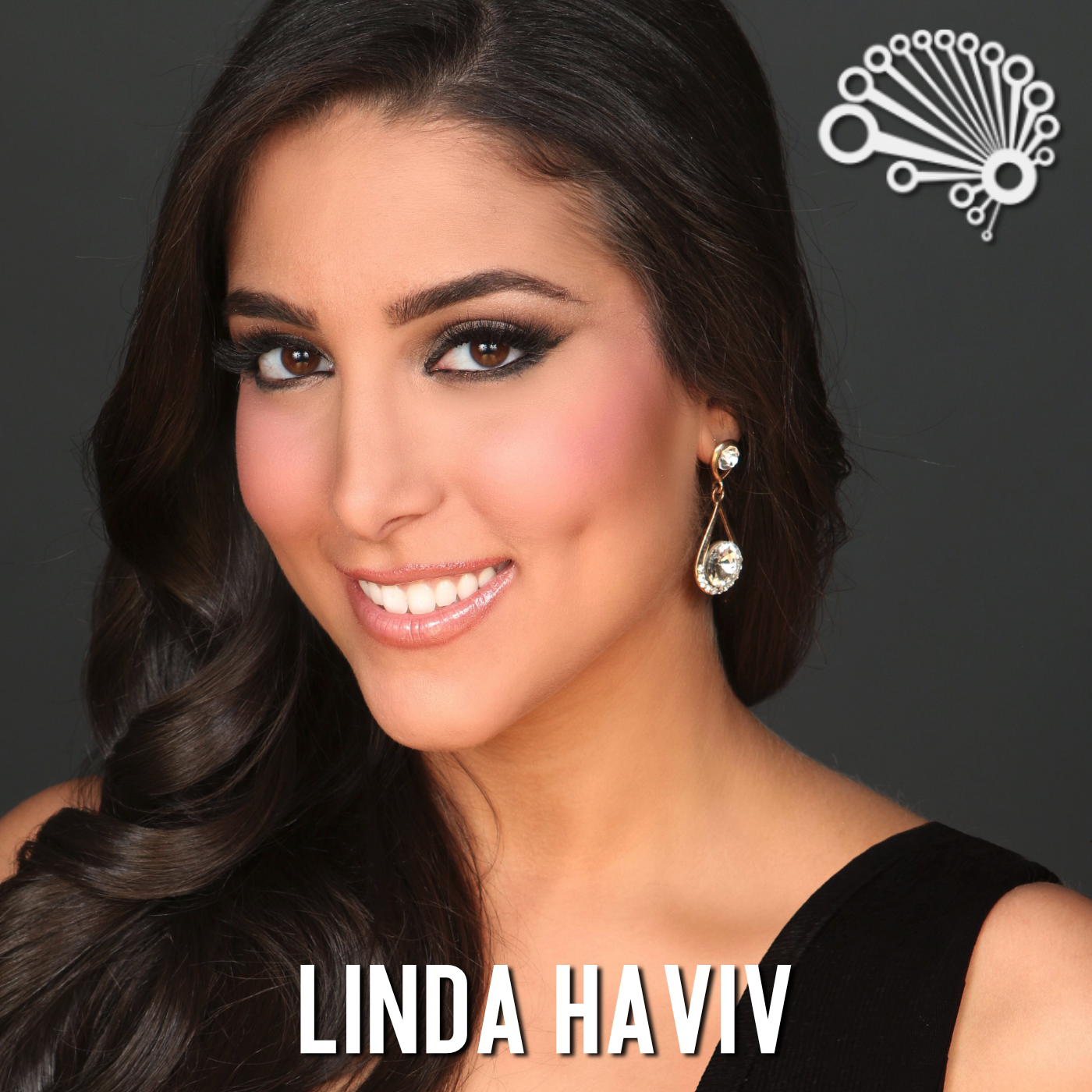
Linda Haviv arrived at Anyscale the way most interesting people arrive anywhere - sideways. Her path ran through Aristotle, open mic nights, Fox News control rooms, and AWS conference stages before landing her at the company whose open-source framework coordinates the training of ChatGPT. She is not a typical AI infrastructure person. That is precisely the point.
At Anyscale, Haviv serves as Staff Developer Advocate for Ray - the open-source distributed computing framework that has become the spine of serious AI infrastructure. Ray allows Python developers to scale machine learning workloads across clusters of thousands of machines without becoming distributed systems experts. OpenAI uses it. Every serious AI company eventually runs into it. Haviv's job is to make sure developers understand why it matters and how to use it before that moment arrives.
"AI grows more complex by the hour & traditional infra wasn't built to handle modern AI. That's where Ray comes in - an open-source, Python-native framework."
Linda Haviv, on joining AnyscaleWhat sets Haviv apart from most advocates is the range of experience behind the talking. She was a production assistant at Fox News before she knew what a loop was. She learned JavaScript at The Flatiron School's intensive bootcamp in 2015, then spent nearly seven years inside one of America's largest media organizations - first writing front-end code for foxnews.com and foxbusiness.com, then moving into site reliability engineering. She knows what it feels like for systems to break at scale, because she was the one who got paged at 2am.
Before Ray and Anyscale, there was Amazon Web Services, where Haviv spent two years as a Developer Advocate building educational content around cloud architecture, AI, and DevOps. She became a familiar face at AWS re:Invent and across the developer community. When Anyscale came calling, the fit was obvious: an infrastructure-obsessed advocate with deep operational experience and a genuine talent for making hard things click for developers at every level.
Her philosophy degree from Baruch College's Macaulay Honors program - where she graduated summa cum laude and salutatorian in 2013 with a 4.0 major GPA - is not decorative. She credits structured argumentation and logical analysis as core skills for debugging complex distributed systems. When you have spent years thinking carefully about what follows from what, reasoning about distributed state becomes less alien than it might seem.
Nine years inside one of America's largest media empires. Started as a production assistant, became a JavaScript developer, ended as a site reliability engineer. She kept the lights on when millions of people were watching.
Moved from operator to educator. Built content for cloud-native AI, spoke at re:Invent, and discovered a talent for translating infrastructure complexity into something developers could actually use.
The current chapter. Advocating for Ray - the Python-native distributed computing framework that has quietly become the substrate of serious AI infrastructure. Because traditional infra wasn't built for what AI needs.
Makes AI and ML concepts accessible through STEM-inspired crystal jewelry. Because not every lesson happens at a conference. Sometimes it arrives in the mail, wrapped in tissue paper.
Most developers don't think about distributed computing until something breaks. Haviv's job is to make sure they think about it before that - and that when they do, Ray is the framework they reach for.
Ray is an open-source Python-native distributed computing framework originally developed at UC Berkeley. Anyscale, founded by Berkeley professors Ion Stoica, Robert Nishihara, and Philipp Moritz, builds a fully managed platform on top of it. The framework handles the unglamorous work of splitting Python code across hundreds or thousands of machines, managing fault tolerance, coordinating training runs, and serving models at scale.
OpenAI uses Ray to coordinate ChatGPT's training. That single fact does a lot of the heavy lifting in any conversation about why this matters. But Haviv's pitch goes further: the complexity of AI workloads is growing faster than teams can hire specialized distributed systems engineers. Ray closes that gap. It lets a Python developer work at cluster scale without a PhD in distributed systems.
As Staff Developer Advocate, Haviv shapes the ecosystem of documentation, tutorials, talks, and community resources that help developers navigate that gap. She brings something most advocates don't: she's been the person on-call when systems fail. She doesn't just explain theory. She explains the part where it goes wrong at 2am.
While building a career in AI infrastructure, Haviv founded CodingCrystals.com - a company that makes AI and ML concepts accessible through STEM-inspired crystal jewelry. It is the kind of idea that sounds strange until you think about what developer advocates actually do, which is make abstract concepts tangible.
CodingCrystals is a literal version of that. It takes the vocabulary of machine learning - tensors, gradients, neural networks - and gives it physical form. It is also a signal about how Haviv thinks about access: who gets to understand this technology, and what pathways exist for people who don't arrive through traditional channels.
The enterprise sits alongside her main work at Anyscale not as a contradiction but as a consistent expression of a single idea - that the tools and ideas of the AI era should be within reach of more people than they currently are.
STEM-inspired crystal jewelry making AI and ML concepts tangible. Where distributed computing meets wearable art.
Visit CodingCrystals"AI grows more complex by the hour & traditional infra wasn't built to handle modern AI. That's where Ray comes in - an open-source, Python-native framework."
Linda Haviv - on joining Anyscale"Nonlinear careers win in AI."
Linda Haviv - SuperDataScience Podcast, SDS 987"As an infra nerd at heart it's clear we are facing this challenge: AI grows more complex by the hour."
Linda Haviv - Twitter/XFrom philosophy to production: the skills that make a great engineer - structured thinking, careful argumentation, knowing what follows from what - don't belong to computer science alone.
Linda Haviv - Career ArcShe was a professional singer before she wrote a single line of code. The stage presence carries over.
Her first journalism was as Senior Staff Writer at The Ticker, Baruch's student newspaper. She has been explaining things clearly in public for a long time.
She kept Fox News online as an SRE. The next time someone questions whether bootcamp graduates can do "real" engineering work, that's the answer.
The framework she advocates for - Ray - is used by OpenAI to coordinate ChatGPT's training runs. That is not a small claim.
She sells STEM-inspired crystal jewelry at CodingCrystals.com. The abstract and the physical, in the same cart.
Her philosophy degree included formal logic, argumentation theory, and epistemology. All useful for debugging distributed systems, it turns out.
She has appeared on SuperDataScience, Packet Pushers, Dev Interrupted, AWS Developers Podcast, Coffee & Open Source, and more. She covers a lot of ground.
SDS 987: "AI Infrastructure, Ray, and Why Nonlinear Careers Win with Linda Haviv" - one of her most comprehensive career conversations.
Listen →LIU014: "Linda Haviv: From Philosophy Major to AI Engineer" - traces the full arc from Baruch to Anyscale.
Listen →A conversation about open source, AI infrastructure, and the communities being built around distributed computing.
Listen →Two-part interview with Dave Isbitski during her time as AWS Developer Advocate - covers cloud AI and developer education.
Find on AWS →YouTube interview series tracking the journey from coding bootcamp to cloud engineering - her story in full.
Watch on YouTube →Featured as AWS Developer Advocate at re:Invent 2023 via vBrownBag - one of cloud computing's biggest annual events.
vBrownBag →