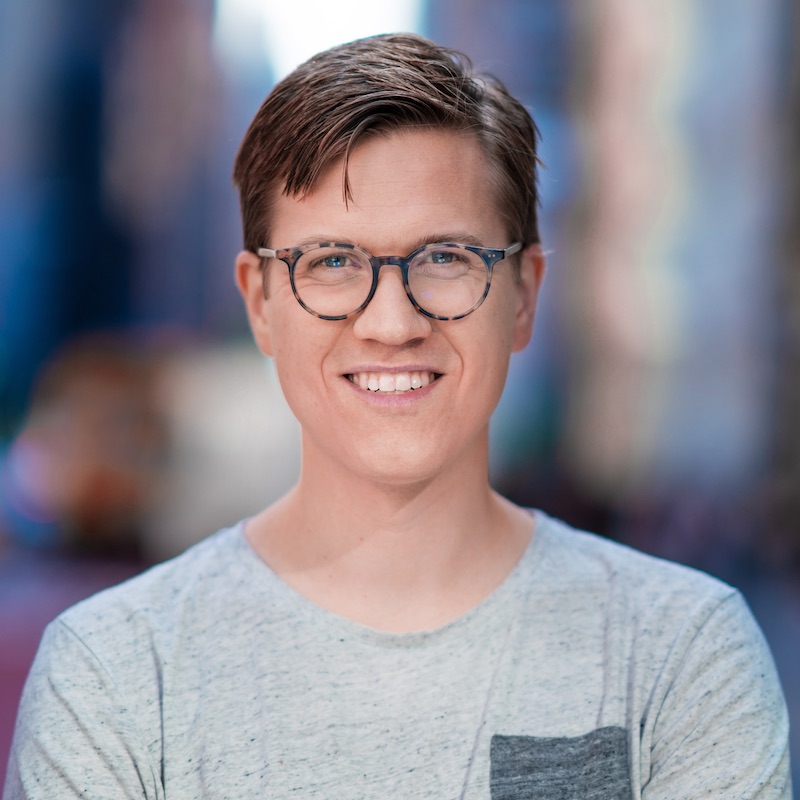
Building the plumbing for the AI era
Erik Bernhardsson spends his days thinking about a problem most people never notice: how quickly a computer can wake up. When an AI engineer wants to run a model, the cloud usually makes them wait - provisioning servers, pulling containers, wiring up storage. Bernhardsson decided that wait was the enemy. Modal Labs, the company he founded in 2021 and now leads as CEO, was built to make GPU compute feel instant, so a developer can go from an idea to a running model in seconds rather than hours.
That obsession paid off publicly in 2026, when Modal raised a $355 million Series C at a $4.65 billion valuation, led by General Catalyst and Redpoint Ventures. It roughly quadrupled the company's worth from its Series B a few months earlier. Asked what changed, Bernhardsson pointed to the surge in AI-assisted coding: "The last six months have been driving everything." But the technology underneath had been years in the making.
To build Modal, his team went further than most founders would consider reasonable. "Current infrastructure isn't built for AI applications," he has said. "That meant going deeper than most people thought was reasonable: building our own runtime, scheduler, filesystem, and orchestration layer from scratch." The result is a platform where the goal - sub-second container starts - is not a marketing line but the core engineering bet.
From Solna to Spotify
Bernhardsson grew up in Solna, Sweden, and studied physics at KTH in Stockholm. He was a serious competitive programmer, winning a gold medal at the 2003 International Olympiad in Informatics and reaching the ACM-ICPC World Finals twice. A six-month internship at Google in Zurich came during his university years. But the job that shaped him arrived in 2008, when he joined a young Spotify.
In the early days his role was, in his own words, to do almost anything with data. He managed the analytics team in Stockholm, then moved to New York in 2011 to build and lead the machine learning group. There he wrote the first version of Spotify's music recommendation system - the machinery behind Related Artists, Radio, and the groundwork that became Discover Weekly. Millions of listeners felt the results without ever knowing his name.
Giving the tools away
Two projects from that period outlived his tenure. Luigi, a workflow engine for stitching together data pipelines, gathered more than 10,000 GitHub stars and 200-plus contributors. Annoy, a compact library for finding approximate nearest neighbors in high-dimensional space, became a quiet staple of search and recommendation systems across the industry. Both were open source and free. Long before Modal had a product to sell, Bernhardsson had earned the trust of the engineers who would one day become his users.
When he left Spotify in 2015, he planned to start a company right away. The CEO of Better.com talked him out of rushing. Instead he spent six years running Better's engineering organization - a team that grew to around 300 people - learning how to raise money, work with a board, and operate a business at scale. He has described it as the preparation he didn't know he needed. In January 2021 he finally started Modal.
The engineer who writes
Bernhardsson is unusual among founders for how openly he thinks in public. His personal blog at erikbern.com is required reading in engineering circles, covering everything from data-team org design to the economics of software to the odd data-driven experiment. He writes the way he builds: plainly, from first principles, and without much patience for received wisdom. In 2022 he was named to the Redgate 100 list of the most influential people in the database community, as much for his ideas as his code.
Away from the terminal he is a self-described espresso devotee and Indian-food enthusiast, vegetarian since 2011, and a piano player of more than a decade. He speaks Swedish, English, and German, has visited 47 countries, and once hitchhiked from Berlin to Barcelona. He lives in the financial district of New York with his wife, two daughters, and two cats - a short walk from the office where Modal is trying to make the cloud disappear.