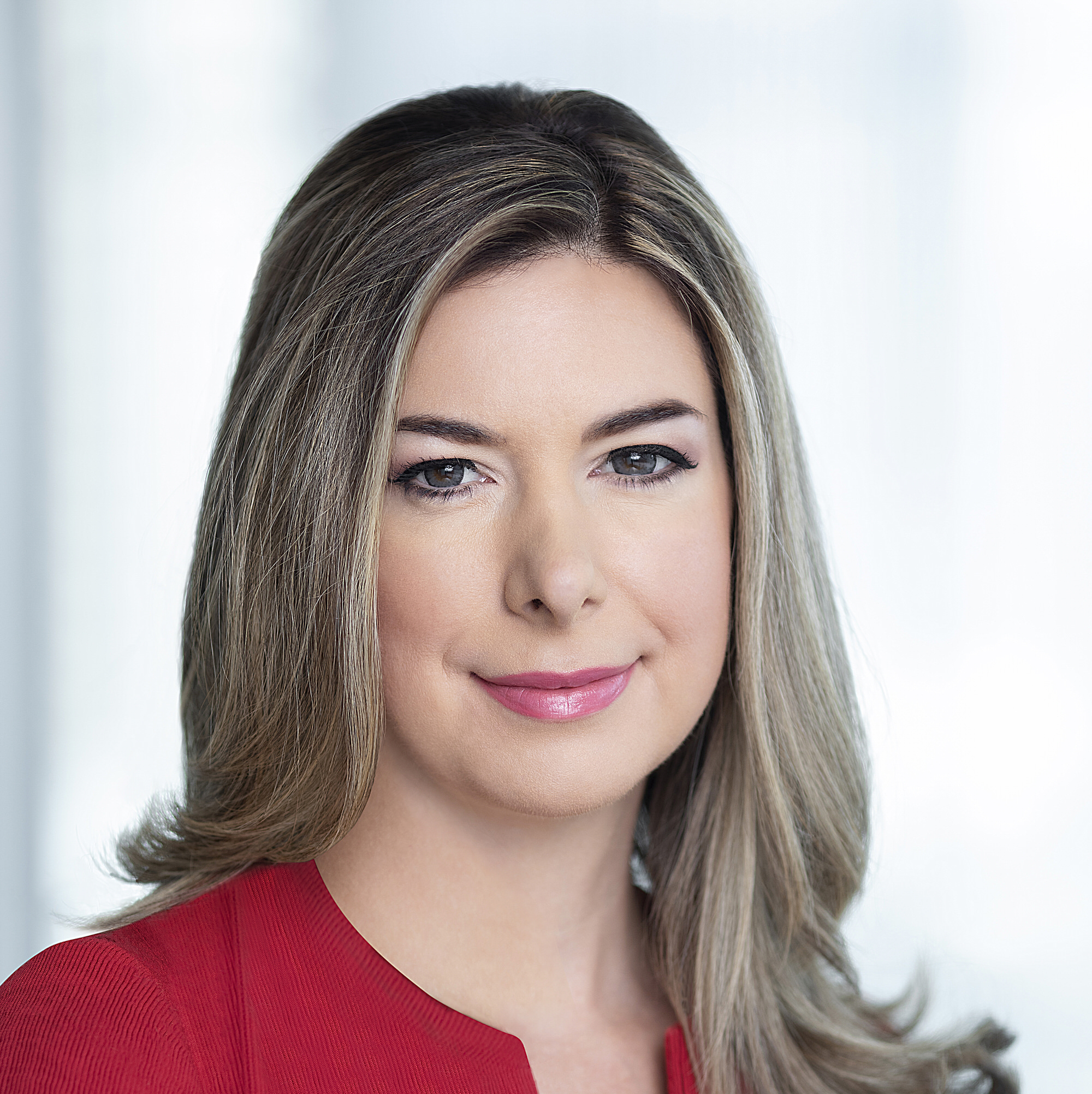
The woman who made Wall Street listenable
Bloomberg Executive Editor. Odd Lots co-host. Former FT Alphaville deputy editor. The journalist who covered Lehman's collapse, the eurozone crisis, and once tried to invest in a physical barrel of crude oil - all in service of making global finance make sense to real humans.
Tracy Alloway occupies a rare intersection in financial media: she is equally trusted by hedge fund managers and people who have never opened a brokerage account. As Executive Editor for Bloomberg Markets and co-host of the Odd Lots podcast alongside Joe Weisenthal, she has spent years building an audience that spans Wall Street trading desks and suburban commutes - not by dumbing things down, but by asking the exact questions that make complex markets suddenly legible.
Her career began at the Financial Times in 2008 - timing that would test any journalist's nerves. She arrived just as Lehman Brothers was assembling its final chapter. Rather than retreat into jargon, she leaned in. At FT Alphaville, the paper's celebrated finance blog, she rose to Deputy Editor and earned a reputation for forensic curiosity: digging into the plumbing of financial markets at a level most reporters skip entirely. The eurozone debt crisis, sovereign debt mechanics, repo markets, the arcane architecture of how money actually moves - this was her beat, and she covered it with the thoroughness of an auditor and the wit of a columnist.
In 2015 she made the move to Bloomberg, where she has since built something that transcends the usual categories of financial journalism. Odd Lots - which she launched that same year - became a weekly argument that finance is genuinely interesting if you ask the right questions. Ten years on, it remains one of the most referenced shows on Wall Street, with guests who range from legendary investors to specialists in obscure commodity markets you had no idea existed until you listened.
Her Twitter bio tells you something useful: "I like forensic accounting, financial crisis hindsight, and kittens." That compression of the serious and the absurd is also her professional signature. She will spend 45 minutes drilling into the mechanics of collateral transformation and follow it with a question about mayonnaise - and both will somehow illuminate the same point about inflation dynamics.
I like forensic accounting, financial crisis hindsight, and kittens.
- Tracy Alloway, Twitter bioWhen Alloway and Weisenthal launched Odd Lots in 2015, the finance podcast landscape was still largely a graveyard of stiff interviews and recapped headlines. They built something different: a show with genuine intellectual curiosity at its center, where each episode chases a specific mechanism - how does a particular market actually work, who are the participants nobody talks about, what is the thing everyone assumes they understand but doesn't.
The name itself is instructive. "Odd lots" is a stock market term for trades below the standard 100-share block - the small, irregular, overlooked transactions. The show deliberately goes looking for those overlooked corners: natural gas storage, the mechanics of airline fuel hedging, what repo markets actually do, why certain commodity futures behave the way they do. The format trusts the audience to follow, and the audience returns the favor.
The result: a Webby Award nomination for best business podcast in 2022, an iHeartPodcast nomination in 2023, and a weekly listenership that includes managing directors at major banks who reference episodes in morning notes. That is not a typical trajectory for a finance audio show. It is the direct product of Alloway's editorial instinct - her insistence that the interesting story is usually one layer deeper than the obvious one.
When "contango" - a futures market quirk where near-term oil prices fall below longer-dated ones - made it theoretically profitable to buy and store physical crude, Alloway actually tried to do it. She investigated purchasing a literal barrel of oil as a journalism experiment. The plan collapsed for practical reasons: 100+ pounds of crude requires solid insurance and excellent ventilation, neither of which her 400-square-foot New York apartment provided. Rolling a barrel past Bloomberg security also presented complications. She settled for a bottle of oil worth 24 cents - and pocketed approximately seven cents when the trade worked. The story ran in Fortune. The principle had been proven. The apartment survived.
Inflation is an abstract concept until it sits on your supermarket shelf. Alloway investigated mayonnaise prices as a case study in how commodity costs flow through supply chains and into consumer prices. The exercise - deliberately mundane, deliberately specific - is signature Alloway: use the concrete and the daily to explain the systemic. Soybean oil to jar to shelf. Follow the cost.
Before landing in New York, Alloway reported from Abu Dhabi (interviewing Mubadala's CEO, Adnoc's Sultan Al-Jaber, and a roster of oil ministers) and ran Bloomberg's Asia Pacific news desk from Hong Kong. That geographic range - British education, Middle East finance, Asian markets, American broadcasting - gives her a perspective on global capital flows that few journalists working today can match. She has watched the same money from three different continents.
I like financial crisis hindsight, spurious correlation and puppies.
- Tracy Alloway, Bluesky bioWhat distinguishes Tracy Alloway from the broader universe of financial journalists is not the rolodex - though two decades of Bloomberg, FT, Abu Dhabi, and Hong Kong will build one - it is the editorial philosophy. She approaches every financial mechanism as if it is worth understanding from first principles, regardless of how many times it has been covered before. This is rarer than it sounds. Most market journalism defaults to what moved, by how much, and the nearest available explanation. Alloway goes further: why does this mechanism exist, who built it, what problem was it solving, and what happens when conditions change.
The forensic accounting interest declared in her Twitter bio is not a quirk - it is the method. Accounting tells you what a business actually does, as opposed to what it says it does. Applied to financial markets, that same instinct means tracing the actual flows: where does collateral go, how does a repo trade work, what happens to a leveraged loan when rates move. The plumbing, not the billboard.
Her global career adds the other dimension. Having covered the same capital flows from Abu Dhabi, Hong Kong, and New York means she understands that every market story has a version that looks different from each of those cities. Oil priced in dollars looks different in the Gulf than on a Manhattan trading screen. Asian credit markets behave differently than their American equivalents. These are not abstractions for Alloway - she reported from all three.
What she has built with Odd Lots is essentially the long-form version of that method: find someone who understands one specific corner of finance better than almost anyone alive, sit them down, and ask the questions that surface the mechanism. No agenda beyond comprehension. No performance beyond curiosity. The audience for that turns out to be larger than most finance producers assumed.