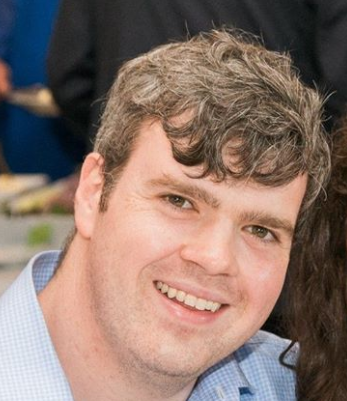
There is a specific type of reader who opens every email from Byrne Hobart before anything else in their inbox. That reader might run a $10 billion hedge fund, or they might be a sleep-deprived engineer at a startup who suspects the real leverage in tech is understanding capital allocation. Either way, they've concluded the same thing: Byrne Hobart sees things before most people even know what to look for.
He grew up in St. Louis, attended a Jesuit high school, earned a full-ride to Arizona State at 18, and then promptly dropped out. Not because school was too hard. Because he'd been investing since age 11, had been reading economic history since before high school, and New York City had more hedge funds than ASU had finance professors worth arguing with.
He moved to New York with no connections, no degree, and a writing habit that would eventually do more for his career than any credential could. He spent years doing online marketing - including building SEO strategy for Yahoo's news, sports, and finance verticals - all while writing relentlessly about markets. When a friend finally connected him with a hiring manager at SAC Capital in 2012, his Medium posts did the interview for him.
SAC Capital, for context, was the hedge fund at the top of the food chain - the one where information advantage was essentially the entire product. Byrne Hobart walked in without a bachelor's degree and walked out two and a half years later as an analyst who had covered Google, Amazon, WebMD, and the rest of the early consumer internet. He got laid off in a restructuring in 2014 and took it as an opportunity.
"America's supply of completely insane risk-takers, and the financiers who back them, is a key national advantage."
- Byrne Hobart
He bounced through 7Park Data, M Science, and a stint at 21.co under Balaji Srinivasan before landing on the thing that actually mattered: a newsletter. In 2018 he started writing on Medium. Substack found him. In February 2020 - weeks before most Americans had formed opinions about a virus - Hobart activated a paywall on The Diff. By June, newsletter revenue had exceeded everything else he earned. The timing was not entirely coincidental. On January 27, 2020, he had tweeted that COVID-19 had likely already reached New York City. He was weeks early. He usually is.
The Diff is not a hot-takes newsletter. It does not trade in sentiment or recency bias. What Hobart tracks are inflection points - the moments when companies, markets, or technologies cross a threshold that makes the next five years categorically different from the last five. His readers include not just hedge fund managers and VCs and tech founders, but 1.5% of the Forbes 400. The newsletter has grown to over 50,000 subscribers. He writes roughly 500,000 words per year - about six full-length novels' worth - most of them dense with frameworks, data, and long-arc historical thinking.
In February 2023, he identified SVB's massive unrealized bond losses through mark-to-market analysis weeks before the bank announced a capital raise that triggered the run. He shorted SIVB. He got out early. The bank failed in March. Analysts who followed traditional bank models missed it. Hobart didn't - because he had done the spreadsheet work that most people assumed someone else was doing.
In 2024, he published Boom: Bubbles and the End of Stagnation with Stripe Press alongside Tobias Huber. The thesis is counterintuitive even by Hobart standards: financial bubbles are not primarily destructive events. They are, historically, the primary engine of transformative technological progress. The Manhattan Project, Apollo, fracking, Bitcoin - all share the same pattern: small groups, unified vision, absurd funding, weak oversight. The book is an argument that we are not over-bubbled. We may be under-bubbled.
He also co-founded Anomaly, a frontier tech investment firm, with Huber. The Diff has taken on a researcher (Nikhil Davar, hired in August 2024). Hobart's stated vision for The Diff is something like a merchant bank: a platform that connects ideas to capital at the edge of what's technically possible and financially plausible. He co-hosts The Riff podcast with Erik Torenberg on the Turpentine network. He plans to homeschool his children. He thinks age-segregated schooling is a structural mistake.
What makes Byrne Hobart worth reading is not that he's always right. It's that his models are load-bearing. When he builds a thesis, it rests on empirical evidence, historical precedent, and a specific structural claim that can be falsified. He doesn't overstate. He lets readers decide. But the readers who have decided to pay attention have found, repeatedly, that he was first.