BREAKING: Emily Oster named TIME's 100 Most Influential People ParentData surpasses hundreds of thousands of newsletter subscribers Four NYT Bestsellers and counting - Oster's next book "The Hormone Loop" drops June 2026 Brown University's Royce Family Professor turns pregnancy myths into data points Over one million books sold - the economist who made parenting less terrifying BREAKING: Emily Oster named TIME's 100 Most Influential People ParentData surpasses hundreds of thousands of newsletter subscribers Four NYT Bestsellers and counting - Oster's next book "The Hormone Loop" drops June 2026 Brown University's Royce Family Professor turns pregnancy myths into data points Over one million books sold - the economist who made parenting less terrifying
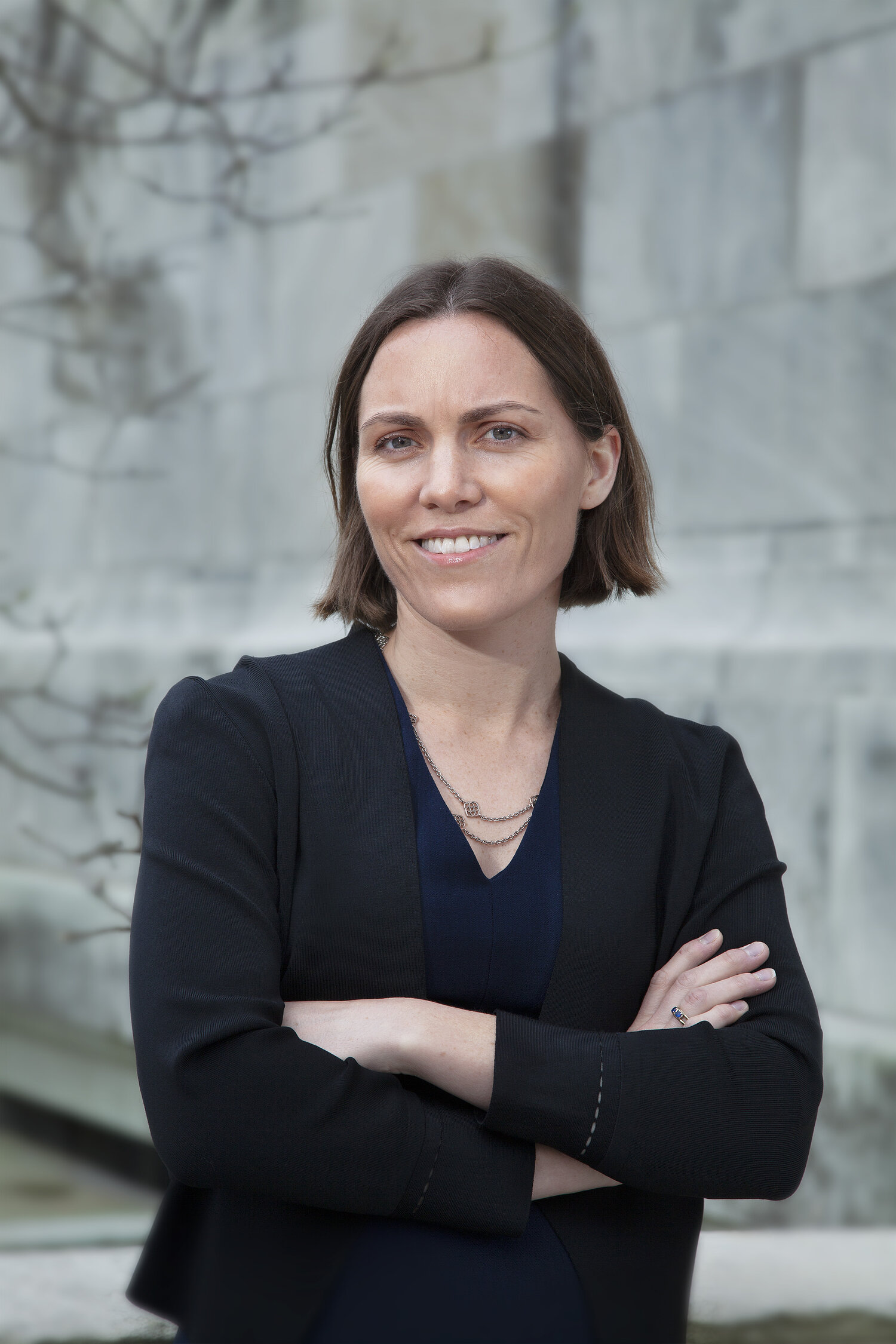
Emily Oster - Economist and Author
YesPress Profile

Emily
Oster

She didn't invent parenting. She just brought a spreadsheet to the delivery room - and everything changed.

Economist Author Brown University ParentData Founder
4
NYT Bestsellers
1M+
Books Sold
TIME
100 Most Influential

The Economist Who Made Data Safe for Diaper Bags

Emily Oster is what happens when a Harvard-trained economist becomes a parent and refuses to settle for "that's just how it's done."

Most economists study markets, trade flows, and GDP. Oster studied whether you can have a glass of wine during pregnancy (the data says: probably yes, sometimes). This is either a radical departure from her field or its most natural extension - depending on how you feel about applied welfare economics.

She is, in the least reductive terms possible, a Royce Family Professor of Teaching Excellence at Brown University, where she teaches and researches health economics and development economics. She is also the founder and CEO of ParentData, a newsletter-and-platform empire with hundreds of thousands of subscribers. And she is the author of four consecutive New York Times bestsellers - books that have collectively sold more than one million copies and been translated internationally.

The throughline in all of it: Oster gives people the tools to make their own decisions, rather than telling them what those decisions should be. She presents the research, explains the tradeoffs, acknowledges the uncertainty, and then steps back. This is unusual in a parenting space that tends toward either "science says X, full stop" or "trust your gut" mysticism. Oster occupies the productive middle ground - where data meets nuance and parents get to be adults.

The Child Who Was a Research Subject

At age two, Oster's economist parents placed a tape recorder in her crib to study her language development. The discovery: she spoke more complex sentences when alone than when adults were present. She was featured in the 1989 academic papers "Narratives from the Crib."

It is perhaps the most fitting origin story for a scientist who would spend her career listening carefully to data - and noticing what gets said when no one is performing for an audience.

Born February 14, 1980, in New Haven, Connecticut - the daughter of not one but two Yale economics professors - Oster grew up in a household where opportunity cost was not just a concept but a domestic organizing principle. Her mother arranged grocery delivery to milk crates specifically to minimize the time cost of shopping. Her father taught her regression analysis at age ten. She found it fun.

She attended Choate Rosemary Hall, then Harvard for both her undergraduate degree and her Ph.D. Her doctoral dissertation, completed in 2006 under Michael Kremer, was titled "The Economics of Infectious Disease." She joined the University of Chicago faculty immediately after, eventually landing at Brown in 2015, where she has been tenured and promoted to full professor. In 2019, she received the Royce Family professorship specifically for teaching excellence - a signal that her ability to translate complex ideas for real people is not accidental.

The four books came in waves: Expecting Better in 2013, Cribsheet in 2019, The Family Firm in 2021, and The Unexpected - co-authored with maternal-fetal medicine specialist Dr. Nathan Fox - in 2024. Each one applied economic decision-making frameworks to a domain most economists would consider beneath them. Each one became a bestseller. A fifth, The Hormone Loop, is due from HarperCollins in June 2026.
"Data, a scary word, can be a humanizing force."
- Steven Pinker, writing in TIME's 100 Most Influential People (2022)

The Oster Effect, Quantified

4
NYT Bestselling Books
1M+
Books Sold
100
TIME Most Influential (2022)
5
Books total (incl. upcoming)
2006
Ph.D. from Harvard
2
Yale economist parents

Four Bestsellers. One Mission.

2013
Expecting Better

The book that started it all. Oster examined every major piece of pregnancy advice and asked: what does the data actually say? The answer upended a lot of received wisdom - and sold a million copies.

NYT Bestseller
2019
Cribsheet

Breastfeeding, sleep training, screen time - all the battles parents fight without knowing why. Oster applied her evidence-based framework to the first three years and found that most "rules" have significant asterisks.

NYT Bestseller
2021
The Family Firm

School-age decisions are a different beast - longer time horizons, more variables, higher stakes. Oster borrowed from business strategy to help parents build frameworks for big choices rather than just reacting to them.

NYT Bestseller
2024
The Unexpected

Co-authored with Dr. Nathan Fox, this tackles the pregnancies that don't go to plan - miscarriage, preterm birth, preeclampsia, postpartum depression. About half of all pregnancies involve some complication. This book existed to serve all of them.

NYT Bestseller
June 2026
The Hormone Loop

The next frontier: hormones. HarperCollins. Coming June 2026. Details still emerging, but the Oster playbook is reliable at this point - expect data where there was only anecdote.

Forthcoming

ParentData: Where Evidence Lives

Books have chapters. Newsletters have inboxes. Oster built both.

ParentData is the media company Oster founded to turn her research approach into a subscription platform. Hundreds of thousands of readers get weekly newsletters organized around exactly where they are in the parenting journey - trying to conceive, pregnant, newborn, toddler, school-age.

The podcast brings in expert guests to discuss specific questions: labor induction timing, food allergy introduction, parenting through divorce. The Wednesday Instagram Q&As have become a reliable ritual for Oster's community - parents send questions, she answers them with data.

In early 2025, ParentData launched a significantly expanded PregnantData edition with new topics including prenatal appointments, anatomy scans, pregnancy nausea, and labor timing. The platform keeps evolving, and Oster keeps showing up.

PregnantData

Weekly evidence-based guidance through each stage of pregnancy. Expanded 2025 edition launched with new research and topics.

BabyData + ToddlerData

Targeted newsletters for the 0-3 stage - feeding, sleep, development - with the same evidence-first approach.

ParentData Podcast

Expert guest conversations on specific parenting and pregnancy questions. Available on Apple Podcasts, Spotify, and more.

Wednesday Q&As

Oster's most popular recurring Instagram content - live responses to community questions, every week.

Who Is Emily Oster, Actually?

Oster is not a parenting guru. She will tell you this directly. She does not tell parents what to do. She does not position herself as having solved the mystery of raising children. What she does is give parents a framework for making decisions - the same framework economists use, adapted for the messy reality of family life where the variables include your own sleep deprivation and your mother-in-law's opinions.

Her self-described approach: "You could be a co-sleeping formula feeder. You don't have to be a 'kind' of parent." This is more radical than it sounds in a parenting culture organized around tribal affiliations (attachment parenting vs. Ferber, breastfeeding vs. formula, organic vs. conventional). Oster's implicit argument is that most of these debates are fake - that the data doesn't support the strong version of almost any of these positions, and that parents should stop feeling guilty about decisions that have minimal measurable impact on their children.

She is, according to people who know her and interviews she's given, genuinely not very guiltable. She doesn't wrestle with the mom guilt that defines so much of the parenting conversation. This is partly a personality trait and partly the inevitable result of having spent years reading the actual research - which reliably fails to support the doom-laden predictions made about ordinary parenting decisions.

📊

COVID-19 School Data Hub

During the pandemic, Oster created the COVID-19 School Data Hub, described by The New York Times as "one of the most comprehensive efforts yet to document how schools operated during the pandemic." She was tracking data when the data was most needed and least available.

Her academic work at Brown spans health economics and development economics - the same tools she uses in her books, applied to larger policy questions. She is affiliated with Brown's Policy Lab and the Center for Human Rights and Humanitarian Studies. She is a Research Associate at the National Bureau of Economic Research and an Associate Editor at the Quarterly Journal of Economics. None of this is ornamental. She is an active researcher who also writes books for a general audience, which is genuinely unusual.

She comes from a family that is, statistically speaking, absurdly accomplished. Both her parents - Sharon Oster and Ray Fair - are professors of economics at Yale. Her husband, Jesse Shapiro, is a professor of economics at Brown University. Their household is probably the densest concentration of regression analysis in Rhode Island.

The family origin story that gets cited most: at age two, her parents placed a tape recorder in her crib to study her language development. They discovered she used more complex sentences when talking to herself than when speaking to adults. She was included in "Narratives from the Crib," a 1989 collection of academic papers. It is possible she is the only person currently with over a million books sold who was also a research subject before she could read.

At ages ten and eleven, her father taught her regression programming, which she found genuinely entertaining. By young adulthood, she was spending hours studying historical records to understand why a local canal had been converted into a railroad. The pattern - find a question, find the data, interrogate it - has held for her entire career.

She ran her first marathon and qualified for Boston on that single attempt. This is not something most people do. The acceptance rate for Boston qualification requires running a marathon considerably faster than the median. She did it the first time she tried the distance. The same approach, essentially, that she applies to everything: set a goal defined by evidence, execute with rigor, don't make it more mystical than it needs to be.

She is described by those who work with her as warm - not the robotic data-cruncher the "evidence-based" brand might suggest. Her writing has always included personal anecdotes alongside the statistics. She makes fun of her own pregnancy experiences. She writes about the gap between what she knew intellectually and how she actually felt. The data and the human experience coexist in her work, which is most of why it reaches so many people who would normally be allergic to terms like "regression analysis."

"You could be a co-sleeping formula feeder. You don't have to be a 'kind' of parent."
- Emily Oster

From Crib Research Subject to TIME 100

1980
Born February 14 in New Haven, Connecticut. Parents: Sharon Oster and Ray Fair, both Yale economics professors. Featured at age two in "Narratives from the Crib" academic papers on language development.
1998-2006
Harvard University - B.A. in Economics (2002), then Ph.D. in Economics (2006). Doctoral thesis: "The Economics of Infectious Disease," supervised by Michael Kremer.
2006-2014
Faculty career at University of Chicago - first as Becker Fellow, then Assistant Professor of Economics, then Associate Professor at Booth School of Business.
2013
Published "Expecting Better" - debut book challenging conventional pregnancy wisdom with data. Became an instant NYT bestseller and established her as the voice for evidence-based parenting.
2015-2016
Joined Brown University as tenured Associate Professor of Economics, then promoted to Full Professor. Named Research Associate at National Bureau of Economic Research (NBER).
2019
"Cribsheet" published - second NYT bestseller on data-driven early parenting. Same year: named Royce Family Professor of Teaching Excellence at Brown.
2020-2021
Created the COVID-19 School Data Hub during the pandemic. The New York Times called it "one of the most comprehensive efforts to document how schools operated during the pandemic." Published "The Family Firm" (third NYT bestseller).
2022
Named to TIME's 100 Most Influential People. Launched ParentData newsletter and podcast - the platform now has hundreds of thousands of subscribers.
2024
Co-authored "The Unexpected" with Dr. Nathan Fox - addressing the complications that affect roughly half of all pregnancies. Fourth consecutive NYT bestseller.
2025-2026
ParentData launches expanded 2025 PregnantData edition. Keynote at ASU+GSV Summit in San Diego. Announces "The Hormone Loop" (HarperCollins, June 2026).

The Person Behind the Data

Matter-of-fact
Deadpan humor
Intellectually curious
Direct communicator
Genuinely warm
Comfortable with criticism
Evidence-obsessed
Not easily guilt-tripped
Deeply humanistic

The Oster Doctrine

"This is the lifestyle I prefer" and "this is what works for my family" are both okay reasons to make a choice.

- Emily Oster

You could be a co-sleeping formula feeder. You don't have to be a "kind" of parent.

- Emily Oster

I'm OK with people yelling at me.

- Emily Oster, on public debate around her work

Data, a scary word, can be a humanizing force.

- Steven Pinker, on Emily Oster's work (TIME 100, 2022)

The Making of an Evidence Machine

Choate Rosemary Hall
High School Diploma
1994 - 1998
Harvard University
B.A. in Economics
1998 - 2002
Harvard University
Ph.D. in Economics - "The Economics of Infectious Disease" (advisor: Michael Kremer)
2002 - 2006

Fun Facts, No Asterisks

01
She was a research subject at age two. Her parents recorded her in her crib and published the results. She was more articulate when alone than with adults. Some things don't change.
02
Both her parents AND her husband are economics professors. Her mom at Yale. Her dad at Yale. Her husband Jesse Shapiro at Brown. She is literally surrounded by economists at every dinner table.
03
She learned regression analysis from her father at age 10. She considered this entertainment. This explains a lot about her career trajectory.
04
She qualified for the Boston Marathon on her very first marathon attempt. Boston qualification is notoriously difficult and requires running significantly faster than average. First try.
05
Steven Pinker wrote her TIME 100 profile, describing her use of data as "a humanizing force." This is either the highest praise or the most economist-adjacent compliment imaginable.
06
Her Wednesday Instagram Q&As are her most popular recurring content. Parents send questions, she answers with data, the community shows up every week like clockwork.
07
Her mother optimized grocery shopping by having deliveries go to milk crates - specifically to reduce the opportunity cost of shopping time. Growing up Oster meant growing up in applied economics.

Latest Updates

2026-04
Preparing for the June 2026 release of The Hormone Loop (HarperCollins). Her fifth book, expanding the evidence-based framework into hormones and personal health.
2025-04
Keynote speaker at the ASU+GSV Summit 2025 in San Diego - an education and technology conference that typically attracts major voices in learning and innovation.
2025-01
ParentData launched a significantly expanded 2025 edition of PregnantData with new research and new guidance topics including prenatal appointments, anatomy scans, pregnancy nausea, and labor timing.
2024-05
Co-authored The Unexpected with Dr. Nathan Fox - addressing pregnancy complications that affect approximately half of all pregnancies. Became her fourth consecutive NYT bestseller.

Spread the Word

URL copied to clipboard