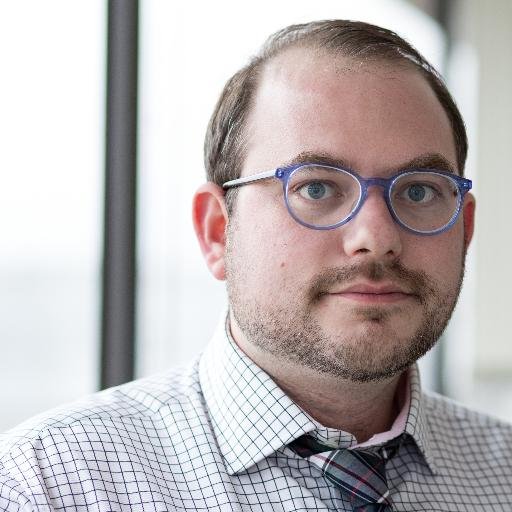
The Man Behind The Boring
Here is a man who graduated from Harvard with a philosophy degree, started blogging in his dorm room, and two decades later collects a seven-figure income while lecturing the American political establishment on its own blind spots. Not bad for someone who named his main product after a concept from a 1919 German essay.
Matt Yglesias is, depending on which week you read him, the most sensible person in American political commentary or the most infuriating. Sometimes both on the same Tuesday. That friction is the point. He built his career - and his considerable following - by being willing to say the thing that makes half the room wince: housing is expensive because we don't build enough; the population should be much, much larger; the pundit class is systematically wrong about how politics works.
Born in New York City on May 18, 1981, Yglesias came out of the gate with an unusual inheritance. His father, Rafael Yglesias, writes screenplays and novels. His grandfather, Jose Yglesias, was a Cuban-American novelist. His grandmother, Helen Yglesias, was also a novelist. His uncle, Paul Joskow, is an MIT economist. So: literary sensitivity on one side, economic rigor on the other. His newsletters read like both those genes got expressed at the same time, every day, four days a week.
He grew up in Greenwich Village - America's densest neighborhood - and promptly became one of its most famous critics. Not of the Village specifically, but of the idea that you can have a thriving city and also a zoning code that forbids building more of it. The YIMBY movement had many early champions; Yglesias is one of its most persistent.
Politics is the strong and slow boring of hard boards.
- Max Weber, 1919 - and Matt Yglesias, every day since 2020His newsletter, Slow Boring, takes its name from that Max Weber line - a deliberate choice to reject the hot-take industrial complex. In a media ecosystem rewarding the fastest, loudest, most outrage-generating takes, Yglesias bet on the opposite. Slow. Boring. Hard boards. It turns out the boards were made of money.
By 2024, with roughly 18,000 paying subscribers, Slow Boring generated over $1.4 million annually - making Yglesias one of the highest-earning Substack writers in the world. He donates 10% of that revenue to GiveWell's Top Charities Fund. Even his charity is evidence-based.
The Newsletter Economy
Based on 2024 reported figures. Substack takes 10%; card processing fees apply.
Harvard, Hard Boards, and the Long Game
Yglesias started blogging in 2002, while still a philosophy student at Harvard. He wasn't writing about Plato. He was writing about American politics, foreign policy, and the looming Iraq War - which he initially supported and later deeply reconsidered. That willingness to change publicly, to be wrong and say so, became part of his brand. It's a rare quality in the pundit class.
After graduating magna cum laude in 2003 - editor-in-chief of The Harvard Independent, the alternative paper rather than the more prestigious Crimson, which is either modest or contrarian, probably both - he joined The American Prospect as a writing fellow. Then The Atlantic. Then the Center for American Progress. Then Slate, where he ran the Moneybox column on business and economics.
The real turning point came in 2014, when he joined Ezra Klein and Melissa Bell to co-found Vox. The idea was radical at the time: explainer journalism for people who needed context, not just headlines. Vox became one of the defining media brands of the 2010s. Yglesias was a senior correspondent and co-hosted The Weeds podcast, which became required listening in Washington policy circles.
Then, in November 2020, he left. Not for another outlet. For himself. He launched Slow Boring on Substack with no corporate backing, no editorial team, and no safety net beyond the readers who followed him out the door. Within three years, it was one of the most financially successful independent newsletters in American media.
The pundit's fallacy is that what the country needs is more politicians to take the pundits' preferred positions.
- Matt YglesiasThe concept of the "pundit's fallacy" - his coinage - captures something true about the closed feedback loop of political commentary. Pundits observe elections, decide the lesson is "more of what I think," and repeat. Yglesias noticed this trap and spent years trying to escape it: arguing for positions unpopular with his left-liberal audience when he thought the evidence pointed that way, defending free trade, immigration, density, nuclear power, charter schools.
This made him something unusual: a liberal intellectual who irritates liberals. His 2020 book, One Billion Americans: The Case for Thinking Bigger, became a national bestseller by arguing that the United States should triple its population through immigration and pro-natalist policies. The subtitle wasn't hyperbole. He meant it. Still does.
Field Notes: The Yglesias Files
- ! He named his newsletter after a 1919 Max Weber lecture on the nature of politics. The newsletter now earns more than most law partners. Weber would have approved of the pragmatism.
- ! In 2018, after blowback over comments about Tucker Carlson, he deleted his entire Twitter archive - not his account, just the history. The account returned. The tweets did not. Somewhere there are several years of hot takes that no longer exist.
- ! His wife Kate Crawford edits Slow Boring. This makes it a family business in the most literal sense - one that earns more than most family businesses and also publishes four policy columns a week.
- ! Grew up in Greenwich Village - the densest neighborhood in America - and became one of America's most famous advocates for building more housing. The man is what he observed.
- ! His family tree includes three novelists (father, grandfather, grandmother) and one MIT economist (uncle). His writing reads like all four were arguing in the margins.
Character Study
Yglesias operates on a frequency that is hard to tune. He is not an ideologue - his politics resist the standard left/right sorting that makes cable news function. He calls himself a "left-leaning neoliberal" and has publicly accepted the "chief neoliberal shill" label as something between a joke and a point of pride. He is pro-growth, pro-immigration, pro-housing, skeptical of both market fundamentalism and statist overreach.
He can discourse on supervolcanoes, Habsburg federalism, Taiwan's semiconductor industry, and geothermal drilling regulations in a single conversation. This is either a remarkable intellectual range or a very specific kind of person who grew up in the early internet era, when knowing things was still considered interesting.
His intellectual honesty - the willingness to hold positions that annoy his own readers - has earned him both devoted followers and persistent critics. He's been accused of being too pro-Israel by the left and too squishy on free markets by the right. The complaints from both directions suggest he's doing something right.
One Billion Americans: The Big Bet
The central argument of Yglesias's career - distilled into 288 pages in 2020 - is that America should get much, much bigger. Not as an abstract aspiration, but as a specific, achievable policy goal: pro-immigration reform, family support policies, reform of the regulatory and zoning regimes that make it hard to build cities where people want to live.
The book landed in the middle of a pandemic that had just made "density" a dirty word, and still became a national bestseller. The argument held: growth is not the enemy of quality of life. Scarcity is. The question is not whether America can accommodate a billion people - it's why we'd refuse to try.
This frames his housing coverage, his immigration writing, his takes on urban policy, and his consistent critique of what he calls the politics of abundance versus the politics of scarcity. His newsletter, Slow Boring, returns to this theme repeatedly - the idea that the most progressive thing you can do for poor people is build housing, accept immigrants, and let the economy grow without choking it in red tape.
Some readers disagree with this vision. Some find it too technocratic, too market-friendly, too willing to make peace with inequality on the way to growth. Yglesias engages these objections - in the mailbag column, in response posts, in the podcast. The conversation is the product.
Things You Probably Didn't Know
Harvard BA in Philosophy, class of 2003 - graduated magna cum laude. Not journalism. Not economics. Philosophy.
Ten percent of every Slow Boring subscription goes to GiveWell's Top Charities Fund. His charity is as rigorously chosen as his arguments.
Was editor-in-chief of The Harvard Independent - the alternative paper - not The Crimson. A pattern emerges.
Three generations of novelists in the family. Father, grandfather, grandmother all published fiction. Paul Joskow (uncle) published economics. Matt publishes both, daily.
Based in Washington, D.C. - as close to the policy world as you can get without actually holding office, which he shows no signs of wanting.
Named his newsletter after Max Weber's 1919 essay. Weber died in 1920. He never saw how much the hard boards would yield.