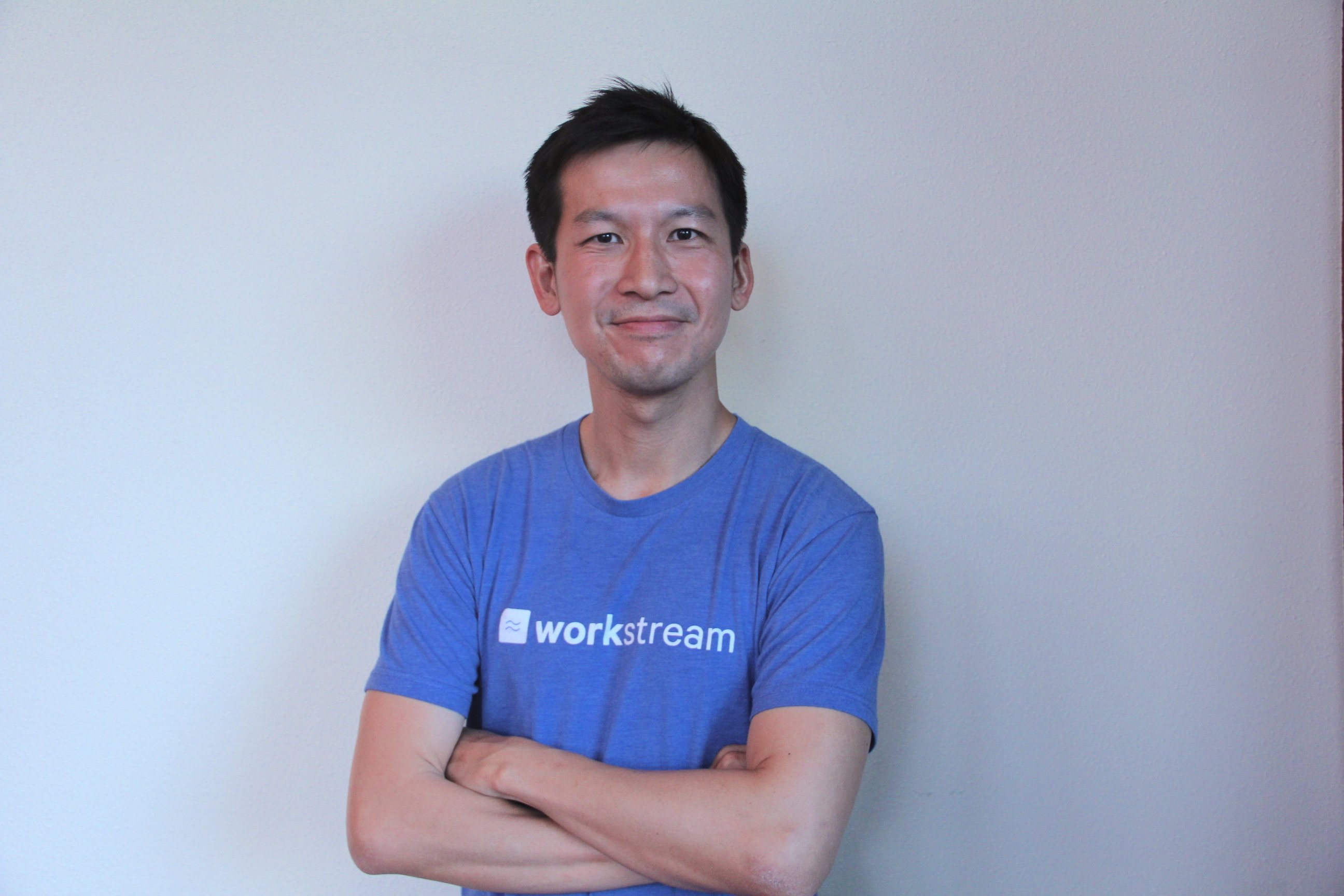
The Delivery Van That Built a Unicorn
Every weekday at 4:30 AM, a boy in Singapore would climb into his father's delivery van. His dad - who never got past 4th grade - drove that route for forty years. His mother worked part-time cleaning offices. Between them, they gave their son something neither Harvard nor MIT could teach: a clear-eyed understanding of what it costs to make a living on your feet.
That boy became Desmond Lim. And that understanding - not the credentials, not the funding - is what separates Workstream from every other HR software company trying to serve frontline businesses.
The pitch sounds simple: text-based hiring that cuts time-to-hire by 4x for the industries drowning in turnover. Fast food. Hotels. Logistics. The kind of businesses that post a job and need someone showing up on Tuesday. Workstream handles the application, the screening, the onboarding paperwork, and the payroll - all via SMS, because the hourly workers actually being hired are not sitting at desks checking email.
"My dad's dedication and passion towards hard work made me want to help others in the hourly worker space."- Desmond Lim, CEO of Workstream
Before Desmond started Workstream, he sold cable TV door-to-door as a teenager. He ran a Thai restaurant in college to pay his own tuition - managing hundreds of hourly workers while studying for his finance degree at Singapore Management University. Then Merrill Lynch. Then Harvard, where he co-founded QuikForce (an on-demand moving service) at the Innovation Lab and backed student startups through Dorm Room Fund. Then WeChat as a product manager. Every stop left a trace in the product he'd build next.
Workstream launched in September 2017. The first paying customer came on January 4, 2018. That date, the team still marks. Six years later, the company serves 46 of the top 50 quick-service restaurant brands in America - McDonald's, Burger King, Dunkin', Taco Bell, Jimmy John's, Marriott. Revenue grew from $38.5M in 2023 to $59.2M in 2024. Founders Fund, Charles River, and GGV Capital have collectively put in $120M+.
The product works because Desmond knows the customer isn't just the brand on the marquee. It's the shift manager at a Burger King in Columbus who doesn't have time to dig through a software dashboard. It's the new hire who speaks Spanish or Mandarin and needs onboarding that meets them where they are. Tech built for deskless workers has to be ruthlessly simple. "This space is very tough to manage," Desmond said at the inaugural On the Clock Summit. "There's a very high turnover rate. People may speak Spanish or Chinese."
"I believe in the democratization of technology for the deskless workforce."- Desmond Lim
Off the product roadmap, Desmond is obsessively structured in the way that only people who distrust ambiguity ever truly are. His calendar runs in 30-minute blocks. He wakes at 6 AM for a run. He takes five short walks daily, sometimes during calls. He drinks tea, not coffee. He power naps for ten minutes after lunch. One day a week, he disconnects completely. His mentor is Eric Yuan, the Zoom founder - and like Yuan, Desmond talks about culture less as a differentiator and more as infrastructure.
Desmond captained national basketball championship teams in Singapore and represented the country at the South East Asian Youth Games. He completed a 10-day jungle survival exercise in the Singapore Army, losing 15 lbs in the process. He reads for 20 minutes before bed every night. His recommended book is Shoe Dog by Phil Knight - a memoir about a man who bet everything on a product the world didn't know it needed yet.
He speaks English, Mandarin, and Korean fluently. He has founded roughly seven companies across his career. He was named to the Silicon Valley Business Journal's 40 Under 40 in 2020 and was a finalist for the Ernst & Young Entrepreneur of the Year award in 2023. These are the receipts. The actual story is simpler: a kid from Singapore who grew up watching his father work hard for forty years decided to build software that treats that kind of work with the seriousness it deserves.
"The days are long but the years are short. Enjoy the journey!"- Desmond Lim, on Workstream's 7th birthday
The 70 million hourly workers in the United States have been an afterthought in enterprise software for decades. Salesforce didn't build for them. Workday didn't build for them. They got legacy timeclocks, paper applications, and managers texting applicants from personal cell phones. Workstream is the first serious attempt to close that gap - not as a charity project, but as a $500M company with real ARR growth and real customers betting their operations on it.
At 4:30 AM, a delivery van used to roll through the streets of Singapore. The kid in the passenger seat grew up to make sure those streets are full of people who actually have the tools to do their jobs.