BREAKING/// Swyx coins "AI Engineer" - Andrej Karpathy agrees/// Latent Space hits 200,000+ subscribers/// AI Engineer World's Fair 2025: 18 tracks, SF June 3-5/// Alessio Fanelli: Forbes 30 Under 30, VC (2024)/// Kernel Labs opens 12,000 sq ft AI builder space in SF/// 10 MILLION total readers and listeners/// BREAKING/// Swyx coins "AI Engineer" - Andrej Karpathy agrees/// Latent Space hits 200,000+ subscribers/// AI Engineer World's Fair 2025: 18 tracks, SF June 3-5/// Alessio Fanelli: Forbes 30 Under 30, VC (2024)/// Kernel Labs opens 12,000 sq ft AI builder space in SF/// 10 MILLION total readers and listeners///
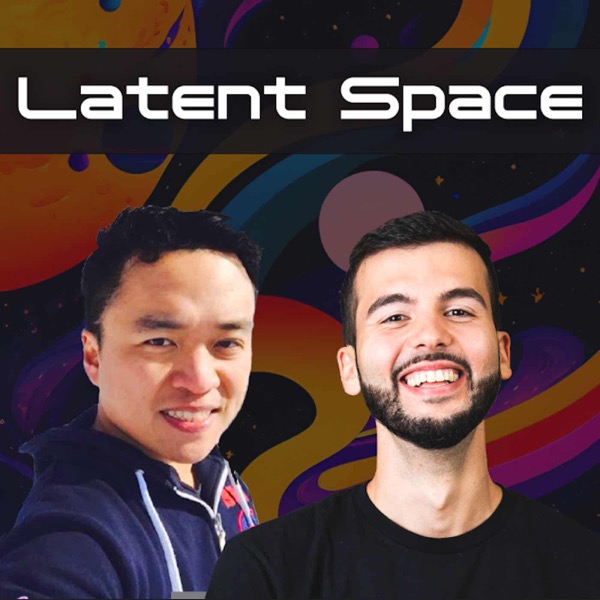
Swyx (Shawn Wang) and Alessio Fanelli - Latent Space co-hosts
AI Engineering - Latent Space

Swyx & Alessio

A hedge-fund dropout from Singapore and a Rome-born hackathon dropout walked into a podcast studio - and accidentally named a profession that didn't exist yet.

200K+ Subscribers
10M+ Total Readers
191+ Episodes
#1 AI Eng. Podcast
Latent Space AI Engineering Podcast Newsletter

"You can learn so much on the internet for the low, low price of your ego." - Swyx

200K+ Newsletter Subscribers
Top 10 US Tech Podcast
6,000+ AI Eng. World's Fair 2025
$1.4B+ Panther Labs (Alessio's seed)

They Didn't Just Cover the AI Revolution.
They Gave It a Job Title.

Most people in tech wait for a trend to arrive and then write about it. Shawn "Swyx" Wang and Alessio Fanelli did something different: they wrote the trend into existence. In June 2023, Swyx published "The Rise of the AI Engineer" on their Latent Space newsletter. Within days, Andrej Karpathy - the man who wrote the neural network textbook Silicon Valley passes around like scripture - publicly agreed. The phrase "AI Engineer" went from a blog post to a LinkedIn job category to a conference with 3,000 attendees in less than a year. That's not a media success story. That's a naming ceremony for an entire discipline.

Latent Space started in 2022 as a newsletter Swyx ran from lspace.swyx.io - a domain so unglamorous it practically invited someone to donate a better one. Brian McMahan did. By February 2024, the podcast had reached one million Substack readers, with Alessio joining as co-host for the audio version. Today it sits at 200,000+ active subscribers, 10M+ cumulative readers and listeners, and a Top 10 US Tech podcast ranking - audio and YouTube both. The show's guest list reads like a Silicon Valley who's-who: Andrej Karpathy, Chris Lattner, George Hotz, Marc Andreessen recorded in a16z's Sand Hill Road office. Jeremy Howard. Soumith Chintala. The architect of basically every major framework you're running in production right now.

But here's the thing about Latent Space that separates it from every other AI podcast: it has a deliberate editorial philosophy. No AI safety debates. No regulation hand-wringing. No biotech crossover episodes. Purely engineering - foundation models, code generation, agents, GPU infrastructure, open source. The show's tagline is "by and for the rising class of AI Engineers," and Swyx and Alessio mean it literally. They don't talk to engineers about AI. They talk as engineers, to engineers.

The two hosts are a study in improbable origin stories that somehow converge perfectly. Swyx is a Singaporean who walked away from a $350,000-a-year hedge fund career at roughly age 30, taught himself to code via freeCodeCamp, built communities for tens of thousands of developers, wrote a 450-page book, and then - almost by accident - coined the phrase that now sits in millions of job descriptions. Alessio is a Roman kid from Torpignattara (a working-class neighborhood, not the postcard Rome) who won a university hackathon, immediately dropped out, founded an IoT startup, moved to the US on the strength of a Twitter DM, and turned an engineering fellowship at a VC firm into a Forbes 30 Under 30 ranking and a partner seat at Decibel.

Different continents. Different paths. Identical instincts: build in public, ship early, trust the community over the institution.


Two Paths, One Signal

Co-Host & Founder
Shawn "Swyx" Wang
@swyx - swyx.io - Smol AI - AI Engineer

The name "swyx" - pronounced "swicks" - is the initials of his English and Chinese names overlaid. It's a small biographical fact that tells a big story: a Singaporean who built a career across two cultures by making both names literally inseparable.

Swyx spent his twenties as a currency options trader and TMT hedge fund analyst earning roughly $350,000 a year. By his early thirties, he had burned out. He opened freeCodeCamp and started from scratch. What followed was a masterclass in the power of his own philosophy: write in public, build in public, share everything including the failures.

He built Svelte Society from zero to 15,000+ developers. He moderated r/reactjs for 200,000 developers. He created the React TypeScript Cheatsheet still used by engineers worldwide. He wrote "Learn in Public" - an essay read by millions that reframed how developers think about professional growth. He wrote a 450-page book. He worked in Developer Experience at Netlify, AWS, Temporal, and Airbyte - three of those are unicorn-valued companies - before founding Smol AI and co-founding Latent Space.

In June 2023, he published "The Rise of the AI Engineer." Andrej Karpathy publicly endorsed it. The term entered the industry lexicon faster than almost any other phrase in recent tech history.

Defining Concept
"Learn in Public" - the practice of sharing your learning journey as it happens, building an audience by documenting the problems your past self had
Coined Phrase
"AI Engineer" - now one of the fastest-growing job titles in tech globally
Co-Host, Partner & CTO
Alessio Fanelli
@FanaHOVA - decibel.vc - kernellabs.ai

The handle "FanaHOVA" blends his surname (Fanelli) with "Hova" - Jay-Z's nickname derived from Jehovah. It's a small tell: there's a hip-hop fan beneath the VC partner, a Rome kid underneath the San Francisco founder. Neither parent attended college (his father didn't finish high school). His first computer was a teal iMac G3 his mother brought home from her employer's discard pile.

Alessio won a university hackathon in his second year studying Physics and Computer Science in Rome. He dropped out immediately to found Smart Torvy, an open-source IoT home automation platform. He showed it at Maker Faire. He open-sourced all of it when the commercial path didn't work. He found 645 Ventures' engineering fellowship via Twitter, moved to the United States, and over four years turned that fellowship into a VP role.

At 645 Ventures, he didn't just pick investments - he coded the internal investment platform, replacing spreadsheets with custom software. He sourced and led the seed investment in Panther Labs at under $20M valuation. Panther later exceeded $1.4 billion. In 2022, he joined Decibel Partners as Partner and CTO. In 2024, Forbes named him to their 30 Under 30 Venture Capital list.

In 2024, he founded Kernel Labs: a 12,000-square-foot space in San Francisco for AI engineers and founders. His thesis: "Startups are context arbitrages." Build the physical infrastructure where context gets converted into product faster than any incumbent can match.
Investment Thesis Proof
Led seed in Panther Labs at <$20M valuation. Company later exceeded $1.4 billion.
Kernel Labs
12,000 sq ft AI builder community in SF. Described as "the TSMC of startups."

"A wide range of AI tasks that used to take five years and a research team can now be accomplished with API docs and a spare afternoon."

- Swyx (Shawn Wang), on the Rise of the AI Engineer

Latent Space - Engineering's
Favorite Radio Signal

The podcast started as a newsletter. It became a podcast because Alessio kept showing up to Swyx's newsletter office hours and they realized the conversation was better live. They invested $5,000 to $6,000 in a proper studio setup with four microphones. Alessio's strong preference for recording in person over remote - "breaking the ice in person is much easier than online" - shapes the whole production philosophy. Remote podcasts, he believes, go "linear and robotic." The in-studio dynamic creates something closer to a technical conversation between colleagues, which is exactly what their audience wants.

Episodes fall into three types: 101s (timeless fundamentals that retain value for years), Guest Interviews (trend-driven, weeks of relevance), and Emergency/Recap Pods (news analysis, 24-hour lifespan). It's a content strategy borrowed from journalism, applied to engineering education. The 101 format in particular - episodes like deep-dives on RAG, tokenization, or embeddings - gives Latent Space a durable educational catalog that keeps growing in value as the field attracts new engineers who need the foundation.

The show's first year brought in Marc Andreessen (recorded at a16z's Sand Hill Road office), Andrej Karpathy, Chris Lattner, George Hotz, Soumith Chintala, and Jeremy Howard. The Codeium episode is a favorite internal milestone: they interviewed Varun Mohan when the company had 10,000 users. By the time the episode published, Codeium had raised $65 million and had 300,000+ users. Latent Space had found the signal before it became noise.

The Discord community runs weekly LLM Paper Club meetings. There are regional events, online sessions, and a network that now feeds directly into the AI Engineer conference. The show doesn't just cover the AI engineering ecosystem - it's become infrastructure for it.

The Three Episode Types
101s: Timeless fundamentals - retains value for years as the field attracts new engineers.

Guest Interviews: Trend-driven conversations, weeks of relevance, early signal on companies and ideas.

Emergency/Recap Pods: News analysis with a 24-hour lifespan - because not everything ages well.

What neither Swyx nor Alessio does is speculate about AI consciousness, existential risk, or regulatory futures. The show's editorial philosophy excludes these topics explicitly. It's not ignorance - both are well-read on the debates. It's a choice about who the show serves. Builders don't need another opinion on whether AI will destroy humanity. They need to know which embedding model to use, how to evaluate RAG pipelines, and what the production implications of reasoning models actually are. Latent Space gives them that.

The Numbers That
Built a Profession

Newsletter Subs
200K+
YouTube Subs
90K+
Total Readers
10M+
AE Fair 2024
3,000
AE Fair 2025
6,000+
Episodes (2025)
191+
Swyx's Finance Exit
Left a $350K/year hedge fund career at ~age 30. Opened freeCodeCamp. Within 7 years: built three unicorn-company devrel roles, wrote a book, started a conference, co-hosted the #1 AI engineering podcast.
Alessio's Hackathon Dropout
Won a university hackathon in year two of a Physics degree. Left immediately to found Smart Torvy. Moved country on a Twitter DM. Within 10 years: VC partner, Forbes 30 Under 30, co-host of a Top 10 podcast.
Common Pattern
Both exited conventional paths at the moment of maximum institutional pressure. Both moved toward open, public work. Both credit building in public - not credentials - as the thing that worked.

The World's Fair for Engineers
Who Build with AI

The first AI Engineer Summit in 2023 was deliberately ambitious and immediately oversubscribed. The applicant-to-attendee ratio was 10:1. The conference sold out within hours. It was proof that the community Swyx had been writing about - engineers who build with AI as opposed to researchers who study it - existed and had no dedicated home.

The AI Engineer World's Fair in 2024 scaled to 3,000+ attendees in San Francisco, making it the largest technical AI conference for engineers globally. 2025 brings 18 tracks across topics including RAG, SWE-Agents, Agent Reliability, Reasoning and Reinforcement Learning, and - notably - the first dedicated MCP (Model Context Protocol) track at any AI conference. Expected attendance: 6,000+.

The event series now runs on four continents. SF, London, New York, plus partner events in Paris, Miami, Singapore, and Melbourne. Each event follows the same core principle as the podcast: practitioner-to-practitioner, no philosophy, no hype cycles, just the engineering reality of building with AI systems in production.

Swyx co-organizes under the ai.engineer banner. The conference is, in a real sense, a physical instantiation of what Latent Space built digitally: a space where the people doing the work can talk to each other directly, without an intermediary telling them what AI means.

"A wide range of AI tasks that used to take five years and a research team can now be accomplished with API docs and a spare afternoon."

Swyx - Rise of the AI Engineer (2023)

"Startups are context arbitrages. Founders who can convert unique knowledge into products faster than incumbents win."

Alessio Fanelli

"Breaking the ice in person is much easier than online. Remote recordings tend to go linear and robotic."

Alessio Fanelli - on Latent Space's in-studio approach

"Startups are context arbitrages."

- Alessio Fanelli, Partner & CTO at Decibel

The Road Here

Swyx (Shawn Wang)

2010-2016
Hedge Fund, Singapore/US - Currency options trader and TMT analyst earning ~$350K/year. Decides finance isn't it.
2016-2017
freeCodeCamp + First Role - Teaches himself to code. Joins Two Sigma as a frontend engineer.
2018
Netlify - Developer Experience Engineer at a devtool unicorn. Starts writing "Learn in Public."
2019-2021
AWS, Temporal, Airbyte - Senior DevRel across three more unicorn-scale devtool companies.
2022
Latent Space Founded - Newsletter starts at lspace.swyx.io. Brian McMahan donates the latent.space domain.
June 2023
"Rise of the AI Engineer" - Published on Latent Space. Andrej Karpathy publicly endorses it. The term enters the industry.
2023-2025
AI Engineer Summit - World's Fair - From sold-out summit (10:1 applicant ratio) to 6,000+ expected attendees in 2025 across 18 tracks.

Alessio Fanelli

~2013
Hackathon Win + Dropout - Wins university hackathon in year two of Physics/CS at Tor Vergata. Drops out immediately to found Smart Torvy (IoT platform).
2013-2017
Smart Torvy + Early Engineering - Exhibits at Maker Faire, open-sources the platform. Joins Welcome Tech as Lead Engineer.
2018
645 Ventures - Finds the engineering fellowship via Twitter. Moves to the US. Over four years rises from fellow to VP. Codes the internal investment platform. Seeds Panther Labs at <$20M.
2022
Decibel Partners - Joins as Partner & CTO. Invests in open source, dev tools, cybersecurity, autonomous software.
2023
Latent Space Podcast Co-Host - Joins Swyx as audio co-host. Together they grow to 1M Substack readers in year one.
2024
Forbes 30 Under 30 + Kernel Labs - Named to Forbes 30 Under 30 VC. Founds Kernel Labs, a 12,000 sq ft AI builder space in SF.

The Things Bios Usually Skip

🔊
It's "Swicks"
The name "swyx" is pronounced "swicks" - not "swix," not "swex." It's the initials of Shawn Wang's English and Chinese names overlaid. Every first-time caller mispronounces it. He's stopped correcting strangers.
🕹️
FanaHOVA = Jay-Z Reference
Alessio's handle is Fanelli + "Hova" (Jay-Z's nickname, from Jehovah). There is a hip-hop fan beneath the VC partner, and he's not hiding it. He also plays Magic: The Gathering and FPS games (CoD, Counter-Strike).
💻
The iMac G3 Origin Story
Alessio's first computer was a discarded teal iMac G3 his mother brought home from her employer's discard pile. That machine - now a retro collector's item worth hundreds of dollars - is where his interest in technology began.
📻
They Didn't Plan a Podcast
Latent Space started as Swyx's solo newsletter. Alessio kept showing up to newsletter office hours. The conversation was better live. A $5,000-$6,000 studio setup with four microphones later, they had a Top 10 US Tech podcast.
🌐
Someone Donated the Domain
The newsletter originally ran on lspace.swyx.io - a URL that would make any growth marketer wince. Brian McMahan donated the latent.space domain. Small act, big impact on the brand.
AS Roma, Always
Alessio is a devoted AS Roma supporter. For the uninitiated: Roma fans are among the most passionate and the most long-suffering in Italian football. It says something about character that he's stayed loyal.
🎙️
smol-podcaster Produces Itself
Alessio open-sourced smol-podcaster - an AI-powered podcast production tool for transcription, show notes, and speaker diarization. It's used by podcast creators everywhere. Including, internally, to produce Latent Space itself.
📈
The Codeium Signal
They interviewed Codeium's Varun Mohan when the product had 10,000 users. By the episode's publish date, Codeium had $65M raised and 300,000+ users. That's Latent Space's superpower: finding signal before it becomes noise.
🏦
Finance to freeCodeCamp
Swyx walked away from ~$350K/year in hedge fund finance at roughly age 30. The career pivot story has been cited by thousands of developers as their own inspiration. He taught himself to code with the same openness he'd later preach.

What They've Built and Won

Swyx

  • Coined "AI Engineer" - now one of the fastest-growing job titles in tech, endorsed by Andrej Karpathy
  • "Learn in Public" essay - read by millions, reshaped developer culture around public knowledge-sharing
  • The Coding Career Handbook - 450+ page book covering developer career strategy from beginner to senior
  • Svelte Society - built from 0 to 15,000+ developers
  • r/reactjs moderator for 200,000+ developers
  • React TypeScript Cheatsheet - widely used open-source reference globally
  • Developer Experience at three unicorn devtool companies: Netlify, Temporal, Airbyte
  • AI Engineer World's Fair 2024: 3,000+ attendees, largest technical AI conference for engineers
  • AI Engineer World's Fair 2025: 18 tracks, projected 6,000+ attendees, first dedicated MCP track
  • GitHub Star (official community recognition from GitHub)

Alessio

  • Forbes 30 Under 30, Venture Capital (2024)
  • Led seed investment in Panther Labs at <$20M valuation - company later exceeded $1.4B
  • Latent Space: 1 million Substack readers in year one (55 episodes), now 200K+ active subscribers
  • Kernel Labs: 12,000 sq ft AI engineering space and community in San Francisco (2024)
  • smol-podcaster: open-source AI podcast production tool - widely adopted, used on Latent Space itself
  • Partner & CTO at Decibel Partners - rare dual role combining investing and engineering leadership
  • Open source tools: AWT (AI worktree CLI), GLIMPSE (CI screenshot tool), KERNEL GYM (MCP testing), PIQUEUE, SLOP METER
  • Built 645 Ventures' internal investment platform from scratch, replacing manual spreadsheet tracking
  • Rose from Engineering Fellow to VP at 645 Ventures over four years
  • Moved from Rome to San Francisco based on a Twitter DM - worked out

Why Latent Space Works
When Others Don't

There are hundreds of AI podcasts. Most of them interview researchers about capabilities. Most of them speculate about futures. Most of them have a host who is, generously, a smart generalist asking questions at the edge of their understanding. Latent Space is different in ways that are obvious only in retrospect: the hosts are engineers, not journalists.

Swyx has shipped developer tooling at companies where the product is the developer experience. He has moderated communities of hundreds of thousands of developers. He knows what a senior engineer cares about on a Tuesday afternoon and what question they'll actually ask a guest versus what a journalist would ask. Alessio has coded internal investment platforms, shipped open-source tooling, and built products from scratch. When he asks a guest about their architecture decisions, he's asking as someone who has made architecture decisions.

The result is interviews where guests say things they wouldn't say on other podcasts - because the hosts will understand the answer. That's the irreplaceable advantage. You can't fake that fluency, and you can't hire it. You earn it by shipping things.

There's also the editorial discipline. Most technology media covers everything adjacent to their core topic. Latent Space explicitly excludes: AI regulation, AI safety and x-risk debates, and biotech. This is not incuriosity. It's a value proposition. Engineers have limited attention. They're not looking for a show about AI in general. They want the show about the AI they're actually deploying. The constraint makes the product sharper.

Finally: the in-person format. Alessio's insistence that the best episodes come from being in the same room as the guest - that remote recordings go "linear and robotic" - shapes the production in ways listeners can feel without being able to name. Great podcasting is about the thing that happens between what someone intended to say and what they actually say when the conversation is live and there's another person across the table. That's what Latent Space reliably delivers.

Quotes Worth Keeping

"You can learn so much on the internet for the low, low price of your ego."

Swyx - on Learn in Public

"Create the thing you wish you had found when you were learning."

Swyx - content philosophy

"The best way to learn is to teach. The best way to build an audience is to solve the problems your past self had."

Swyx

"LLaMA2 doesn't fit the definition of open source, but it's $3M+ of FLOPS donated to the public. OSS has different levels of openness. AI will follow the same pattern."

Alessio Fanelli - on open-source AI

"Skill floor/ceilings are a mental model I've been using to understand what industries are good for AI agents."

Alessio Fanelli

"Startups are context arbitrages. Founders who can convert unique knowledge into products faster than incumbents win."

Alessio Fanelli - Kernel Labs thesis