BREAKING* OPENHANDS CLOSES $18.8M SERIES A LED BY MADRONA - NOV 2025* 30,000+ GITHUB STARS* 150+ CONTRIBUTORS* OPENHANDS SHIPS NATIVELY IN ZED AND TOAD VIA ACP* ALL HANDS AI TEAM: 36* TOTAL RAISED: $23.8M* BREAKING* OPENHANDS CLOSES $18.8M SERIES A LED BY MADRONA - NOV 2025* 30,000+ GITHUB STARS* 150+ CONTRIBUTORS* OPENHANDS SHIPS NATIVELY IN ZED AND TOAD VIA ACP* ALL HANDS AI TEAM: 36* TOTAL RAISED: $23.8M*
Vol. 26 - No. 07 - Profile - Los Angeles / Boston

Robert Brennan

He watched Devin's demo, forked the future in 24 hours, and called the fork OpenDevin. The investors called it a $23.8 million company.

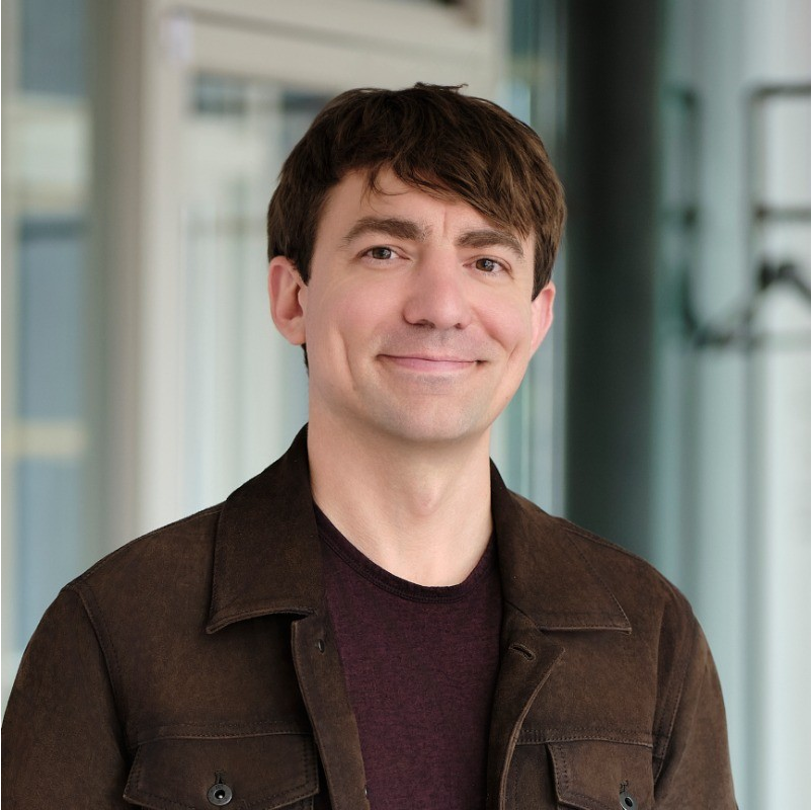
Robert Brennan, co-founder and CEO of OpenHands
Robert A. Brennan, photographed at QCon AI New York, 2025. The founder who insists the interesting problems live at the seam between English and code.

A weekend, a fork, and a very good year for open source.

On a March weekend in 2024, Robert Brennan watched Cognition AI's Devin demo along with a few million other engineers. The reaction split into two camps. One camp posted "wow." The other camp posted "wow, but." Brennan was in the second camp, and by Monday there was a text file on GitHub. The file was called OpenDevin. Within a year it had 30,000 stars, 150 contributors, a new name (OpenHands), and roughly $23.8 million in venture capital attached to it.

The company, All Hands AI, is now based in Los Angeles and employs about 36 people. Its CEO lives in Boston. Its Chief Scientist is a Carnegie Mellon professor. Its Chief AI Officer is a research prodigy. Its central premise is that an AI coding agent should be MIT-licensed, model-agnostic, and installable in whichever IDE the developer already loves. Menlo Ventures wrote the seed. Madrona led the Series A in November 2025. Fujitsu Ventures is on the cap table, which is a sentence that would have been strange to write in 2019.

Brennan came to the moment already fluent in the underlying trades. At Google in the early 2010s he wrote an algorithm to extract answers from long documents, the kind of code that gets shipped inside Search when you ask why the sky is blue. It became US Patent US9940367B1 and quietly ran behind the scenes for years. Afterward, he co-founded DataFire, a platform for building APIs and integrations, and LucyBot, which handled the paperwork nobody wanted to do: automated API documentation. Then, as Director of Open Source at Fairwinds, he built Insights, a Kubernetes auditing tool for teams whose clusters were getting away from them.

The pattern is legible in retrospect. Each company automated something a developer would rather not do at 4pm on a Friday. OpenHands is the same idea at a different altitude. Brennan calls the target "toil-oriented tasks" - the writing of unit tests, the bumping of dependencies, the keeping of documentation vaguely in sync with reality. His argument is that agents will eat this work first because it is boring, high-volume, and low-risk. Craft stays with humans. Toil moves to the coding agent. Both sides get to keep the parts they like.

That framing is why the investor reaction to OpenHands is less confused than it looks. On paper, the company gives its core product away under the most permissive license in software. In practice, this is the whole point. An MIT-licensed agent gets through procurement at banks and defense contractors in a way a closed one does not. The community keeps the roadmap honest. The commercial layer, in Brennan's phrasing, is "software we can build that complements the open source, where we can feel good about building that in a closed source way." The distinction is not moral. It is architectural.


By the numbers.

$23.8M
Total raised
30k+
GitHub stars
150+
Contributors
36
Employees

None of us were surprised to see the Cognition demo in terms of technology. We all knew that this was there.
- Robert Brennan, to TechCrunch, September 2024

What OpenHands actually does.

OpenHands, in the product sense, is a control plane. There is an interface, a set of automations, and a governance layer, and on top of them the agent goes off and edits code. A developer can run one agent locally on a laptop, which is the version most people encounter first. A platform team can also run a fleet of them across an organization, which is the version the Series A is meant to fund.

The agent itself is model-agnostic. Users bring their own LLM: Anthropic, OpenAI, Google, an open-weight model behind a self-hosted endpoint. The point of not picking one is that the customers who need OpenHands most - large enterprises with strong opinions about which model they trust - can pick their own. This is the sort of decision that reads as diplomatic and is actually strategic.

What agents run on top of OpenHands? Not the glamorous work. The company talks openly about the boring stuff. Bump a dependency across 400 services. Add tests to a legacy module nobody remembers writing. Refactor a naming convention across a monorepo. Keep the READMEs in sync with the actual API. These are the tasks that, if you asked a senior engineer to do them for a week, would produce a resignation letter. If you ask an OpenHands agent, you get a pull request.

The distribution channel is the IDE. In late 2025 OpenHands adopted the Agent Client Protocol, or ACP, and shipped native support inside Zed and Toad, two editors that are themselves in the middle of trying to reinvent how developers write code. Brennan's public posture is that OpenHands should live everywhere developers already are, rather than trying to become another place they have to go. This is a fairly serious commercial claim dressed up as a tweet.


Two rounds, eighteen months.

SEP 2024 - Seed
$5.0M
NOV 2025 - Series A
$18.8M
TOTAL
$23.8M

Seed: Menlo Ventures (lead), Pillar VC, Betaworks, Rebellion. Series A: Madrona (lead), Menlo Ventures, Pillar VC, Obvious Ventures, Fujitsu Ventures, Alumni Ventures. Angels include Thom Wolf (Hugging Face), Jeff Hammerbacher (Cloudera), Soumith Chintala (PyTorch).


A career at the seam of language and code.

2011-2014
Senior software engineer at Google. Writes an open-domain answer-extraction algorithm shipped inside Google Search in August 2013. Patent US9940367B1 follows.
~2015
Co-founds DataFire, an open source platform for APIs and integrations. Also runs LucyBot, an automated API documentation tool used by Fortune 500 customers.
2019-2023
Director of Open Source and VP of Product Development at Fairwinds, the Kubernetes enablement company. Builds Insights, an auditing and cost-analysis tool for clusters.
Mar 2024
Watches Cognition's Devin demo. Within 24 hours launches OpenDevin on GitHub with Xingyao Wang and Graham Neubig.
Sep 2024
All Hands AI announces $5M seed round led by Menlo Ventures. Project rebranded to OpenHands.
Nov 2025
Closes $18.8M Series A led by Madrona. 30,000+ GitHub stars. Team of ~36.
Dec 2025
OpenHands adopts the ACP protocol. Native integration lands inside Zed and Toad IDEs.

The record.

The Cognition folks came out with their Devin demo and I - and I think every other software engineer in the world - was amazed at that video.
On the March 2024 moment
It was being developed as closed source and kept in this walled garden we couldn't see and contribute to and really own as a development community.
On why an open source alternative had to exist
There's a bunch of software we can build that complements the open source, where we can feel good about building that in a closed source way.
On the commercial model
Amazing being able to use OpenHands natively in Zed, Toad, and other IDEs.
On distribution, December 2025

A CEO, a professor, and a research prodigy walk into a repo.

Robert Brennan

Co-Founder and CEO. Ex-Google Search NLP, ex-DataFire, ex-Fairwinds open source. Columbia CS, Math, and Linguistics.

Graham Neubig

Co-Founder and Chief Scientist. Carnegie Mellon professor. One of the more cited names in natural language processing.

Xingyao Wang

Co-Founder and Chief AI Officer. Published extensively on agentic reasoning and tool use before OpenHands existed.


Loose facts that don't fit anywhere else.


It was being developed as closed source and kept in this walled garden we couldn't see and contribute to and really own as a development community.
- Brennan on Devin, and on the argument for OpenHands existing at all

Common questions.

Who is Robert Brennan?

Robert Brennan is co-founder and CEO of All Hands AI, the company behind OpenHands, an open source AI coding agent platform. He previously worked at Google, co-founded DataFire and LucyBot, and led open source engineering at Fairwinds.

What is OpenHands?

OpenHands is an MIT-licensed open source platform for building and running AI coding agents. It began as OpenDevin in March 2024, launched as an open source response to Cognition's Devin, and now has more than 30,000 GitHub stars and 150+ contributors.

How much has All Hands AI raised?

Roughly $23.8M total: a $5M seed round led by Menlo Ventures in September 2024, and an $18.8M Series A led by Madrona in November 2025 with participation from Menlo, Pillar, Obvious Ventures, Fujitsu Ventures, and Alumni Ventures.

Who are Brennan's co-founders?

Xingyao Wang, Chief AI Officer, and Graham Neubig, Chief Scientist and a Carnegie Mellon professor known for his work in natural language processing.

Where did Brennan work before OpenHands?

Senior software engineer at Google working on NLP and search, then co-founder of DataFire and LucyBot, then VP Product Development and Director of Open Source at Fairwinds, a Kubernetes enablement company.


Where to find him.


Share this profile.