YesPress Profile · Vol. 01
Mandolin.
The AI agents quietly working the night shift in America's infusion suites - reading faxes, calling payers, and getting cancer patients off the wait list.
The AI agents quietly working the night shift in America's infusion suites - reading faxes, calling payers, and getting cancer patients off the wait list.
It's a Tuesday in 2026 and inside an ambulatory infusion center in the American South, a patient who needs a $14,000 monthly biologic is waiting. Not on the drug. Not on the doctor. On a piece of paper. A payer wants prior authorization. The clinic's intake coordinator has 38 other charts. Somewhere upstairs, a fax machine is warming up.
This is the gap Mandolin walked into. The company - legally Coral Automation, Inc., trading as Mandolin - builds AI agents that handle the unglamorous administrative spine of specialty drug delivery. Intake. Benefits verification. Out-of-pocket estimation. Medical policy review. Prior authorization. Claims statusing. Appeals. The list is boring on purpose. The boring list is exactly where patients lose weeks of treatment.
Founded in 2024 by Will Yin and Rohit Rustagi - one a former neuroscience researcher, the other on deferral from Stanford School of Medicine - Mandolin shipped its first product in January 2025. By June, six months later, the company announced $40 million in combined Seed and Series A financing led by Greylock with participation from SignalFire, Maverick, SV Angel, Jerry Yang of Yahoo, and Guillermo Rauch of Vercel. The cap table is a small statement of its own: an internet pioneer and a developer-tools CEO writing checks into infusion-center operations. That doesn't usually happen.
It happened because Mandolin sells something that finally works. Its AI agents, the company says, behave like its best employees - reasoning across payer clinical policies, picking up the phone, parsing faxes and handwritten notes, and making decisions across an entire workflow rather than a single task. The agents don't replace the staff. They eat the work nobody wanted in the first place.
"Mandolin's AI agents act just like your best employees, completing tasks like reasoning about clinical policies, calling payers, and parsing faxes and handwritten notes." - Mandolin announcement, June 2025
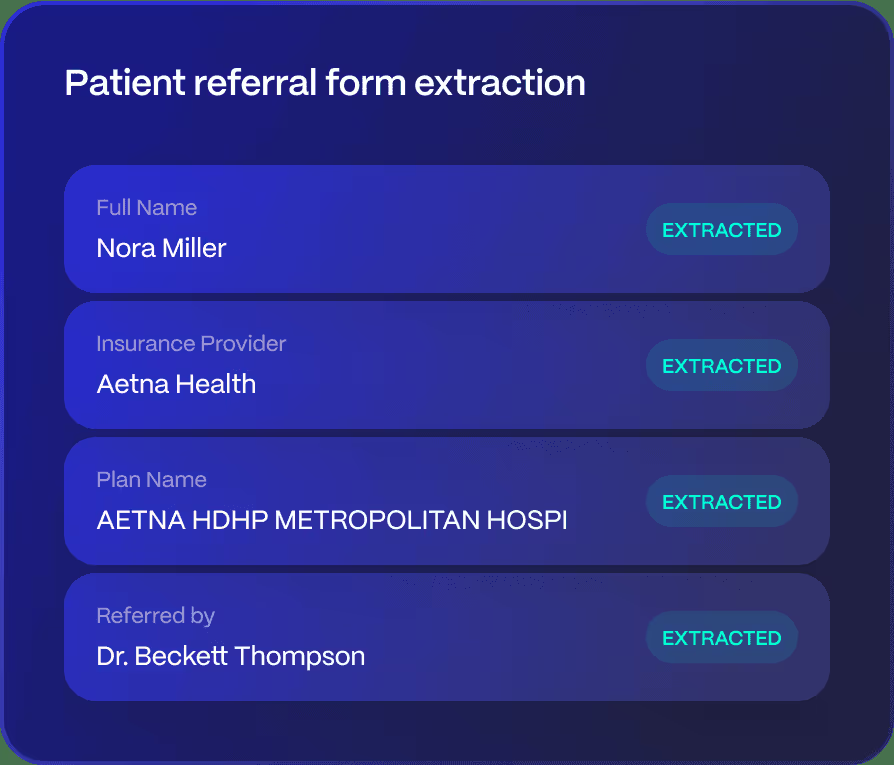
Pulls referrals, extracts documents, and stands up the patient record before a human touches it.
Calls payers, reads coverage rules, and returns a verified benefit summary - faster than the phone tree allows.
Tells the patient and the clinic what the patient will actually pay - before the patient arrives.
Reasons over payer clinical policy. Assembles a prior auth packet with evidence the reviewer wants to see.
Tracks claim status, surfaces denials early, and drafts appeals so revenue cycle quietly works.
Most healthcare AI sells a copilot. Mandolin sells a teammate that finishes the ticket.
Specialty drugs are a small slice of US prescriptions but the largest share of pharmacy spending - and the workflows around them are the most paperwork-heavy in medicine. That is the slope Mandolin is climbing.
Spent his high school and college years publishing neuroscience research and preparing for a physician-scientist career. Family experiences with Alzheimer's redirected him toward the operational problem keeping treatments from patients. Repeat founder.
Biomedical engineering at the University of Virginia. Master's in bioethics at Harvard. Fulbright scholar. Admitted to Stanford School of Medicine's MD program - and currently on deferral. Previously co-founded Alfie Health, a venture-backed obesity medicine startup.
Yin and Rustagi incorporate as Coral Automation, Inc. and start building agents for specialty drug operations under the Mandolin brand.
First commercial product ships. Early customers include national infusion networks and a top-20 specialty pharmacy.
Combined Seed and Series A announced. Greylock leads. SignalFire, Maverick, SV Angel, Jerry Yang and Guillermo Rauch join.
It's still Tuesday. The patient is still waiting. But somewhere upstream, an agent has already read the payer's policy manual, identified the four pieces of evidence the reviewer asks for, and assembled them into a packet. The intake coordinator opens her screen at 8:02 a.m. and finds the prior authorization already drafted, with a green check next to the benefits verification line. She approves. The infusion is on the schedule before lunch.
This is the unsexy version of healthcare AI - no diagnosis, no chatbot bedside manner, no breakthrough about protein folding. Just paperwork, processed honestly, by software that knows the difference between a CPT code and a J code. Mandolin's bet is that the bottleneck for a cancer patient in 2026 is not pharmacology. It is whoever is sitting at that fax machine. And the fax machine, finally, has help.
The patient never meets the agent. That is the entire point.