claims-automation
(55)
Matthew Lu Learned to Move Fast Without Leaving Kindness Behind
The Reserv founding leader treats urgency as a discipline, rest as part of the job, and kindness as operating infrastructure. His route from a Dartmouth fundraiser to a 600-person insurtech suggests that speed works best when trust gets there first.
The Company That Hired the Missing Middle
BackOps found a lucrative place to put AI: the awkward stretch between spotting a supply-chain problem and actually fixing it. Its agents do not merely point at the fire - they gather the paperwork, cross the portals, ask for approval, and close the loop.

The £18.5 Billion Insurance Market Hiding Behind a Login Screen
Acturis built the place where brokers, insurers and MGAs quietly conduct business - then kept widening the doors. Twenty-five years on, its advantage is less a flashy feature than a market already assembled.
The Quiet Machine Behind Faster Life Insurance
UnderwriteMe turned the life-insurance questionnaire into infrastructure: one application for advisers, configurable decisions for insurers, and fewer files waiting for a human to retype them.
XiFin Spent 29 Years Teaching Software How to Get a Medical Bill Paid
The San Diego company began with the least glamorous problem in diagnostics - low-dollar claims at punishing volume. Now it is turning decades of billing rules, denials and payor behavior into an AI operating layer for labs, pharmacies and radiology groups.
Machinify’s $670 Million Bet: Fix America’s Medical Bills Before They’re Paid
Machinify started with a broad promise to turn enterprise data into decisions. A decade later, it is making a narrower, harder wager: teach machines the rules of American healthcare, then catch costly claims errors before the money leaves the building.

Zelis Wants to Fix the Part of Healthcare Nobody Sees - the Money Moving Underneath It
Most patients will never know its name. Yet Zelis helps decide what a claim should cost, how a provider gets paid and whether a confusing bill becomes a three-month ordeal - or a solvable problem.
Duck Creek’s 26-Year Bet: Insurance Software Should Bend Before the Business Breaks
Duck Creek started with a low-code rating engine in rural Missouri. Three ownership eras and one $2.6 billion take-private later, its original idea - let insurers change the rules without rebuilding the machine - has become the strategy.

The 24-Hour Shortcut Hidden Inside America’s Health Plans
Simplify Healthcare built a business around the least glamorous problem in insurance: the same benefit being typed, checked and explained again and again. Its pitch is simple - configure it once, then let the data travel.
The Company Quietly Replacing 45 Systems Behind Your Dental Claim
Dental insurance looks simple until a payer tries to run it across 50 states. SKYGEN built the plumbing - software, claims operations and provider tools - that turns a thicket of legacy systems into one working benefits business.
ImagineSoftware Wants Medical Billing to Run Itself - Here’s the Catch
For 25 years, the Charlotte company has been teaching software the fussy rules of medical billing. Its latest bet is that the next winning revenue-cycle system will not merely organize the work - it will finish most of it.

Henry Mascot Is Teaching Insurance to Move at Software Speed
A student app, a million-naira prize and one well-timed pivot led Henry Mascot to the unglamorous machinery beneath insurance. Now he is asking how much of a company can run at software speed.

Cornelius Schramm Is Teaching Insurance to Answer the Phone
The Avallon co-founder moved from machine-learning research and fleet operations into one of business software's least glamorous rooms: the insurance claims back office. His company's agents handle calls, emails, documents and data entry so adjusters can spend more time resolving cases.
Understory Spent a Decade Measuring Hail. Then It Learned the Money Was in Moving Cars.
The Madison startup began with a clever weather station and a consumer product nobody could use. Its second act turns ground-level storm data into insurance - and gives customers a reason to act before the hail arrives.

Clearspeed Bets a Few Seconds of Voice Can Clear the Honest Majority
The risk-screening company does not listen for the right words. It studies how a voice changes when the stakes rise - then helps insurers and government teams decide where human attention belongs.

Amrish Singh Is Teaching AI to Pick Up the Phone - and Finish the Job
After years inside enterprise software and insurance operations, Singh made a narrow bet: AI earns its place when it can resolve the routine work, respect the rules, and know when a person should take over.
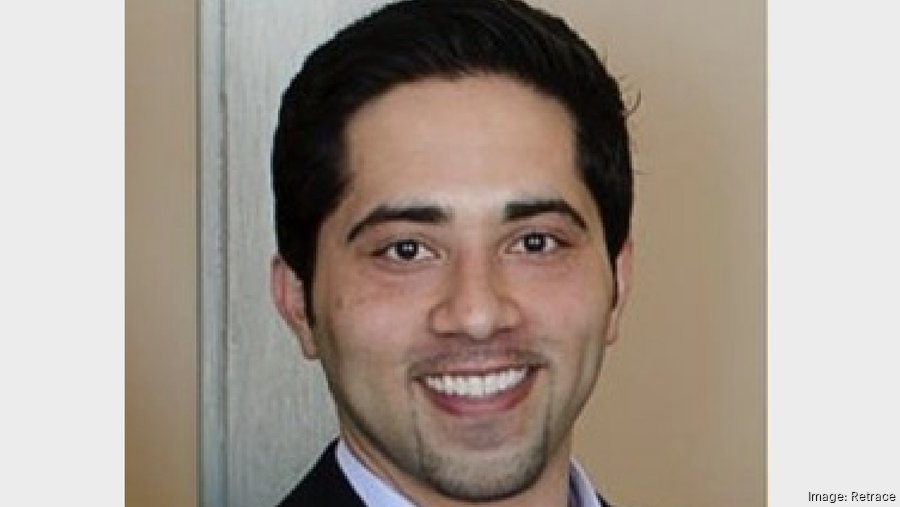
Ali Sadat Built Retrace Around Dentistry’s Least Glamorous Problem
He learned the cost of dental paperwork from the back office, then studied the clinic and the code. Retrace is his attempt to make a claim behave less like a mystery and more like a transaction.
The Quiet Machine That Helps Insurance Price the Unthinkable
Before an insurer prices a hurricane, spots a suspicious claim, or estimates a ruined kitchen, there is a good chance Verisk is somewhere in the workflow. The 55-year-old data company has become part utility, part software network, and part laboratory for risk.

Neutrinos
The Singapore startup betting that insurers do not need to replace their aging core systems - they need software smart enough to work around them.
Crawford & Company
For 85 years, Crawford & Company has made a business of the difficult middle between loss and recovery. Its next act pairs thousands of adjusters, nurses and contractors with software built to make claims move faster - without pretending the human judgment can be automated away.
bolttech
A Singapore insurtech quietly turned the checkout button into an insurance counter. Now 230 insurers and 700 partners run through its pipes.

Avallon AI
Avallon AI is a New York-based Y Combinator (Spring 2025) startup building AI agents that automate insurance claims operations from intake to resolution. Its agents answer phones, chase down employers and providers, read medical reports, and enter data directly into claims systems - work that traditionally consumes weeks of adjuster time. Avallon sells to insurance carriers, MGAs, and third-party administrators (TPAs), and raised a $4.6M seed round led by Frontline Ventures in November 2025.

Curacel
Curacel is an AI-powered insurance infrastructure company building the rails for insurance in emerging markets. Its cloud APIs let insurers automate claims processing and catch fraud, waste and abuse, while its Grow product lets banks, fintechs and e-commerce platforms embed insurance into their own apps. A Y Combinator Winter 2022 company founded in Nigeria, Curacel works with insurers such as AXA Mansard, Old Mutual and Jubilee across roughly ten African markets.

Insurf
Insurf is an AI-native decision and data layer for U.S. health insurance. Its first product, Inveto, turns denied healthcare claims into source-cited, physician-attested appeals so medical practices recover revenue they would otherwise write off. Each resolved claim feeds a proprietary coverage-decision graph of real payer behavior, which powers a second product, Surely, that prices the true cost of a health plan for employers and brokers. Founded in 2026 by Chang Lu and Bryan Chung, the company is part of Y Combinator's Summer 2026 batch and is based in San Francisco.

Toothy AI
Toothy AI builds HIPAA-compliant AI agents that run the insurance side of a dental practice - verifying patient coverage, filing and correcting claims, chasing denials, and posting payments. Using voice AI to make payer phone calls and portal automation to check eligibility, Toothy aims to take the roughly 160 hours a month that clinics spend on insurance busywork off staff plates. A Y Combinator Winter 2025 company founded in 2024 by Johnny Chen and Matthew Kerrigan, it sells a subscription service to dental clinics looking to collect more, faster, with smaller back-office teams.

Democrance
Democrance is a Dubai-based B2B insurtech that sells insurers a lightweight, cloud-based core platform - Democrance Pulse - which sits on top of legacy systems rather than replacing them. Founded in 2015 by Michele Grosso, Alberto Perez and Dr. Damian Dimmich, the company began by trying to sell low-cost microinsurance to people in emerging markets who had never held a policy, then discovered that the real bottleneck was the insurers' own technology. Today its no-code product configurator, distribution portals, underwriting engine and API library let carriers including AXA, MetLife, AIG, Manulife, Zurich, Tokio Marine and Sukoon launch and administer life, health and P&C products in days rather than months, across 15-plus markets in the Middle East, Africa, Asia and Latin America. The mainstream book cross-subsidises the microinsurance one, which is how a financial-inclusion mission survives contact with a P&L.

HealthMetrics
HealthMetrics is a Malaysia-based digital third-party administrator (TPA) that runs a cloud platform for managing corporate employee health benefits across Southeast Asia. It connects employers, insurers and a network of 15,000+ healthcare providers to automate claims, cut administrative work and give companies real-time visibility and control over rising healthcare costs. Founded in 2015 by Alvin Yuan and Advent Phang, it now serves 3,000+ corporate clients and 100+ insurers in Malaysia, Singapore and Indonesia.

Adonis
Adonis is a New York-based health-tech company that builds an AI orchestration platform for healthcare revenue cycle management (RCM). Founded in 2022 by brothers Akash and Aman Magoon, the platform uses context-aware AI agents to detect revenue risks early and automate resolution across denials, delays, and payer friction - helping physician groups, hospitals, and health systems collect more of the money they are owed while spending less to do it.

Arrow
Arrow is a New York-based healthcare technology company building an AI-powered operating system for revenue cycle management (RCM). Formerly known as Walnut and often described as 'Stripe for healthcare,' Arrow helps healthcare organizations reduce claim denials, accelerate collections, and run billing, claims, and payer communications from a single platform. Founded in 2020 by Roshan Patel and Yash Joshi, the company emerged from stealth in 2024 with $110M in Series A financing led by Gradient Ventures.
Camber
Camber is a New York-based healthtech company building AI-driven revenue cycle management (RCM) software for specialty care practices. Formerly known as Juniper, it automates medical claims processing, denial prevention, and payment reconciliation for ABA therapy, physical therapy, ENT and allergy, and other high-recurring care specialties. Trained on more than $2.5 billion in claims data, Camber helps providers reach roughly 95% first-pass paid rates and get reimbursed faster, replacing the manual, call-center-heavy processes of traditional billing firms.