The first clue was not insurance. It was a timetable. In 2013, Henry Mascot and a co-founder built OnPoint, a GPA calculator and schedule app for Nigerian university students. The project won the education category in the MTN Developer Challenge and came with a one-million-naira prize. Mascot later called it a defining moment. He had found the kind of problem he liked: ordinary work, needlessly awkward, waiting for software to make it lighter.
That preference would carry him through a technology hub in Enugu, consulting work, sales and growth roles, founder training in Accra, and eventually into the back rooms of insurance. It is a career assembled less like a ladder than a toolkit. Each stop added an instrument: code, community, customer discovery, selling, company building. By the time Curacel entered Y Combinator's Winter 2022 batch, Mascot and co-founder John Flash Dada were not merely pitching an app. They were building the rails on which other companies could move.
The unofficial degree
Mascot first used a computer at eleven, during the early years of internet access in Nigeria. The machine did more than entertain him. It enlarged his sense of what a person could make. He applied to study computer science and engineering, but university delivered a different syllabus: metallurgical and materials engineering at Enugu State University of Science and Technology.
He kept programming anyway. During a fourth-year internship at an oil company, colleagues began bringing him their software problems. He became, in his own recollection, the local IT person at the flow station. There is a useful distinction in that anecdote. Mascot did not need the official title before doing the work. The people around him supplied the job description one broken program at a time.
OnPoint arrived the following year. The prize offered money, of course, but its larger gift was evidence. Strangers had used something he helped build and a national competition had judged it useful. Mascot went on to help run a tech hub, build education products, consult and organize developer communities. In 2015 he helped organize GDG Aba and hosted an event for Google Developer Group Enugu. His education in technology happened across classrooms, client rooms and community gatherings, with the unofficial course often proving the more decisive one.
A pivot with a customer attached
Curacel did not begin in its present form. The early company made workflow software for record-heavy organizations. Then customer conversations exposed a more expensive obstruction: insurance claims moved through manual systems, integrations were slow, and fraud and waste made insurers wary of paying quickly or serving smaller markets. The opportunity was not hiding in a brainstorm. It was sitting next to the original product, controlling the economics around it.
Mascot and Dada redirected the company in 2019. Curacel began digitizing claims, using software to flag unusual patterns and reserving human attention for quality control. A company born from a client request had an unusual advantage: its first market was not theoretical. The pivot traded a broad language of productivity for the narrower grammar of claims, premiums, distribution and compliance. Narrower, here, meant larger.
The Curacel loop
meets customer
quote, distribute, process
covers and settles
The company eventually organized its work around two linked products. Claims automation helps insurers receive, check and process claims. Grow lets banks, fintech companies, logistics platforms and online businesses place insurance inside their own customer journeys. Someone can receive a quote and buy coverage without being sent through a small maze of forms and handoffs. Curacel remains mostly invisible. Infrastructure is allowed this peculiar luxury: the less a customer notices it, the better it is behaving.
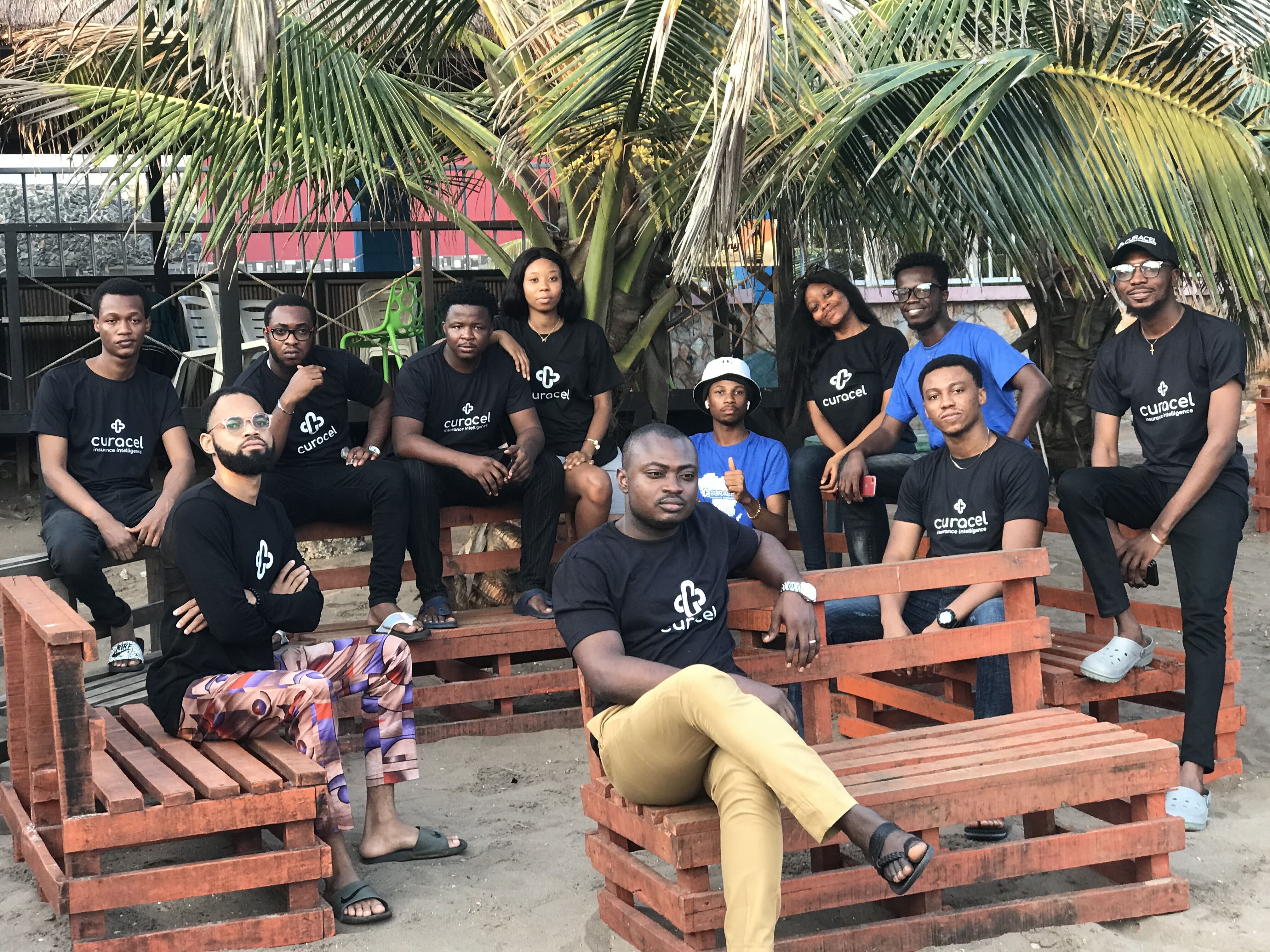
Selling the plumbing
Mascot's résumé made him unusually suited to sell something customers rarely see. Before Curacel, he worked in growth at 54gene and led sales strategy at AmplifyPay, where his work included landing banking clients. He now leads product and sales at Curacel. The pairing matters. Product leaders learn what can be made; sales leaders learn which inconveniences earn a budget. Infrastructure companies perish when those two lessons stop speaking.
Training at the Meltwater Entrepreneurial School of Technology in Accra gave that instinct a company-building frame. Mascot has said MEST changed him from an ambitious software developer into someone who understood how to start and run a business. Curacel later joined the Google for Startups Accelerator Africa, then Y Combinator. These programs did not invent the founder. They gave his pattern recognition more rooms in which to be tested.
By early 2023, Grow was used by more than 100 companies across eight African markets. Curacel's claims software served 20 insurance partners, including AXA Mansard, Old Mutual and Jubilee Insurance. The company announced a $3 million seed round that February and later reported $3.5 million raised in total and activity in ten markets. Those numbers are snapshots rather than trophies. For a business stretched across regulators, insurers and digital channels, every new market also means another collection of exceptions to absorb.
That complexity helps explain Mascot's preference for infrastructure. Africa is not a single insurance market with one regulator, one product catalogue or one method of payment. A distribution connection that looks effortless to the buyer may involve a carrier, a digital platform, a broker, local rules and several systems that were never designed to exchange information. Curacel's wager is that enough of those differences can be translated into reusable software. The difficult part is deciding what should become standard and what must remain local.
The work also joins two clocks that rarely agree. Software teams release quickly; insurance institutions are built to examine risk carefully. Mascot has to sell speed without treating caution as a defect. Claims still need review. Partners still need reliable records. Regulators still need answers. A useful platform does not simply hurry the old process. It gives each participant better information at the moment a decision must be made. That is a less theatrical promise than disruption, and a more demanding engineering brief.
The company as software
In 2026, Mascot's public work has acquired a new cast: Ada, Spock and Scotty. They are names for AI agents in a system he has documented as supporting Curacel and Soteria AI, a newer financial-services venture he is building. The agents draft emails, assemble meeting notes, track work and help ship code. One orchestrates. Others specialize. The science-fiction names are playful; the underlying idea is sober.
Mascot argues that agents become more useful when they are connected to real work and allowed to coordinate, rather than left inside isolated chat windows. His published operating notes describe a system working across company communication, research and engineering. The claim is not that management has disappeared. It is that routine coordination can be represented as software, then inspected and improved like any other workflow.
This is a natural next chapter for someone who once described himself as a “freak of tools.” The unit has changed. OnPoint helped one student organize grades and time. Curacel helps many companies coordinate an insurance transaction. The newer agents attempt to coordinate parts of the company itself. Each step moves the boundary between person and system, but the old question survives: where is attention being spent badly?
The useful wrong turn
There is a temptation to tidy a founder's past until every detour looks prophetic. Mascot's route resists the polish. He wanted computer science and received materials engineering. He made student software, ran community projects, consulted, sold technology and started one kind of company before discovering another. Curacel's story works because those experiences compounded, not because they followed a perfect plan.
The engineer could understand systems. The salesperson could hear the economic complaint underneath the technical one. The community organizer could recruit belief. The reader, who for years published lists of the books he consumed, kept treating self-education as part of the job. Even the early fascination with productivity remained useful once the workflows became consequential and the customers became institutions.
Mascot's stated ambition has long been to widen insurance access in emerging markets. That requires less poetry than plumbing: quicker claims, cheaper distribution, trustworthy data exchange and software that can accommodate different markets without collapsing into custom work. It is slow, specific labor disguised by the breezy word “platform.”
At eleven, the computer represented possibility. In 2013, a timetable app made that possibility public. Curacel turned it into infrastructure. Soteria AI and the agent experiments now ask whether the organization building the software can itself become more programmable. The thread is not a single industry. It is Mascot's enduring affection for leverage that can be used on Monday morning.