Greg Volynsky’s philosophy club began with a modest warm-up: the meaning of life. It was high school, a Tuesday morning, and apparently there was time before the rest of the day to settle the matter. He kept coming back. Eventually, as creative director, he chose questions for the group, taking particular pleasure in the small ones that other people hadn’t thought to ask.
There is something useful about meeting a forecasting-company founder here, before the forecasts. Volynsky’s interests have wandered through engineering, public policy, law and artificial intelligence. The questions have changed. His willingness to spend time on them has been rather consistent. His early writing also suggests he would have objected to any biography that made him sound entirely solemn.
Today he is co-founder and CEO of Zoa Research in New York, working with Sam Damashek on quantitative forecasting. Years before that, he was a teenager trying to understand why assembling a bed took so long, and whether a camera might help. Between those two projects lies an education in what happens when an interesting question becomes somebody’s responsibility.
Four hours, one bed, a business plan
During the summer between his sophomore and junior years, Volynsky moved from Fort Lee to Tenafly. There was furniture to assemble. He and his father spent more than four hours on a bed. The experience supplied a business idea: professionally made videos could show customers how a product went together, sparing them some of the difficulty of written instructions.
He called the project ProVid Productions. By September he had a draft business plan; a teacher offered suggestions. By early November, he had presented a revised version to three business teachers. He and a friend made an assembly video to demonstrate the idea. The plan ran to 27 pages. The bed had, at least, produced something beyond a place to sleep.
This was a school project, and he described it as a mock company. Its appeal as an origin story is its scale. There was an inconvenience he understood personally, a proposed improvement and a way to show it. He sought criticism from people who knew more about business than he did. Then he revised the work.
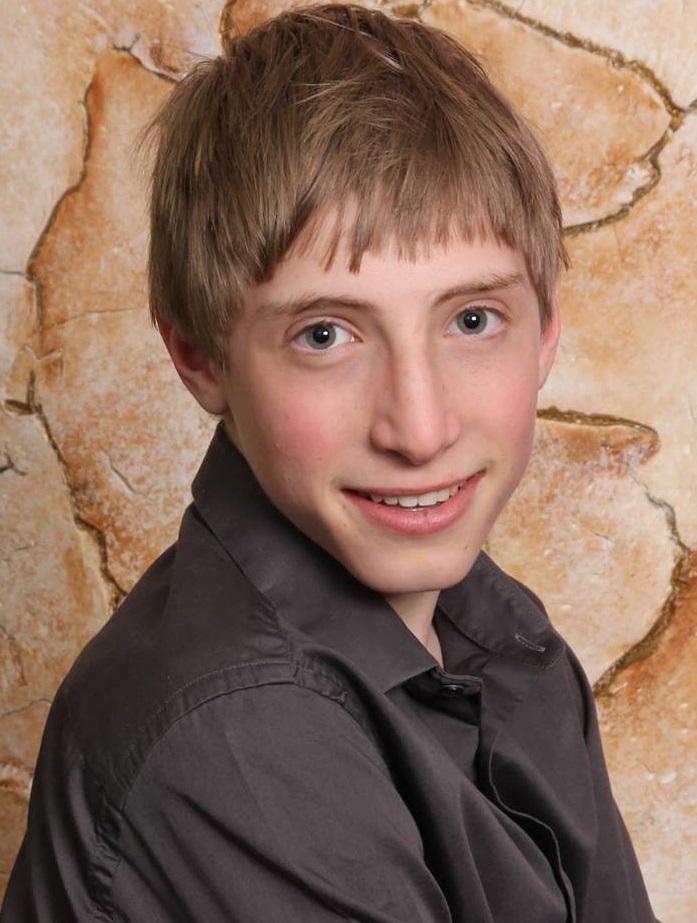
At Bergen County Academies, where he studied in the science and technology academy, he treated school as a place to try unfamiliar things. He participated in research programs, public speaking and competitions. At Readorium, an education startup, his internship included writing science articles for children and doing market research. A future career could wait while he collected some evidence.
Taking the measurements himself
Another early project involved building an Aqua Monitoring System. His proposal was to attach sensors to a boat so that it could record water conditions while moving. Rather than requiring every researcher to start a measuring device from scratch, he wanted a system that could accommodate different sensors and experiments.
He worked with teacher and mentor Mr. Nodarse, built a prototype and later revised the design to make it easier to attach and remove. In his school portfolio, he recorded science-fair recognition and described the continuing work of building and testing. The account is full of practical concerns: mounting, power, movement, cost and the usefulness of the resulting data.
The same portfolio contains a warning about the romance of being your own boss. He jokingly listed the one-person monitoring project among his leadership positions, on the grounds that managing himself was quite enough work. Behind the joke was a concrete lesson about planning a project over time. An idea that arrives suddenly still leaves a considerable amount of sawing, building and organizing to be done.
The argument leaves the classroom
Public questions were drawing his attention too. Constituting America recognized him in its 2016 entrepreneurship winners. His project, Politiscope News, gathered policy-related articles and analysis. He had noticed a difference between commentary about politics and examination of policy, and wanted to make the latter easier to find.
He also volunteered on a local campaign, working with the candidate on policy proposals. Debate offered another way into public life. At Bergen County Debate Camp, he coached twenty elementary and middle school children. Teaching them to speak clearly made him examine his own habits. He especially enjoyed watching children consider an argument before deciding whether to accept it.
By October 2017, at Carnegie Mellon, he was the freshman representative on the Student Body Government Cabinet. He worked to make students more aware of the Swartz Center for Entrepreneurship, collaborating with Christie Chang on outreach to student organizations. His role involved helping other people discover the support available for trying an idea of their own.
That is a pleasantly unglamorous piece of entrepreneurial history. Before a company and its recruiting needs came meetings, explanations and efforts to get students through the right door. Institutions can contain useful opportunities that remain invisible to the people who could use them. His job was partly to point.
Law, with questions in the margins
Volynsky graduated from Carnegie Mellon in 2020 with a degree in behavioral economics, policy and organization. In 2021, before entering Harvard Law School, he did research for the Pennsylvania Prison Society and worked for the Japanese consulate. Domestic policy and international diplomacy supplied different settings for his interest in how institutions operate.
At Carnegie Mellon, conversations with professor Jay Aronson had continued beyond class into the hallways of Baker Hall. Volynsky was interested in challenging an interpretation and considering alternatives. The habit suited law school, where the answer to a question can depend on which rule governs it, who has authority and how the facts are arranged.
His writing at Harvard gives that interest a more specific shape. He contributed to OnLabor, covering developments in labor law and employment. In January 2024, he explained SpaceX’s constitutional challenge to the National Labor Relations Board. Another piece examined a dispute over layoffs at the Los Angeles Times. These were accounts of institutional choices with consequences for the people working inside them.
In March 2023, he published an essay titled ChatGPT and Law School: an opportunity to think more deeply. The title places AI alongside education rather than outside it. By then, his interests in technology and legal reasoning were appearing on the same page. He completed Harvard Law School in 2024; his LinkedIn education entry records cum laude.
A friendship with a longer horizon
Volynsky and Damashek met at Carnegie Mellon in 2017 through Damashek’s then-girlfriend. Their friendship continued as their professional paths separated. Volynsky went to Harvard; Damashek spent three years at Jane Street, working on algorithmic options strategies in New York and Hong Kong and helping build a satellite development team.
They eventually became co-founders. Zoa’s company history dates its founding to 2024, and it belongs to Y Combinator’s Summer 2024 batch. Volynsky leads as CEO, Damashek as CTO. Their friendship preceded those titles by years, giving the partnership a history longer than the startup’s.
The attraction of their combination is easy to understand without assigning each founder a theatrical part. Both had spent time with complicated systems. Their experience came from different settings. At Zoa, they have chosen a problem that requires making explicit judgments about evidence and testing whether those judgments hold up.
What a forecasting company is asking
Zoa’s stated ambition is to train forecasting models that work across domains. The premise is that useful patterns need not stay within the boundaries of a single specialty. Its proposed applications include supply chains, energy and scientific experiments. These are ambitions for the models, rather than a list of results already delivered.
For a reader outside machine learning, the underlying question is approachable: can learning from several kinds of evidence improve a prediction about one particular thing? Zoa wants to build and test systems around that proposition. The appeal is broader than guessing an outcome correctly. A useful forecast can help someone decide what to investigate next.
Volynsky’s earlier work on a measuring device offers an interesting parallel. Then, he wanted researchers to have a more adaptable way to collect observations. Now, his company is concerned with what models can learn from observations. The projects sit at different stages of inquiry, with a shared interest in making the next experiment more useful.
“Speaking with Noah gives structure to reflection.”
Greg Volynsky, on working with CEO coach Noah Shanok
His own work as a founder includes a deliberate effort to examine how he spends his time. In a testimonial about coach Noah Shanok, Volynsky describes seeking guidance after a pivot and finding value in reconsidering his priorities. The account is unusually practical: building a company creates demands, and discussing them helps him decide where his attention belongs.
A soundtrack for the unanswered questions
The interests around the work remain varied. He lists twentieth-century political history, neural and artificial intelligence, Soviet bard music and climbing. His team biography adds the Oppenheimer soundtrack. Earlier reading included The Tipping Point, The Intelligent Investor and Naked Statistics. His television choices included The West Wing and The Office, a workable pairing for anyone interested in institutions and their daily absurdities.
He continues to write about institutions on Substack. The questions of his student years have acquired more detail, more history and more professional consequences. They still leave room for curiosity beyond the immediate job. A forecasting company makes a fitting current chapter for someone who has repeatedly found something worth investigating before knowing exactly where it would lead.
The teenager preparing Tuesday’s philosophy discussion would recognize the arrangement: choose a question, invite other minds into it and see how far the conversation can go. At Zoa, there is also a model to build, evidence to examine and a result against which the conversation can eventually be checked.
Follow the questions
Writing, projects and places to read more.