A startup founder wants a customer. Across the table, a large organisation wants a supplier it can trust. Both may admire innovation. Neither admiration nor a handsome pitch deck resolves the distance between them. La French Tech’s most interesting recent move is to work on that distance: the introductions, buying habits and administrative machinery that decide whether a promising product ever becomes somebody’s purchase order.
- A state-backed network helps French startups reach services, markets and one another.
- Different programmes serve scale-ups, strategic technologies and underrepresented founders.
- More than €2 billion in corporate buying commitments puts customers at the centre of the next chapter.
There is a useful wrinkle in the name. “French Tech” can mean the entire startup ecosystem, its public brand, or the Mission French Tech that runs government programmes. The Mission sits within the Directorate-General for Enterprise. Confusing those things makes every statistic look like an institutional achievement. The startups build the products. The Mission tries to improve the conditions under which they grow.
A flag, then an address book
Fleur Pellerin launched the initiative on 27 November 2013. Its earlier working name, Quartiers numériques, suggested places on a map. La French Tech supplied a collective identity that could travel. The original announcement included €200 million for private acceleration initiatives and €15 million for international promotion, within the public investment programme. That €215 million was an announced envelope, not a current annual operating bill.
The territorial model remains distinctive. Independent associations carry the label, connecting entrepreneurs within their own communities. The 2026-2028 network comprises 19 Capitals and 28 Communities in France, plus 78 Communities abroad. It is an arrangement with room for local character: a national banner, many front doors, and people who know which introduction is worth making.
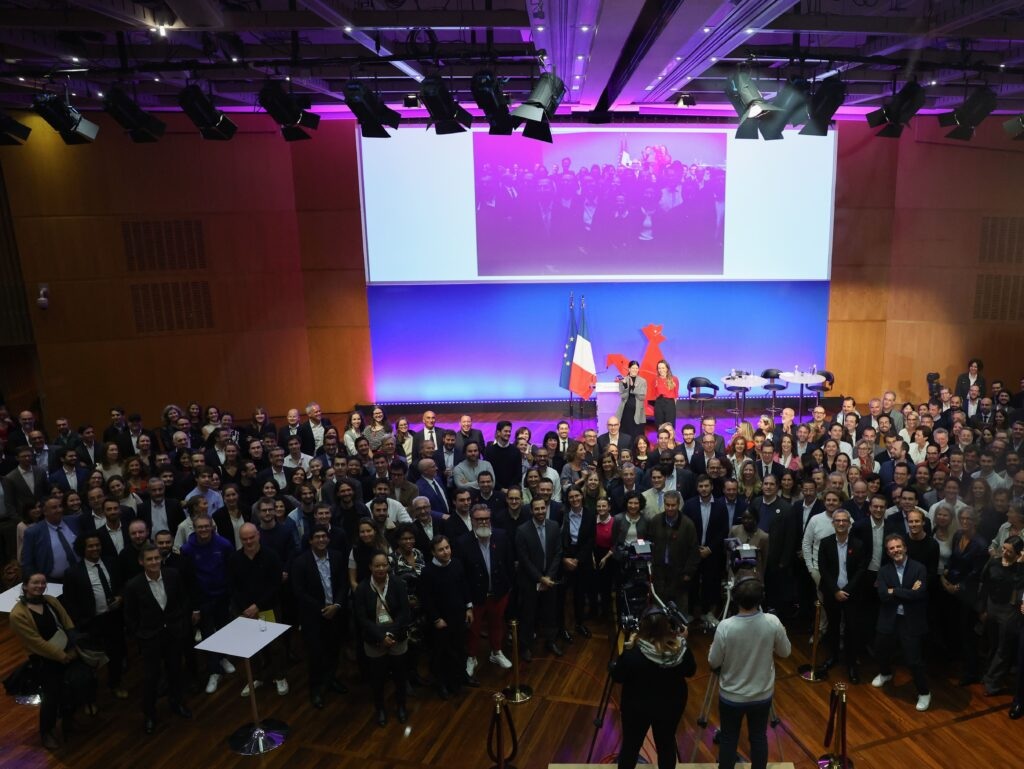
French Tech Central, launched in 2017, makes the public-service side practical. It brings administrative representatives into startup settings through appointments, workshops and other encounters. Correspondents span more than 60 administrations and services. Expertise here means knowing how public institutions work, and helping founders reach them without spending the week guessing which office owns the question.
The unicorn loses its automatic seat
Next40/120, launched in 2019, addresses a different stage. Its selected scale-ups receive tailored support and visibility as they expand. Familiar participants include Doctolib, Back Market and Mistral AI. This is a selective programme for companies already demonstrating substantial progress; it is not an open promise to accelerate every business with an idea.
The revealing moment came in November 2023. Following proposals from an ecosystem working group, the Mission revised the selection criteria. Unicorns would lose automatic admission. Revenue would receive more weight alongside fundraising, while environmental and equality requirements strengthened. The official explanation was that the ecosystem had matured. The editorial implication is straightforward: an investor’s price and a customer’s payment tell different stories.
In 2026, sixty places in the 120 go to businesses selected for revenue and growth, and sixty for fundraising. A committee chooses the Next40 from that group. The selected companies reported €11.3 billion in 2025 turnover. That describes a cohort’s scale; it does not establish how much revenue the programme caused.
French Tech 2030 adds another lens: strategic technology. Its 2025 class contains 80 businesses working across areas including AI, cybersecurity, quantum computing and robotics. The offer combines public-sector coordination, development support and visibility. Where a private accelerator might emphasise its investment thesis, this programme also reflects the state’s interest in technological sovereignty.
Who gets to join the conversation?
Scale-up clubs begin after a founder has cleared several hurdles. Tremplin starts closer to the first one. Launched in 2019, it connects entrepreneurs from underrepresented backgrounds with partner incubators and local networks. Current financial support can reach €15,000. Its 2026 incubation class has 102 businesses; 68% began with less than €10,000 in founders’ equity.
“Le talent entrepreneurial existe partout, mais il n’a pas toujours la visibilité qu’il mérite.”
Mamad Dembele · French Tech Nova ambassadorEntrepreneurial talent exists everywhere, but it does not always get the visibility it deserves. Translation.
French Tech Nova extends that concern to established startups led by underrepresented entrepreneurs. The programme offers six months of expert modules, mentoring and access to investors, corporate leaders and public decision-makers. The practical distinction matters: getting a company started and helping it grow require different interventions. A contact list can be an inherited advantage; these programmes attempt to widen access to it.
The purchasing department takes the stage
Je choisis la French Tech, launched in 2023, targets public and private demand. It arranges buyer introductions and teaches procurement. By June 2026, 23 large corporate groups had collectively committed to more than €2 billion in purchases from French startups and scale-ups. New participants included Safran, Stellantis and Fnac Darty. These are commitments, not a tally of paid invoices.
Purchases pledged by 23 corporate groups.
Measure the follow-through in contracts.
The mechanics are less glamorous than the number. Ministry ambassadors connect public buyers with startup solutions. The free Je choisis la French Tech Académie provides a four-hour online introduction to public procurement. For an entrepreneur, understanding the buying process can be as consequential as polishing the product demonstration. The state is a customer with rules; learning those rules is part of selling.
Borrow the introductions, do the selling
A founder can start with a local Capital or Community, use Central for administrative questions, and examine selective programmes against the company’s stage and eligibility. A buyer can join the purchasing initiative and meet potential suppliers. Private incubators, accelerators and business associations offer alternatives or complementary help. French Tech’s particular position is its bridge into government and its reach across territories.
The lesson to borrow is specific: improve access on both sides of the transaction. Give founders named contacts, teach the purchasing process, and bring buyers into the room. This helps when the obstacle is access or coordination. It offers less when nobody needs the product, the supplier cannot deliver, or the buyer never converts interest into a contract. The rooster can announce the morning. Someone still has to do the work.