Matt Pavelle’s personal website gives you New York, computer science at Carnegie Mellon, a LinkedIn link, and then a C function. The biography is practically over before the algorithm begins. Anyone hoping for a sweeping account of leadership must first negotiate a variable called threehalfs.
It is an appealing little reversal. The executive has made room for the machinery. A visitor can learn that he builds technology companies, then encounter a piece of code with bit manipulation and an unusually opinionated comment. The page has the economy of someone who assumes the interesting part is what happens under the surface.
His career gives that assumption plenty of work. Before becoming co-founder and co-CEO of Doctronic, Pavelle helped build businesses involving runway fashion, custom clothing, luxury watches, and rent. Put those subjects around a dinner table and they would have difficulty agreeing on the wine. Put software underneath them and the conversation becomes more coherent.
What connects these chapters is the practical business of turning an idea into something people can use. The clothing must be selectable. The order must make sense. The reward must reach the renter. Today, his public writing adds another question: who takes responsibility for carrying a piece of work all the way through?
A computer scientist walks into fashion
Pavelle studied computer science at Carnegie Mellon from 1993 to 1998, with a business minor. That pairing is useful context for a résumé that repeatedly puts engineering beside commerce. The two disciplines eventually have to agree on the same product, however different their preferred vocabulary.
By 2011, he was CTO of Moda Operandi, the fashion commerce company co-founded by Lauren Santo Domingo and Aslaug Magnúsdóttir. His role placed a computer scientist inside a business built around designers, collections, and the appetites of shoppers. Fashion supplied the desire; a technology team had to make the transaction possible.
The juxtaposition is more interesting than the familiar picture of a programmer discovering good tailoring. Digital commerce brings the precise and the subjective into the same room. A dress can be discussed in terms of shape, occasion, and taste. An ordering system has less patience for ambiguity. It needs choices that can be recorded and fulfilled.
Pavelle also appears in a small, revealing piece of New York technology history from that period. Asked about the recruiter who placed him at Moda Operandi, he was protective of the relationship and economical with his praise. The description he settled on was “an excellent communicator.” In a business prone to extravagant language, the compliment has a pleasant restraint.
Business minor.Carnegie Mellon University
The dress gets a settings menu
In May 2014, Tinker Tailor arrived with an unusually literal interpretation of personal style. Pavelle was a co-founder and CTO alongside Magnúsdóttir, Gabriel Levy, and Cleo Davis-Urman. Shoppers could customize designer clothing before buying it, using digital tools to make changes they could see.
The launch included work from more than 80 designers. Rather than accepting every detail of an existing garment, a customer could make selected adjustments. The proposition was easy to understand: sometimes the dress is almost right. “Almost” is a rather expensive word when the purchase comes with four digits.
The service offered changes to colors, silhouettes, fabrics, and embellishments, with a way to visualize the result. That made the customer’s preference part of the interface. Personalization acquired an operational meaning: choices on a screen had to correspond to something a designer could actually produce.
Consider the engineering problem implied by that promise. Every permitted change needs a boundary. A useful preview must keep its relationship to the object being ordered. A customer should be able to experiment without accidentally asking a manufacturer for an impossible garment. The appealing freedom of the front end rests on decisions made elsewhere.
That tension makes Tinker Tailor a telling chapter in Pavelle’s career. The business invited individuality while its software organized the available possibilities. There is a quiet comedy in this arrangement: even the wish to be unlike everyone else benefits from a well-designed system.
- 01 / FASHIONModa OperandiCTO by 2011
- 02 / CUSTOMIZATIONTinker TailorCo-founder & CTO · 2014 launch
- 03 / RENTAL REWARDSPiñataFormer CTO
From the wardrobe to the rent
Pavelle’s subsequent roles included CTO at Eleven James and CTO at Piñata. Piñata helps renters earn rewards, build credit, and save on everyday expenses. A career that had passed through luxury commerce was now touching a payment people make whether they feel like shopping or not.
Pavelle described the work in terms of both its ethical purpose and its financial benefit to renters. It brings a value judgment into the discussion of a product. He was willing to say what kind of benefit the team meant to deliver.
Rent is an illuminating subject for a consumer technologist. It recurs. It matters. It does not need to be made fashionable. Rewards and credit-related features enter a routine that already exists, rather than asking someone to invent a new habit for the sake of an app.
The contrast with fashion gives his résumé range without requiring a mythical reinvention. Both businesses involve people making decisions about money through software. The circumstances differ sharply. So do the reasons someone might care. A competent product team has to notice those differences before it can decide what to build.
“We’re all aligned on building morally good and financially beneficial products for renters.”
Matt Pavelle · On building for renters
The meeting that produced something
In September 2024, Pavelle joined a Vention dinner for technology leaders. The announced subjects included AI in software development, distributed teams, and scaling through funding rounds. These are topics that can sustain a very long evening. They can also leave everyone with an impressive collection of nouns.
The memorable incident was smaller. He worked with an attendee on a pressing business problem during the event. No theatrical rescue is necessary to make the anecdote useful. A room assembled to discuss technology briefly became a place where somebody could work on an actual difficulty.
The scene belongs beside his mentoring. He began mentoring with Entrepreneurs Roundtable Accelerator in January 2017. It is a continuing connection to New York’s founder community, alongside the companies on his résumé.
Mentoring offers a different use for accumulated experience. The next founder’s situation will never be an exact replay of the previous company. Useful advice depends on recognizing what carries over and what does not. That is a demanding form of translation for someone whose own work has crossed several consumer markets.
An interview with a working prototype
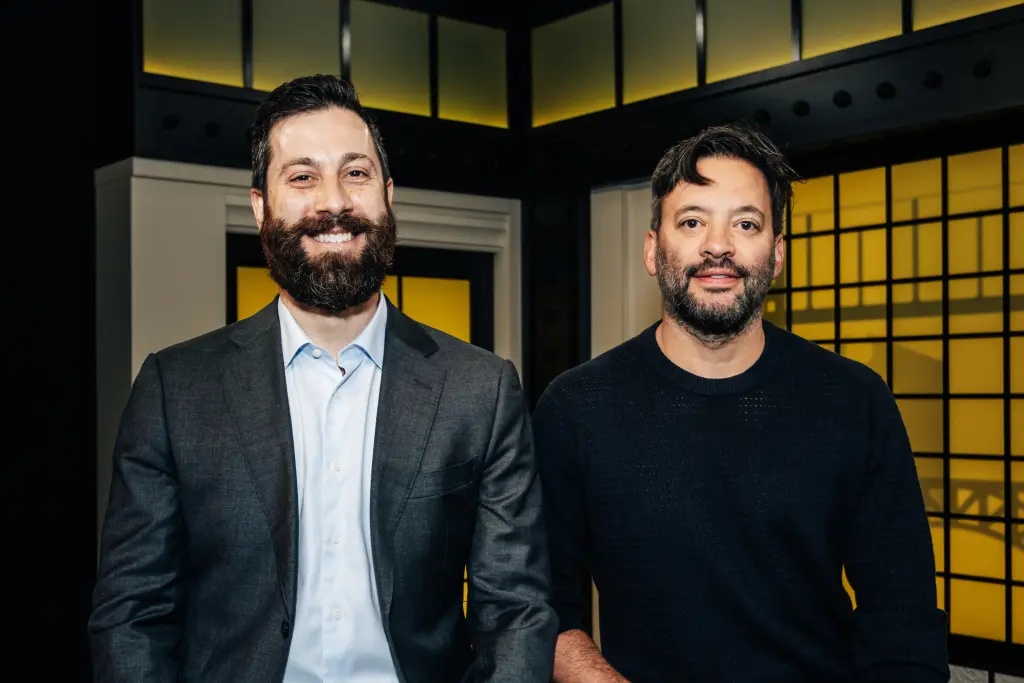
At Doctronic, which he leads with fellow co-founder Adam Oskowitz, Pavelle has described an organization that uses AI across multiple functions. One hiring anecdote gives the description some welcome substance. A candidate for head of product built a working extension of the product during her interview. The company hired her.
A job interview usually offers a peculiar kind of evidence. People explain what they have done, predict what they would do, and try to appear decisive while sitting in an unfamiliar room. A working prototype changes the material available for discussion. There is something to inspect together.
Pavelle’s account does not turn that episode into a universal hiring prescription. It does show what caught his attention: someone used the available tools to produce an extension of the actual product. The distance between talking about work and attempting it had become short enough to fit inside an interview.
For a founder who has spent years at the intersection of technology and consumer businesses, this is a meaningful change. An idea can meet implementation earlier. The questions that follow become more concrete. Does the proposed feature make sense? What should be adjusted? What did the builder understand about the person who will use it?
Who owns the last mile?
In October 2026, Pavelle described a progression from generalist to specialist to “owner.” The term concerns responsibility for an outcome. His example is a backend expert who also understands the product problem and can use AI to carry more of the work through testing and release.
This is his argument about how teams might operate, rather than a settled verdict on every workplace. It places judgment beside technical depth and asks people to stay involved beyond the border of their specialty. In that arrangement, a handoff becomes a decision worth examining.
The idea has a recognizable connection to his earlier work. Consumer products expose the joins between departments. A customer experiences the completed service, including whatever was lost between the original intention and the final screen. From the customer’s side, the organization chart is rarely an adequate explanation for a problem.
There is something quietly exacting about the word “owner.” It leaves less room for the comforting assertion that one’s particular portion was completed. Someone has to care about what arrives at the other end. Pavelle’s current writing makes that responsibility explicit.
Return to his personal website and the C function is still there, taking up space a conventional executive might reserve for a mission statement. It is a good closing image for this career: a brief introduction, then something that does work. After fashion, customization, rent, and company-building, Pavelle still leaves the visitor looking at the machinery.