The interesting word in Envisagenics’ latest deal is “potential.” In September 2026, the New York biotechnology company announced an agreement with Boehringer Ingelheim carrying more than $1 billion in possible payments, plus royalties. Before anyone orders the celebratory yacht, consider what is being purchased: a chance to find cancer targets in the way cells edit RNA.
- SpliceCore searches RNA-splicing patterns for disease-specific targets.
- Pharma partners bring therapeutic expertise; Envisagenics brings discovery and validation.
- Promising experiments and preclinical programs still need to become useful medicines.
The billion-dollar asterisk
Boehringer’s agreement funds a multi-year research effort, with an option to license selected targets after successful research. Antibody-drug conjugates, T-cell engagers and multispecific antibodies are among the approaches under consideration. The financial package includes upfront money, research funding, option fees and development, regulatory and commercial milestones. It is a sequence of bets, each waiting for evidence.
That distinction matters because Envisagenics occupies a particular corner of the AI drug-discovery market. Its proposition begins upstream of a finished medicine: identify something sufficiently distinctive about diseased cells that a therapy could exploit it. The difficulty is finding a target that gives treatment a useful address without sending it knocking on healthy tissue.
A gene is only the first draft
Imagine reading a manuscript and recording only its title. You would know which work you had, but little about the edition. A gene-level view can miss a similarly consequential detail. Before RNA supplies instructions for making proteins, cells splice it: sections are removed and others joined. Different combinations can produce different versions, or isoforms, from the same gene.
Envisagenics concentrates on those differences. SpliceCore combines machine learning, high-performance computing and RNA-sequencing analysis to identify splicing events associated with disease. The company describes a search resource exceeding 14 million events. Its advertised 400-fold expansion of search space is a platform claim about where it looks, rather than a measured multiplication of successful medicines.
Inside the company’s reported search resource. More places to look; every candidate still needs an exam.
The practical questions are more discriminating than “Is this unusual?” Is the event common enough among patients to matter? Does it distinguish diseased tissue from normal tissue? Could a therapeutic modality reach or change it? A rare curiosity may delight a scientist while doing little for a development program. SpliceCore is designed to prioritize the candidates that merit further work.
The computer gets a laboratory exam
A 2024 paper in Molecular Systems Biology makes the method concrete. Researchers identified NEDD4L exon 13 as a candidate in triple-negative breast cancer. The exon-skipping pattern appeared in 109 of 169 patient tumors analyzed. They then designed a splice-switching oligonucleotide, SSO-0205, to encourage inclusion of that exon.
The compound reduced proliferation and migration in breast-cancer cell experiments, with effects connected to TGFβ signaling. The work also used interpretable tree-based models to predict binding positions and the splicing factors involved. A prediction came with a biological explanation that researchers could investigate.
The paper reports a revealing limitation: models operating within exons performed less well than those examining adjacent intronic regions. Biology does not distribute its clues evenly. The result supports a targeted experimental strategy, while cell-based findings leave delivery, safety and effectiveness in people to subsequent development.
Partners buy a closer look
For a pharmaceutical researcher, the service is a way to extract hypotheses from RNA data that might otherwise remain obscure. In 2021, Biogen announced a collaboration to investigate RNA isoform regulation in central nervous system cell types. The commercial attraction was the ability to identify, test and validate splicing differences at scale, rather than laboriously cataloging them one at a time.
Bristol Myers Squibb’s 2022 collaboration applied the platform to oncology. The stated task included integrating data from thousands of patients to find RNA instructions encoding tumor-specific cell-surface antigens. BMS agreed to upfront and milestone payments. The company returned as a strategic investor in Envisagenics’ 2024 Series B, a useful example of a research relationship extending into financing.
Academic partnerships supply another ingredient: relevant patient material. Cancer Research Horizons and Queen Mary University of London announced a collaboration in December 2022 using de-identified data to study blood cancers. Queen Mary’s researchers described multi-omics profiles from more than 50 patients with acute myeloid leukemia. Data access here is part of the scientific machinery.
From toolmaker to asset owner
Maria Luisa Pineda and Martin Akerman founded Envisagenics in 2014, spinning it out of Cold Spring Harbor Laboratory. Its roots in Adrian Krainer’s laboratory explain the emphasis on RNA biology. Pineda leads as CEO; Akerman as CTO. This is a company whose computational work grew from a specific biological problem.
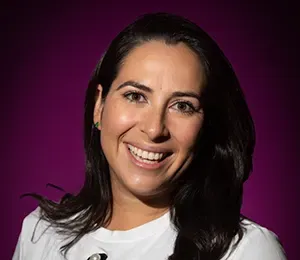
CEO & co-founder
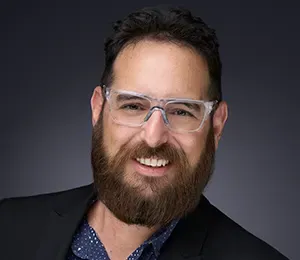
CTO & co-founder
The financing followed the work. In 2018, M12 and Madrona awarded Envisagenics a $1 million investment after an Innovate.AI competition that drew more than 250 North American applications. Red Cell Partners led its 2021 Series A. By the 2024 Series B announcement, Pineda described the business as profitable and emphasized funding its developmental pipeline.
“Today, as a profitable company”Maria Luisa Pineda, June 2024
That pipeline gives the business two routes forward: partnered research and wholly owned programs. Its September 2026 announcement describes ENV-375, an antisense oligonucleotide for ALS, as late-stage preclinical. The public pipeline also lists oncology indications. These are development efforts, with the scientific and commercial obligations that come after a promising discovery.
Copy the question, then test the answer
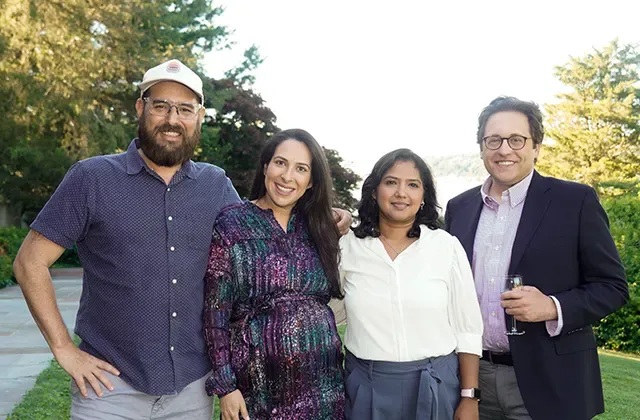
The company describes weekly science talks, collaboration across disciplines and paid internships. Such routines suit work that moves between computers and experiments: an engineer’s finding must eventually make sense to someone handling cells. Envisagenics’ customers are research organizations, while patients remain the intended beneficiaries of therapies still being developed.
The transferable lesson is editorial, but practical. Before asking a model to search harder, ask whether the unit of analysis hides the distinction you need. Envisagenics looks below the gene label, at the edits. Then it submits those discoveries to experiments and partners. An elegant explanation earns attention; a useful target must earn its place in a medicine.