In 2004, Bill Ford had an appointment involving pizza. Amherst students were meeting members of the college’s board of trustees, and Ford, an alumnus serving on that board, explained the point of the gathering: to hear what was on students’ minds. The event had the pleasantly literal name Pizza with the Trustees. For once, an institutional title told you exactly what you were getting.
It is a modest scene to put beside a career in global investing. Yet it offers a useful entrance to Ford’s story. There were people responsible for an institution’s future, people living inside it every day, and a reason to get them talking. The pizza was a practical improvement on the average board agenda.
Ford’s professional world has grown considerably since then. The question behind that campus meeting remains recognizable: how do you make a good decision about someone else’s future without first understanding their present?
Sixteen years before the top job
Ford graduated from Amherst in 1983 with a degree in economics and earned his MBA at Stanford in 1987. He worked as an investment banker at Morgan Stanley before joining General Atlantic in 1991. His arrival preceded his appointment as chief executive by sixteen years. He became chairman in 2021.
The interval is worth pausing over. In a business often described through transactions, a long apprenticeship is less easily photographed. It consists of accumulating comparisons: companies that expand as expected, founders who surprise you, markets that change the meaning of a once sensible assumption. A title arrives on a particular date. Judgment has a less obliging calendar.
His board record gives that education some texture. Over the years, Ford served on boards including E*Trade, Priceline, NYSE Euronext, and NYMEX Holdings. His current corporate appointments include BlackRock and ByteDance. These are different windows onto how people move money, find information, and participate in markets. Together, they help explain why his investing interests extend beyond a single industry’s vocabulary.
The fortune intended to leave
General Atlantic existed for eleven years before Ford arrived. Its founding investor, Chuck Feeney, had made his fortune through Duty Free Shoppers. He wanted investments in growing businesses to increase the money available for philanthropy. The firm began in 1980 as his family office.
That origin gives the enterprise an unusual starting question. How much can money accomplish before its owner gives it away? Feeney’s philanthropy was part of the reason for the investing operation, rather than a decoration added after the investing had gone well.
Ford later wrote about Feeney’s enjoyment of meeting entrepreneurs. The founder entrusted the firm’s leadership with running the business while retaining an interest in the people it backed. Money was useful, and so was contact with the person trying to turn it into something.
For Ford, that history supplies a responsibility as well as an inheritance. Expanding a firm requires new capabilities and new colleagues. Keeping an institutional purpose recognizable requires repeated choices about what deserves attention. A founding story earns its place only if people can still see it operating in the ordinary work.
The influence of a minority stake
Ford’s explanation of growth equity starts between two more familiar forms of private investment. Venture capital can back a company while its business model is still taking shape. A buyout investor can acquire control of an established business. Growth equity works with companies that already have a functioning business and need help expanding it.
In 2015, he described General Atlantic’s typical purchase as a minority holding of 10 to 40 percent. The object was to earn returns through company and market growth. Those figures describe his explanation at that time, rather than a promise about every investment the firm makes today.
The arrangement makes persuasion consequential. An investor can supply money, but money alone does not settle questions about hiring, entering another country, or preserving what customers like about a business. An active partner needs something useful to say, and a founder needs a reason to listen.
Ford has emphasized shared direction with management teams. There is a practical dignity in that idea. Someone has already built something that works. The investor’s assignment begins with understanding it. A checkbook is a useful tool; it is a poor substitute for curiosity.
A simplified view of Ford’s explanation of the private investment spectrum.
A global strategy needs local people
The firm’s geography expanded alongside Ford’s career. London became its first office outside the United States in 1999. Initial investments in Latin America, India, and China followed in the 2000-2002 period. Later office openings extended its presence in emerging markets.
In a 2022 discussion with colleague Graves Tompkins, Ford explained why that map needed people on the ground. He pointed to Clip, a Mexican payments business serving small shops, as an example of combining an understanding of payments with relationships in a local market.
Tompkins supplied a revealing account of the selection process: more than 10,000 companies added to the firm’s database in the preceding year, roughly 1,000 examined, and 25 investments made. The numbers are historical. The work they describe is familiar to anyone who has had to separate a promising introduction from a decision they can defend.
That is where the romance of a global network meets the less glamorous work of attention. Being able to call many people is helpful. Knowing which question to ask the person on the other end is harder. Local relationships give an investor a chance to discover the difference.
Staying in the conversation
In March 2026, Ford reaffirmed General Atlantic’s commitment to the Gulf despite regional conflict. The firm would continue looking for opportunities while discussing the risks attached to particular investments. Its presence included offices in Abu Dhabi and Riyadh and investments in businesses such as Property Finder and Eyewa.
There is a distinction here between deciding that a place matters and deciding that a particular transaction makes sense. The first can survive a period in which the second becomes difficult. Relationships are not conveniently stored in a cupboard until conditions improve.
Ford’s position also puts a demand on the word patience. It must accommodate uncertainty without becoming an excuse to disregard it. A long horizon still contains tomorrow morning. The people responsible for capital have to account for both.
An algorithm joins the discussion
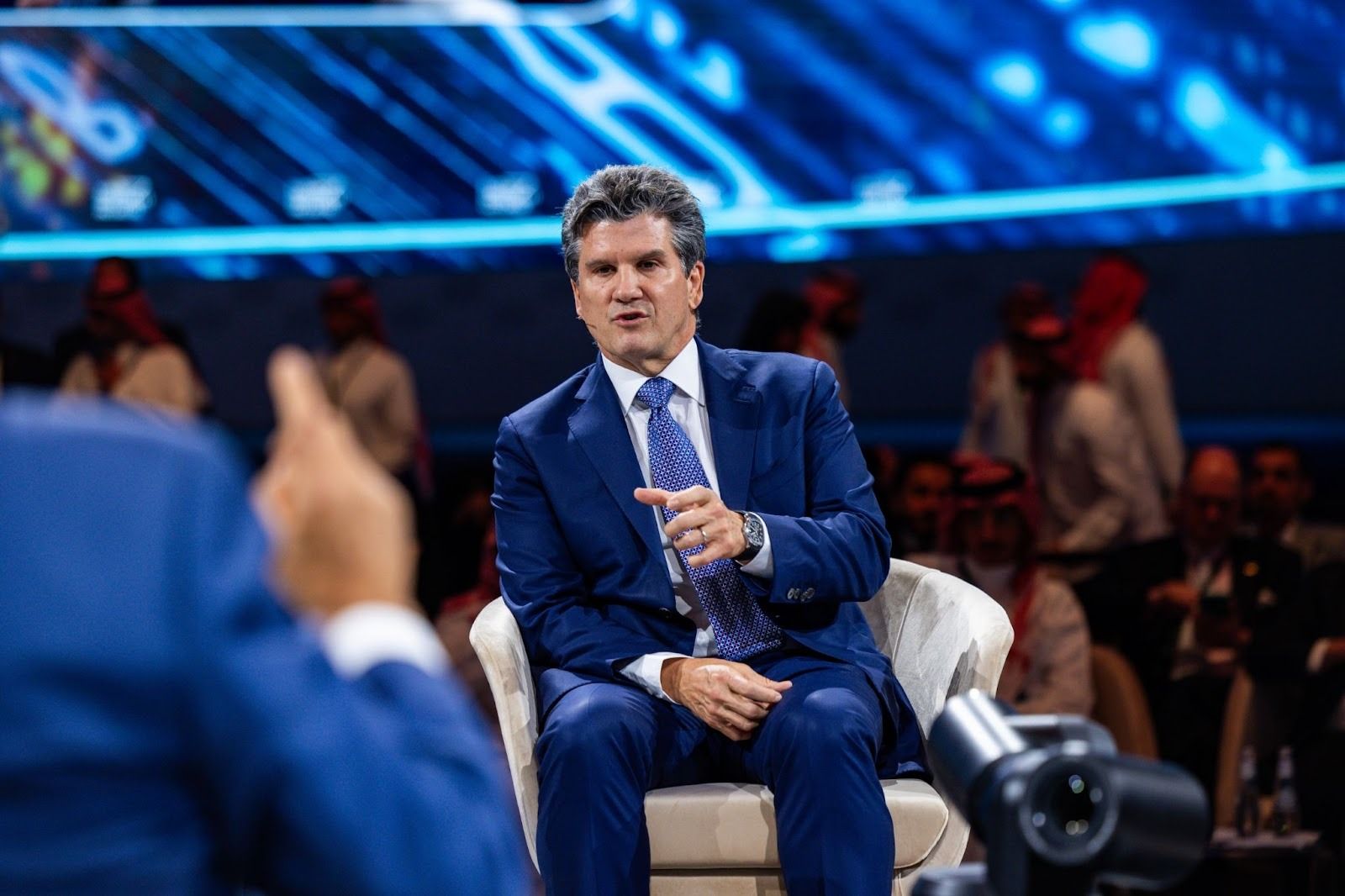
Ford’s interest in technological change also reaches into the firm’s own deliberations. An AI resource called Ada can inform investment discussions; it has no vote. The arrangement leaves responsibility with the people making the decision.
A new tool creates a new kind of conversation. An investor can ask it to help examine a question, then has to decide what weight to give the response. The existence of another answer does not remove the obligation to judge it. An investment committee remains a place where someone must own the consequences.
By his 2026 conversation with CNBC’s Leslie Picker, Ford was discussing AI in a much wider frame: software, data centers, digital infrastructure, and energy. He also emphasized diversification across global markets. More than half of the firm’s investments were outside the United States.
It is an expansive outlook, but expansion alone is an incomplete argument. Technologies change at different speeds. Capital has different jobs to do. Finding connections between them is part of an investor’s work; deciding where a connection justifies an investment is the more exacting part.
A lesson from the other side of the net
Another new perspective arrived through Novak Djokovic. An entrepreneur introduced Ford to the tennis player before the 2023 French Open. In June 2026, General Atlantic appointed Djokovic a global strategic advisor, working with its leadership, portfolio companies, and investors.
Ford’s welcome emphasized discipline and the ability to improve over time. Those are familiar words in corporate life, where they occasionally enjoy a more vigorous career in presentations than in practice. A professional athlete gives them a rather less forgiving setting. The score is visible, and yesterday’s achievement offers no exemption from the next match.
The connection fits Ford’s interest in learning across professions. An advisory appointment cannot demonstrate its value merely by existing. Its possibilities lie in the exchanges that follow: a different account of preparation, a challenge to a familiar assumption, an introduction the firm would otherwise miss.
For an executive with decades in one organization, another profession offers fresh questions. Experience can make a person quicker to recognize a pattern. It can also make an unfamiliar pattern worth seeking out.
A place for the unscheduled conversation
In June 2026, Amherst announced a $50 million gift from Ford, his wife Molly, and the Ford family for a student center and dining commons. By September, students were using the new building. A family with several generations of Amherst graduates had helped create another place for students to meet.
Ford’s explanation stressed spontaneous encounters across differences. It provides an interesting counterpart to his enthusiasm for AI. A college gathering space makes room for experiences that are difficult to request on demand: overhearing an idea, meeting someone outside your discipline, or discovering that a disagreement has become a friendship.
“When intelligence is available on demand, the question shifts from what you know to who you are.”Bill Ford / Amherst, June 2026
The two commitments belong in the same life. Better tools for handling information increase the importance of deciding what to do with it. A dining table offers a different sort of education. It allows the next question to come from someone you had no plan to consult.
Room to keep learning
There is a second building on Ford’s horizon. In September 2026, General Atlantic announced a lease for five floors at 625 Madison Avenue, with the tower expected to open in 2029. The planned headquarters will accommodate its New York team and visiting members of its global network.
The scale is a considerable distance from the firm’s original Manhattan townhouse. General Atlantic reported approximately $130 billion in assets under management across its strategies as of June 30, 2026. Such numbers describe the institution. The rooms describe what people hope to do inside it.
Ford has spent thirty-five years at General Atlantic, with much of his work organized around relationships that can outlast a transaction. His current interests take him toward new technology, new colleagues, and new spaces for meeting. There is room in that career for an algorithm and a tennis champion. There is still room for the person with an awkward question.
And, as those Amherst students discovered years ago, a little pizza can help.