The most revealing thing about Acturis is what its users are trying not to do: type the same information again. A broker takes a client's details. An insurer prices the risk. Someone issues documents, collects money, renews the policy, records the claim and demonstrates to a regulator that the proper checks happened. In a fragmented office, each handoff invites another form, another login and another opportunity for a surname or premium to mutate. Acturis sells the opposite - one cloud environment in which that record can keep moving.
That sounds like sensible plumbing, because it is. It is also the basis of a sizeable private software business. The wider Acturis Group says its products support more than 100,000 users in over 40 countries. Its latest disclosed annual revenue was £165.5 million for the year ended September 2024, up £21.4 million. In Britain alone, the platform now carries £18.5 billion of gross written premium a year. Policyholders may never see the name. Their broker almost certainly knows it.
The founders picked an unglamorous enemy
Theo Duchen and David McDonald founded Acturis in 2000 after careers at McKinsey. Duchen had led the consultancy's UK general-insurance practice; McDonald had worked on e-commerce. Their diagnosis was not poetic: the insurance market was too cumbersome and inefficient for modern business. Their response was unusually early. In July 2002, Acturis put a multi-tenant, industry-specific cloud platform live. Three months later came a real-time premium-finance integration. Commercial e-trade followed in 2004.
The timing mattered. Multi-tenant software means customers share a maintained core rather than each nursing a private version into obsolescence. It lets the vendor update everyone and makes a common transaction model possible. Acturis says updates, modifications and enhancements now arrive behind the scenes without downtime. The less theatrical benefit is that a market can gather around the same rails.
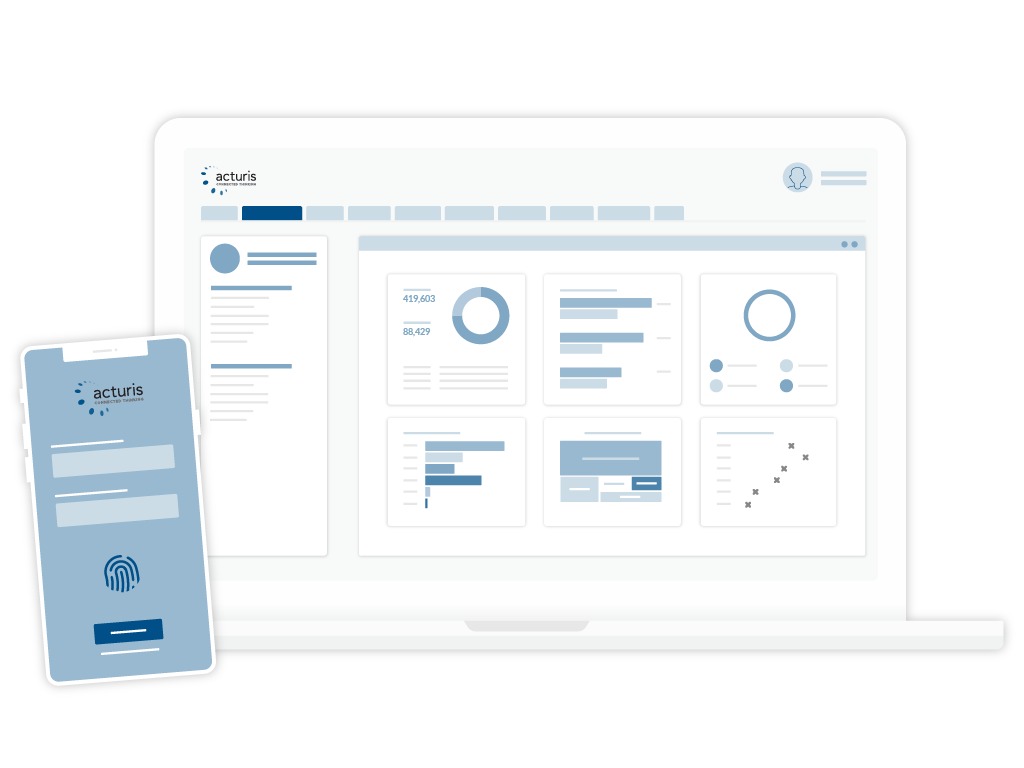
Today the product list reads like the contents of an insurance office: e-trading, CRM, product build, document generation, policy administration, accounting, claims, compliance, business intelligence, mobile access, customer portals, robotics and AI. The point is not that every module is novel. It is that the modules share context. Data entered during prospecting can populate documents; a claim can attach to the correct version of a policy; client-money calculations and audit trails sit beside the operational work.
Its moat is the crowd
A conventional broker-management system helps one firm organise its work. Acturis becomes more interesting when an insurer publishes a product into it and brokers can trade that product electronically. The broker gets access to rates and cover; the insurer gets distribution and cleaner submissions. Add premium finance, comparison sites, payments, external data and claims updates, and each participant gives the others another reason to stay.
The 2024 claims API with Aviva is a neat example. When a personal or commercial motor, property or liability claim is created in Aviva's system, its record and later updates transfer into Acturis and match against the broker's policy or existing claim. The first thing to fail in the old process was continuity: brokers had to request updates and key information manually. The API removes steps without pretending that claims need no humans.
“Go-live is the start of the project, not the conclusion, and the real work starts now.”Theo Duchen, co-founder and Group co-CEO
FullCircl shows the same pattern at the front of the journey. Its SmartBroker integration can pre-populate forms with validated company data, run onboarding checks and enrich underwriting submissions. The partnership was pushed by shared customer demand - useful evidence that Acturis' “community” is more than a marketing noun. Users help decide which connections deserve to exist.
The bill is bespoke; the economics are not
There is no public Acturis price card. The company describes a one-off implementation charge followed by an ongoing service fee, with modules and scope tailored to the buyer. One broker network, Momentum, publicly quotes its own members about £125 per user per month for an Acturis licence while covering setup itself. That is a useful reference, not a general tariff. A migration can also include data cleansing, product configuration, documentation, integrations, training and process redesign.
Acturis offers fixed-cost implementation to reduce uncertainty around delays. Lark Group rolled the system out in phases across offices to limit disruption. The Insurance Partnership trained 139 people across four offices and migrated from TAM for a single-day launch. First2Protect came to Acturis after earlier transformation projects had left it wary of familiar pitfalls; a competitive tender and a shared understanding of its call-centre model changed the decision. Its resulting setup links mortgage advisers, direct customers, insurers, payments, renewals and communications through tailored workflows.
The copyable lesson is not “buy a large system.” It is to identify the repeated record, map every handoff and automate the seams before decorating the customer journey. Phase the rollout when operational continuity matters. Put one accountable project manager on the migration. Keep users involved after launch. And judge the return against avoided operating work, not simply the licence line.
Twenty per cent back into the machine
Infrastructure gets old in public. Regulation changes, insurer appetites move, new data sources appear and security standards rise. Acturis says it reinvests roughly 20 per cent of revenue into the system. In 2024, group platform and technology investment reached £22.3 million. The company points to PCI DSS, SOC 1 and SOC 2 reports, ISO 27001 information-security management and ISO 22301 business-continuity certification. Its brochure claims more than 99.9 per cent availability over ten years.
That spending is funding AI and data tools as well as maintenance. Acturis has used machine learning in decision workflows since 2020 and now promotes underwriting assistance, renewal propensity, cross-selling and placement insight. The sensible reading is augmentation. Insurance decisions have regulatory consequences and awkward edge cases; the recent Aviva work is valuable precisely because it moves facts reliably, not because it makes the broker disappear.
An engineering culture with policy wording
Acturis recruits heavily from engineering, mathematics and physics, then pairs technical hires with people who understand how an insurance office behaves on renewal morning. That combination is part of the product. A generic workflow tool can draw a process; an insurance platform must understand policy versions, delegated authority, client money, insurer referrals and the awkward distinction between being compliant and producing evidence of compliance.
The company describes its workplace as supportive but challenging, with buddying, mentoring, frequent two-way feedback and sponsored professional development. It says most of its management team began at entry level. Benefits include flexible and remote work, private health cover and an employee share-option scheme - a notable detail when employees remain among the minority owners. In 2026, Acturis renewed Great Place to Work certification across Britain, Canada and France for a second year. Awards do not settle the culture question, but the model has an internal logic: a multi-tenant platform needs people willing to maintain old promises while adding new ones. The clever prototype is a small part of the job. The enduring work is making sure an improvement for one customer does not become a surprise for thousands of others.
From a British network to a federation
Acturis bootstrapped for its first decade, then took a minority investment from Summit Partners in 2010 to internationalise. During Summit's tenure, the user base grew 2.8 times to 20,000, more than 500 employees were added and the company completed four acquisitions outside Britain. Astorg bought a minority position in 2019 and increased its holding to roughly 52 per cent in 2024. The founders, management and employees retained a sizable minority.
The international strategy is pragmatic. Rather than assume Britain's insurance rails travel intact, the group bought local capability: German broker software and comparison data, PowerBroker and Brovada connectivity in Canada, Add Value's French e-trading network, Nordic Insurance Software, ICE's insurer suite and, in 2023, the wonderfully named Broker Buddha for US digital client engagement. Local market structure remains the product problem.
This also explains the boundary of the Acturis proposition. A three-person broker with a few insurer relationships may find a simpler CRM and manual portals cheaper. A buyer unwilling to standardise data or assign experienced staff to migration will merely import old confusion into a new screen. And in a market where Acturis lacks dense insurer connectivity, the network advantage takes time to build. The platform earns its keep where transaction volume, regulatory evidence, product breadth and integration complexity are high enough for fewer seams to matter.
For larger brokers, insurers and MGAs, however, those seams are the work. Acturis' achievement is to have made the plumbing cumulative: each new product, integration and participant thickens a marketplace that began with a login screen in 2002. The company does not need the policyholder to know its name. It needs the quote to become a policy, the policy to become a claim, and nobody in between to type it all again.