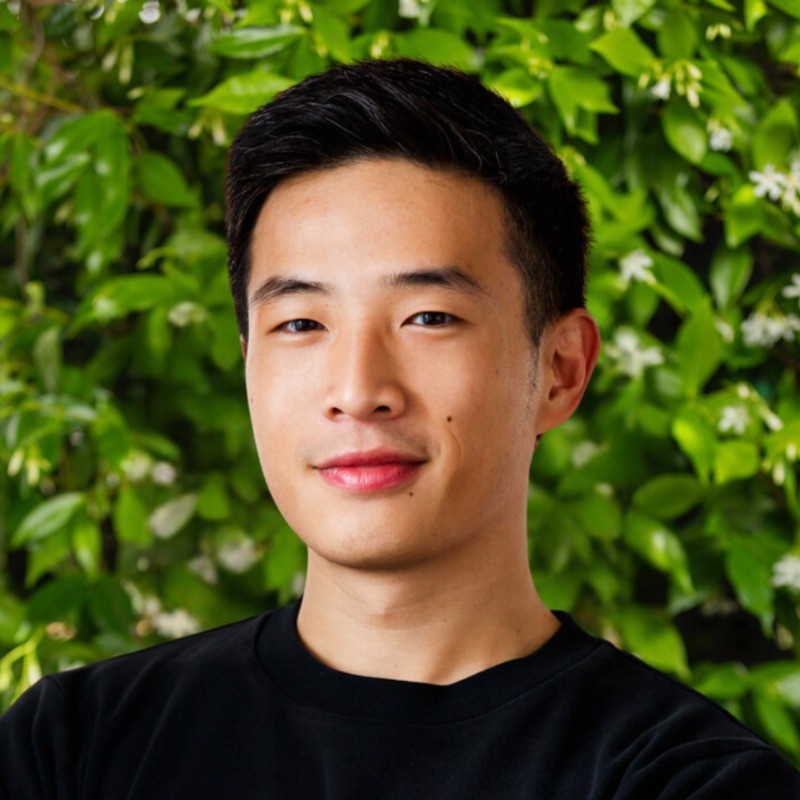
A Kid Who Presented at Nobel Ceremonies, Then Quit Stanford
Will Yin was the kind of student who, at sixteen, was presenting cardiovascular disease diagnostics at Nobel Prize ceremonies in Sweden. Not as an observer - as a researcher. Greenwich High School's class of 2017 valedictorian, U.S. Presidential Scholar, machine learning engineer before most of his peers had written their first for-loop. He enrolled at Stanford to study neuroscience, computer science, and mathematics, ran experiments at the Stanford School of Medicine, and crossed the country to do biochemistry research at MIT.
Then he quit. Sophomore year. Not from burnout and not from doubt. He looked at the thing he cared about - the healthcare system failing people who needed it most - and concluded that being inside a university lab was the slowest possible route to fixing it.
That clarity is the throughline. Every career move Yin has made runs on a single engine: what is the fastest path to impact? At 19, that meant joining Y Combinator and building Jupiter, a food-creator advertising network that raised $9M from Khosla, Canaan, NFX, and YC itself. By 2023, it meant pivoting entirely - watching family members navigate the nightmare of specialty drug approvals for cancer and Alzheimer's, and deciding that the 30-day wait between a life-saving prescription and the first infusion was not inevitable. Just unoptimized.
A 30-Day Delay That Should Not Exist
Specialty drugs are the future of medicine and the present dysfunction of healthcare administration. Treatments for cancer, multiple sclerosis, autoimmune conditions, rare diseases - these drugs now account for more than half of all U.S. prescription spending. They are also the most delayed. Not because the science is slow. Because the paperwork is.
Before a patient receives their first infusion of a biologic or specialty pharmaceutical, a clinic must verify insurance coverage, submit a prior authorization request, wait for a response (often by fax), handle appeals if denied, confirm reimbursement amounts, and manage billing. That process - done manually, by overwhelmed staff, across fragmented payer portals, with inconsistent information - routinely takes weeks. Patients with cancer. Patients with Alzheimer's. Waiting.
Will Yin watched this happen to people in his family. So did his co-founder Rohit Rustagi. They were not surprised. They were done waiting for someone else to fix it.
Insurance companies make the approval process challenging for specialty medications. Infusion providers, pharmacies, and health systems spend an excessive amount of manpower on basic tasks like checking insurance coverage, submitting prior authorizations, or verifying reimbursement amounts, which take weeks of time per prescription and lead to millions in bad debt.
- Will Yin, CEO of MandolinAI Agents as Full-Time Employees
Mandolin launched its product in January 2025. The pitch is not "software that helps your staff work faster." The pitch is the staff. Mandolin's AI agents read, reason, and act across payer portals, fax systems, EMRs, and phone queues - completing entire workflows end-to-end, around the clock, with the judgment of an experienced biller and the throughput of a machine.
Benefits verification that used to take days: done in minutes. Prior authorization submissions that used to require three human handoffs: automated. Clinical notes parsed, payer policies analyzed, reimbursement amounts confirmed. The agents do not hand off to humans for the routine cases. They handle it.
Within months of launch, Mandolin was live across 700+ clinic locations and processing cases for 250,000+ new patients annually. Customers report converting days of administrative work into hours. Patients are getting on therapy weeks earlier. The outcomes are not theoretical.
Greylock, SignalFire, and Maverick led the financing alongside SV Angel. Jerry Yang - co-founder of Yahoo! - and Guillermo Rauch, CEO of Vercel, joined as individual investors. The $40M Series A announced in June 2025 brings Mandolin's total funding to $97M.
From Palantir to Food Tech to the Operating Room Backlog
Before Mandolin, there was Jupiter. Before Jupiter, there was Palantir. Before Palantir, there was a Stanford sophomore who ran neuroscience experiments at the medical school and biochemistry research at MIT. Will Yin's career does not look like a straight line because it isn't one - it looks like a person who runs toward the hardest version of whatever problem he is currently obsessed with.
At Virtualitics, he worked on machine learning applications for large-scale data visualization. At Palantir, he was a Forward Deployed Engineer - the company's version of someone who goes into an organization, figures out what's actually broken, and builds something that works. That sensibility - operational, outcome-oriented, allergic to abstraction - carries through everything he's done since.
Jupiter (YC W19) was an advertising and commerce network for CPG brands and food creators. It raised $9M from Khosla Ventures, Canaan, NFX, and Y Combinator, and built infrastructure for a then-nascent grocery-delivery economy across the Bay Area. Yin served as Co-Founder, President, and CTO - the person who built the product and made it work at scale. When the company reached its conclusion, he did not take a break. He started paying attention to a different broken system.
The pivot to healthcare was not random. Both Yin and Rustagi had watched family members fight the administrative machinery around specialty drug access. They knew the workflows from the researcher's perspective - they had done neuroscience research on Alzheimer's and cancer treatments. They built Mandolin in 2024 because they ran out of reasons not to.
By leveraging AI, we saw an opportunity to build autonomous agents that can tackle these workflows more reliably, in just minutes.
- Will YinA New Kind of Worker for Healthcare
Yin's framing of Mandolin is deliberate. He does not describe the product as a tool or a platform. He describes it as "a new kind of worker for healthcare" - one that executes phone calls, completes forms, navigates payer portals, and makes decisions across entire workflows without supervision. The implication is not that AI assists humans. The implication is that AI is the employee, and humans are freed to do the work that requires human judgment.
Specialty drugs now represent over half of U.S. prescription spending, and that share is growing. The back-office burden is not going away - it is getting larger, more complex, more fragmented. Yin is betting that the solution is not incremental software improvement. It is wholesale replacement of manual labor with agents that never call in sick, never get overwhelmed by a queue, and never fax the wrong form to the wrong payer at 4:58 on a Friday.
He describes himself as an unapologetic optimist. What he means, judging by the outcomes, is that he's correct.
The Moves, In Order
What He Says
"Insurance companies make the approval process challenging for specialty medications... which take weeks of time per prescription and lead to millions in bad debt."
On the problem Mandolin solves"By leveraging AI, we saw an opportunity to build autonomous agents that can tackle these workflows more reliably, in just minutes."
On Mandolin's approach"Improving patient access to life-changing therapies."
Personal mission statement, willyin.comA "new kind of worker for healthcare" - one that executes tasks like phone calls, form completion, and helps patients access specialty pharmaceuticals much faster.
Describing Mandolin's AI agentsWhat He's Built
- Greenwich High School Class of 2017 Valedictorian and U.S. Presidential Scholar
- Presented cardiovascular and Alzheimer's diagnostic research at Nobel Prize ceremonies in Stockholm, Sweden
- Forward Deployed Engineer at Palantir Technologies
- Co-founded Jupiter (YC W19) - raised $9M from Khosla Ventures, Canaan, NFX, and Y Combinator
- Co-founded Mandolin (2024) - raised $97M total including $40M Series A led by Greylock Partners
- Mandolin deployed across 700+ clinic locations, serving 250,000+ new patients per year
- Backed by Jerry Yang (Yahoo! co-founder) and Guillermo Rauch (Vercel CEO) as individual investors
How People Describe Him
SignalFire described him as a "scrappy repeat founder" known for speed of learning and a customer-centric approach. Greylock noted his vision for AI-native platforms in physician-administered drugs. The investors who backed him twice - first at Jupiter, now at Mandolin - are not betting on the idea. They're betting on the person who executes it.
Who Bet on Will Yin
Mandolin's cap table reads like a dispatch from both traditional venture and founder-operator networks. The institutional lead is Greylock - one of Silicon Valley's oldest and most consistent healthcare and enterprise bets. The angels are instructive: Jerry Yang, who built Yahoo! into a category-defining company, and Guillermo Rauch, who built Vercel into the infrastructure layer under much of the modern web. These are people who recognize platform bets when they see them.