Somewhere inside a Monday-morning customer-service call, a person explains exactly why a product is broken. The sentence is candid, expensive and usually doomed. It is recorded, sampled weeks later if the call is lucky, then buried beneath a disposition code like “billing” or “other.” CallMiner built a company around rescuing that sentence.
Founded by Jeff Gallino in 2002, CallMiner sells enterprise software that captures conversations across calls, chats, emails, texts and surveys; turns them into structured data; and helps companies decide what to change. Its Eureka platform transcribes and separates speakers, finds topics and emotion, scores performance, flags compliance risk and feeds the result into dashboards, coaching workflows and real-time prompts. Newer products send proactive messages and run virtual agents. In plain English: it listens, labels, nudges and, increasingly, answers.
CallMiner says it has more than 550 customers, more than 300 employees and 50-plus partners. The clientele skews toward organizations where conversations arrive at industrial scale - banks, insurers, healthcare providers, retailers, telecom companies, travel operators and business-process outsourcers. These businesses already possess a sprawling archive of customer truth. Their problem is that nobody can reasonably hear it all.
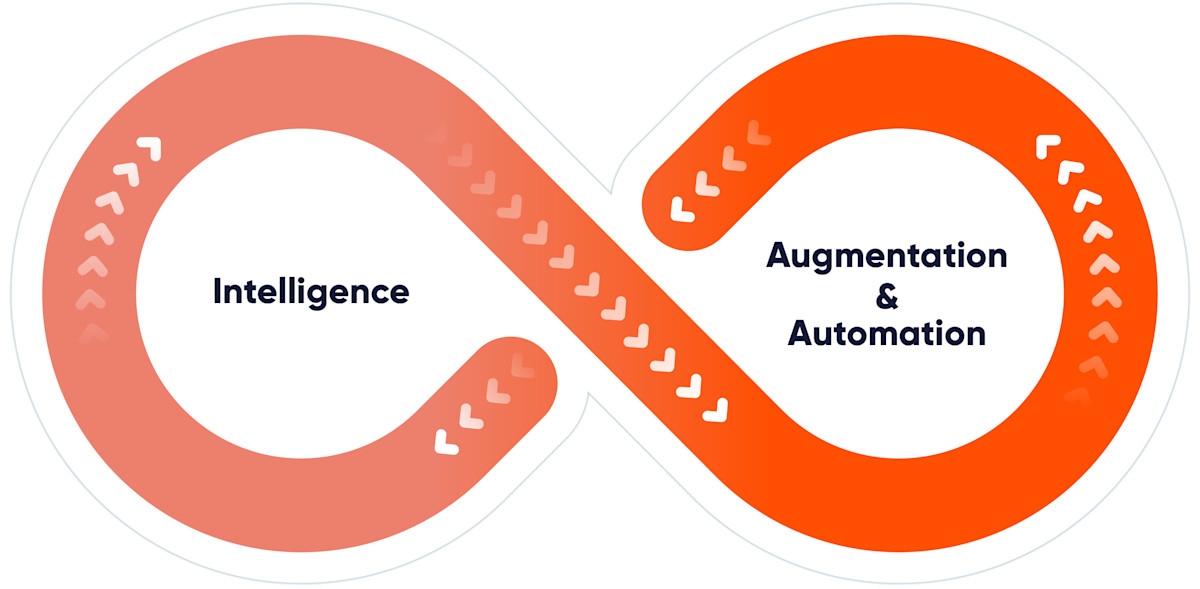
The CallMiner loop
The first thing to fail was the sample
Before conversation intelligence, quality assurance often meant a supervisor choosing a handful of calls, replaying them and filling in a scorecard. It was slow enough to be ceremonial and narrow enough to miss the week’s real pattern. Gant Travel said it managed to review only two to five calls per agent each month. Radial had run surveys for more than a decade but found they supplied less and less useful context. FCT depended on quarterly surveys and wrap-up codes that forced agents to squeeze a nuanced conversation into one bucket.
Those methods did not fail because managers were lazy. They failed because human attention is the scarce input. A random sample can reveal whether one agent followed a script. It struggles to tell a product team that three thousand callers are confused by the same new feature, or to warn compliance that required language is routinely arriving too late.
“What previously took weeks to understand now takes hours or minutes.”FCT customer story
CallMiner’s original wedge was speech analytics: make the recorded call searchable and scoreable. The company says its systems now capture and analyze all interactions a customer connects, not merely the sliver a supervisor selects. “All” depends on the data a customer actually integrates, of course. But the ambition changes the question from “Was this call good?” to “Which problem is happening, to whom, how often and after what event?” That is a much more useful question for a business.
The cost of building the loop
CallMiner does not post a menu of prices. Enterprise cost varies with interaction volume, products, integrations and services. One customer supplied a more revealing comparison. Workhuman estimated that building its own quality tool would cost roughly €1.4 million at minimum while maintaining and improving it for three years. It bought CallMiner instead.
Within 12 months, Workhuman reported that automated audits increased QA coverage 100-fold without adding headcount, avoiding four full-time roles worth about €200,000 a year. Automatic verification handled 27 percent of contacts and shaved 13 seconds from average handle time, or roughly 400 hours annually. Coaching feedback moved from a two-week delay to real time. Its average case duration fell from 1.8 days to 1.2.
The instructive part is not a heroic ROI number. It is what changed customers’ minds. They stopped viewing quality assurance as inspection and began treating conversation data as an input to operations. FCT found friction around a product launch, passed it to the product team and adjusted agent scripts. The company reported a 73 percent decline in related calls and $21,000 saved. Gant Travel used analytics to expose inconsistent scoring among supervisors, then used the Coach product to give agents more frequent, specific feedback.
One finding. One owner. One changed behavior.
CallMiner works when analysis ends in an intervention: rewrite the confusing script, coach the missed behavior, fix the product defect, surface a compliance warning or automate the repeatable request. A dashboard without an owner is only a more attractive backlog.
From telling you what happened to doing something about it
The product portfolio now follows a deliberate staircase. Analyze finds themes, sentiment, emotion and root causes. Coach turns the evidence into evaluations and feedback. RealTime surfaces alerts and next-best actions while an agent is still speaking. Outreach triggers feedback and engagement. OmniAgent uses voice and text virtual agents to handle interactions and tasks.
That last step became much more credible in June 2025, when CallMiner acquired VOCALLS, a Czech voice-first conversational AI company. VOCALLS brought virtual agents for voice, chat, social messaging and email, plus robotic process automation. The strategic logic is neat: use analytics to identify conversations suited to automation, automate them, then analyze the machine’s conversations to find what still goes wrong. It is a closed loop with no natural stopping point.
Microsoft supplies important plumbing. CallMiner has expanded its use of Azure AI, Speech to Text and Azure OpenAI models, and it sells Eureka through Microsoft Marketplace. The relationship lets CallMiner concentrate on the domain layer: contact-center workflows, scoring, governance, integrations and the work of converting language into a business action. That is also where its differentiation must live, because speech models and summaries are rapidly becoming standard features.
A crowded market, and an awkward human question
CallMiner competes with contact-center incumbents such as NICE, Verint, Genesys and Calabrio; AI-native firms including Observe.AI and Cresta; experience-management software such as Qualtrics; and whatever a determined enterprise can assemble from cloud speech models and its own data team. Its defense is two decades of conversation-specific experience, a broad workflow spanning after-call analysis through live guidance, and evidence that customers can move from insight to measurable change.
Its business model follows familiar enterprise SaaS contours: a demo-led sale, a platform subscription, implementation work and an ecosystem of technology and service partners. The buyer is not purchasing a clever transcript. It is purchasing coverage across channels, configurable scoring, role-based workflows, security controls and help persuading several departments to use the same evidence. That explains why CallMiner fits most naturally in mature contact centers. A small support desk can read its own tickets; a global operation needs machinery, permissions and a common language for deciding which pattern matters.
The breadth is a strength and a burden. A specialist point tool can arrive with a crisp promise - summarize the call, redact the card number, score the agent. CallMiner asks customers to see those tasks as one system. The payoff is continuity: the category found after a call can trigger tomorrow's coaching and eventually inform a virtual agent. The danger is implementation sprawl. When every department wants a taxonomy, integration and dashboard, time to value stretches. The strongest customer stories therefore begin with a stubborn operational number, not a grand tour of the feature list.
There is a less comfortable issue. Software that evaluates every interaction can make coaching more consistent, but it can also feel like surveillance wearing a helpful cardigan. Emotion and empathy scores are interpretations, not blood tests. A responsible deployment lets agents contest evaluations, explains how scores are used, separates development from punishment and tests models across accents, languages and contexts. CallMiner talks about objective evidence and governance; customers still determine whether the tool earns trust on the floor.
The same caution applies to automation. A virtual agent can resolve routine work cheaply and quickly. It can also create an infuriating maze when intent is ambiguous, data is stale or escalation is stingy. The company's own research has found consumers still value human contact. The sensible goal is not to erase people from service. It is to use the conversation archive to distinguish repeatable requests from moments that need judgment.
The playbook worth stealing
Start smaller than the platform
- Choose one costly behavior - repeat calls, silence, missed disclosures or a confusing launch.
- Connect enough interaction data to measure the whole pattern, not a showcase sample.
- Name an operator who can change a script, workflow, product or coaching habit.
- Run the intervention and compare a clear before-and-after metric.
- Only then expand the taxonomy, departments and automation.
This approach will not work everywhere. Low interaction volume weakens the economics. Fragmented recordings, unreliable transcripts or missing CRM context poison the analysis. A company without permission to change policy will merely discover problems more elegantly. And if employees believe the system exists to manufacture disciplinary evidence, they will learn to game the score rather than improve the conversation.
CallMiner’s story is therefore less about an omniscient machine than an organizational bargain. The software offers a way to hear far more than a human team can sample. In return, the buyer must supply clean access, governance, a measurable problem and someone willing to act. The company spent its first two decades making the corporate ear bigger. Its next test is whether the brain - and now the automated mouth - can be trusted to follow.