The Quiet Company Teaching Retailers to Answer Half Their Customers With a Bot
Leon Chaddock spent 15 years watching contact centers drown in tweets, DMs and chat windows. Sentiment is his answer - one inbox, a low-code bot builder, and a bet that AI can handle half the queue without anyone noticing.
There is a number Sentiment likes to put in front of retail executives, and it tends to stop the meeting. Half. As in, half of the customer service messages Debenhams receives can be answered by software, with no human touching them, and no measurable drop in how customers feel about the brand. For a company that once ran a call center the size of a small town, that is not a feature. It is a line item that just got cut in two.
Sentiment is the London and Salt Lake City company that makes it happen. On paper it is a customer service platform: it pulls every digital channel a company uses - Twitter, Facebook, Instagram, WhatsApp, Facebook Messenger, Line, iMessage, web chat and email - into a single conversational inbox. In practice it is a bet placed early and held for almost two decades: that people would rather message a brand than call it, and that once the messages pile up, most of them look the same.
The person who placed the bet is Leon Chaddock, the CEO and founder. He is not a first-time founder chasing the AI news cycle. In 2007 he started one of the first companies in the world to offer social media listening and analytics, back when "social customer service" was not a category anyone had bothered to name. He ran that business, Sentiment Metrics, through 2014 and served more than 300 clients in PR and marketing. Sentiment.io is what happened when he followed the same customer forward as the channels multiplied.
One screen for a queue that used to live in fifteen places
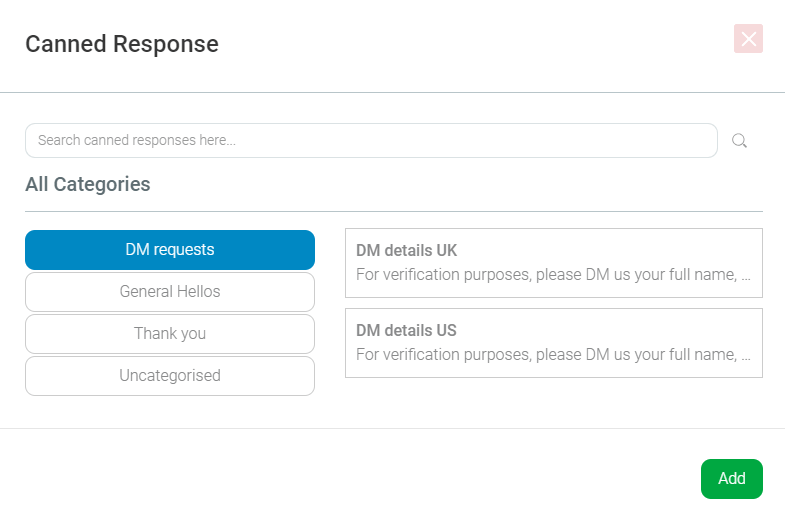
The original problem Sentiment solved is deceptively boring: a customer service agent should not need fifteen browser tabs. Before the platform, a support team might have one person watching Twitter, another buried in a shared email account, a third answering live chat, and no one able to see the whole picture. Sentiment's shared inbox collapses that into one interface, with automatic routing that hands each conversation to an available agent by SLA and priority, smart classification that tags issues as they arrive, canned responses for the questions that never change, and an approvals loop so a senior agent can sign off before anything sensitive goes out.
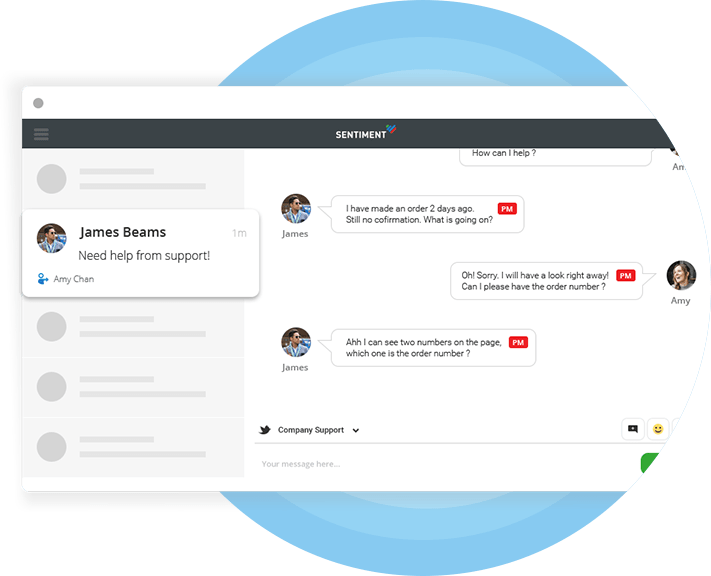
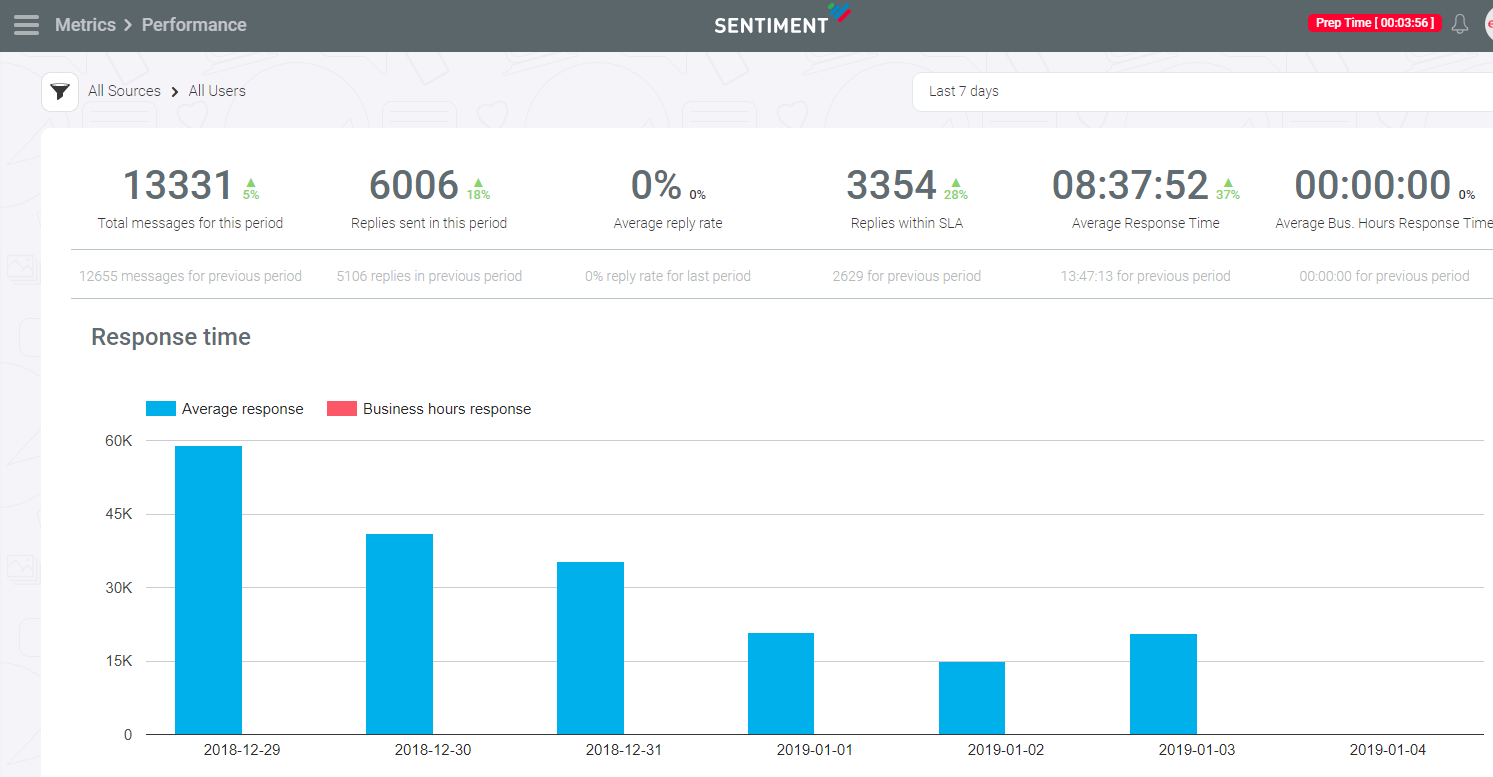
That unified view is the foundation. The results teams talk about come from what sits on top of it. uSwitch, the UK comparison service, was letting online customers wait hours for a reply during peak demand. After setting a target of under an hour and rebuilding its process around Sentiment, it landed on an average response time of 11 minutes - with exactly the same number of people. For a telecom client, Jamaii Telecom, the number of customers actually responded to went up by more than 1,300%. At eBay scale, teams handled roughly three times the volume without hiring.
From answering faster to not answering at all
The interesting move came when Sentiment stopped only helping humans reply faster and started removing the human from the routine replies entirely. Its AI Assistants for Contact Centers, built on OpenAI's large language models, take over the repetitive conversations across Messenger, WhatsApp, Instagram and iMessage, and hand off to a human the moment a query needs judgment. This is the mechanism behind the Debenhams number: consult with the internal teams, build the integrations into the order-management systems so the bot actually knows where a parcel is, wire the LLM into the live channels, and keep a clean handover path for everything else.
"Meet customers on the channels they actually use, then automate the repetitive half of the queue."
The pricing tells you how seriously they mean it. AI-handled conversations start at $0.25 each - a number set before the 2023 rush of LLM launches, and one that quietly rewrites contact-center budgeting. If a routine "where is my order" message costs a quarter to resolve and a human-handled one costs several dollars in wages, the math does the arguing for you.
Sentiment Flow, or how to make a bot without a developer
Sentiment's third act is Flow, a low-code, no-code workflow builder with interactive decision trees. The point of Flow is that the person who understands the customer - a team lead, a trainer, an operations manager - can build and change the automation without filing a ticket to engineering. It embeds a conversational interface directly inside the tools companies already run: Zendesk, Salesforce, Genesys, Talkdesk. Sentiment reports that Flow cuts agent onboarding time by up to 90% and average handling time by around 40%, largely by walking new agents through the right steps in real time instead of leaving them to memorize a binder.
Reported gains with Sentiment Flow
Company-reported figures · relative improvement
There is a strategy hiding in that list of embedded tools, and it is the thing that most separates Sentiment from the crowd. It does not ask a contact center to rip out Zendesk or Salesforce and start over. It sits on top of them. In a market full of platforms that demand a full migration before they deliver a dollar of value, Sentiment's pitch is closer to plumbing than replacement: keep your stack, we will make it smarter. For a risk-averse enterprise buyer, "you don't have to change anything first" is a surprisingly strong sentence.
"We don't rip and replace - we sit on top of the tools contact centers already run."
Retail-heavy, enterprise-shaped
The customer list leans hard into e-commerce and retail, where message volume is brutal and margins are thin: Debenhams Group and its stable of brands, Boohoo, the Swedish bank SEB, and UCAS, the body that processes UK university applications during its own annual tidal wave of anxious teenagers. These are organizations where a bad support week is a trending topic. That Sentiment runs support for names of this size while employing roughly 13 people is either a red flag or the entire point, depending on how you read a software company - a small team whose leverage is almost entirely in the product.
Eighteen years pointed at one problem

Chaddock brings more than 15 years in communications and contact centers, and it shows in the product's instincts. The features that look unglamorous next to a flashy demo - the approvals loop, the graceful handover to a human, the integrations into order-management systems - are exactly the ones that let a FTSE-scale retailer trust a bot with its brand. Automation that fails loudly is worse than no automation at all; Sentiment's expertise is in the escalation path, not just the answer. It is the kind of thing you only learn by watching support queues break for a decade and a half. Around him sit a chairman who once ran a FTSE 100 software company and a small, distributed engineering team in Sofia keeping the platform shipping.
Small team, long runway, unfashionable patience
Sentiment raised a Series A in June 2017 - about $1.32 million, part of roughly $2.75 million raised in total - backed by Elderstreet Investments, the fund founded by Michael Jackson, the former chairman of FTSE 100 software firm The Sage Group, who also chairs Sentiment. Other backers included The FSE Group and Netcall. The model is straightforward B2B SaaS: seat-based subscriptions for the platform and Flow, from $25 per user per month, plus usage pricing on the AI assistants. Estimated annual revenue sits around $4.5 million.
What you notice, reading the timeline, is the patience. A 2007 start in social listening, a pivot into customer service, a 2017 Series A, Flow in 2022, AI assistants in 2023 - and still shipping in 2026. Plenty of louder, better-funded rivals raised more and burned out in the same window. Sentiment kept following one thread: the customer message, wherever it lands, and how to answer it for less.
The competition, and the gap it aims at
On the social side, the obvious names are Sprinklr, Sprout Social and Khoros. On the helpdesk side, Zendesk, Salesforce Service Cloud, Gorgias and Intercom, plus a wave of AI-native support startups all promising the same automation. Sentiment's edge is not that it does any single one of those things better in isolation. It is the combination - genuinely multi-channel intake, an AI layer priced by the conversation, and a workflow builder that embeds into the incumbents instead of fighting them. In a category where everyone now says "AI customer service," the company that was doing digital customer care before the phrase existed has a quiet claim to knowing where the bodies are buried.