Building the Trust Layer for the AI Era
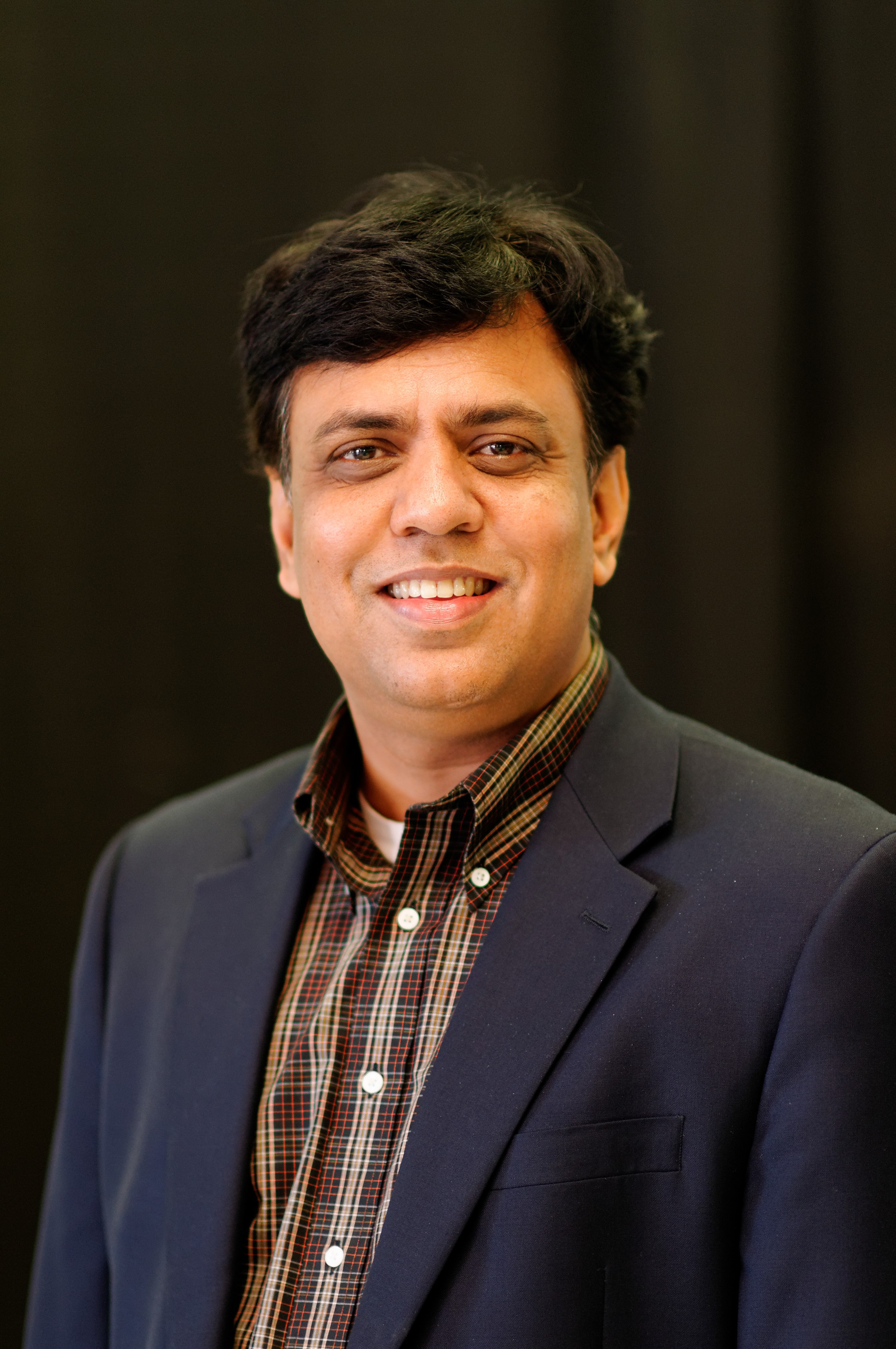
Here is what Cyara does on a given day: it quietly validates over a million AI-generated responses, monitors live contact center infrastructure, and runs synthetic customer journeys through voice, chat, SMS, and digital channels - all before a real person notices anything broke. The system works in 135 countries. It assures roughly 350 million customer interactions per year. And since December 2025, the person setting the direction for all of it is Sushil Kumar.
Kumar did not arrive at Cyara as a career manager stepping into a comfortable enterprise role. He came from a startup he founded, RelicX.ai, a generative AI test automation company that pioneered intent-based automation before being acquired by Harness. Before that, he spent roughly 15 years at Oracle, where he took Oracle Enterprise Manager from a useful operations tool into a billion-dollar business. He ran CA Technologies' $500 million AIOps business. He managed Broadcom's $200 million-plus DevOps portfolio. The resume reads less like a career ladder and more like a map of every seismic shift in enterprise software - managed infrastructure, cloud transition, DevOps, AIOps, generative AI - and a person who kept showing up at the leading edge of each one.
"AI is transforming customer experience faster than any technology shift we've seen in decades. As enterprises rethink their CX stacks and explore agentic AI, what they need most is confidence."- Sushil Kumar, CEO, Cyara
The specific word he keeps reaching for is confidence. Not performance. Not efficiency. Not ROI. Confidence. At a moment when every enterprise is deploying AI agents into customer-facing workflows - chatbots, voice assistants, automated resolution systems - the thing that separates deployment from trust is whether anyone has actually verified the interaction before a real customer experiences it. That is what Cyara does. That is what Kumar has spent his career building toward, even before the category had a name.
He describes himself as "a builder at heart" - someone who has spent his professional life "creating platforms that change how software is engineered, validated, and delivered." That framing is precise rather than self-promotional. At Oracle, he was not just running a product line; he was making the case that enterprise management software could be a strategic platform, not just a diagnostic tool. At CA Technologies and then Broadcom, he was working in AIOps before the term was widely used, applying machine learning to the problem of detecting and predicting infrastructure failures. At RelicX.ai, he took that accumulated pattern recognition and built a startup around the idea that generative AI could fundamentally change how software is tested.
Cyara's co-founder and non-executive chairman, Alok Kulkarni, described Kumar at the time of his appointment as bringing "a rare combination of proven ability, and deep customer and product insight to building and scaling category-defining platforms." The phrase is carefully constructed. Proven ability means the track record - billion-dollar businesses, major exits, real enterprises at real scale. Deep customer and product insight means something harder to manufacture: actual empathy for the problem, not just organizational authority over the solution.
"Confidence that every interaction will be accurate, trustworthy, and delivered at the speed and quality customers expect. Cyara provides the reliability and assurance organizations need to turn AI from experimentation into meaningful, real-world impact." - Sushil Kumar
The timing of his appointment tracks a genuine inflection point. Agentic AI - autonomous systems that handle multi-step customer interactions without human oversight - moved from lab curiosity to enterprise mandate in roughly twelve months. The pressure on contact centers to adopt AI is now enormous. So is the pressure to not embarrass a major brand when the AI says something wrong, routes a call incorrectly, or fails to recognize a customer's frustration. Cyara's platform sits directly at that intersection: it is the infrastructure that lets enterprises run AI experiments in production without making every live customer a guinea pig.
Kumar's background at Harness after the RelicX.ai acquisition - where he served as General Manager for AI Test Automation - gave him a ground-level view of how engineering teams are actually integrating AI into their delivery pipelines. Not the aspirational version told at conferences, but the real version: the edge cases, the regressions, the moments when automated systems fail in ways that manual testing would never have caught. That operational grounding shapes how he thinks about Cyara's product trajectory. The opportunity is not simply to grow a testing company; it is to define what assurance means in an era when the system under test is itself an AI.
He studied engineering at BIT Sindri in Jharkhand, India - an institution with a long tradition of producing engineers who end up running global technology companies. He also holds an MBA from the Indian Institute of Foreign Trade, a combination that signals early comfort moving between technical depth and commercial strategy. That pairing shows up throughout his career: the ability to make a technical case to a product team and a business case to a board in the same week.
Cyara's current scope tells the story of where Kumar is steering it. The platform handles voice channel testing, IVR validation, chatbot and conversational AI testing, agent desktop automation, outbound dialer verification, and increasingly, agentic AI governance - the ability to test and monitor AI agents that operate autonomously across multiple steps in a customer journey. The keyword stack from the company's current positioning is revealing: "agentic AI testing and monitoring," "LLM-driven agent testing," "predictive CX monitoring with agentic AI," "generative AI assurance governance." These are not legacy contact center terms. They are the vocabulary of the problem that enterprises are scrambling to solve right now.
The company is backed by K1 Investment Management, which put in over $350 million in January 2022, the largest growth investment in the CX assurance space at the time. K1 focuses specifically on high-growth enterprise software companies, and Cyara's 35% year-over-year growth in 2022 bookings and 93% customer retention rate were exactly the numbers that support that thesis. Kumar inherited a company with strong fundamentals and a product that is suddenly very relevant to a much larger conversation about AI reliability in enterprise software.
The challenge he is working through is not market education - the need for CX assurance is no longer a hard sell - but market expansion. Cyara already works with major global brands across financial services, healthcare, telecommunications, and retail. The next phase is convincing the enterprises that are deploying agentic AI right now that assurance is not optional infrastructure, it is the prerequisite for deployment at scale. Every customer interaction that an AI agent handles is a test. The question is whether it is a controlled test or an uncontrolled one.