REPLICANT SURPASSES 1 BILLION AUTOMATED CALL MINUTES GADI SHAMIA LEADS $113M IN TOTAL FUNDING FOR VOICE AI 60-70% OF CUSTOMER SERVICE CALLS CAN BE AUTOMATED - SHAMIA FROM SAP ACQUISITION TO SERIES B: A TWO-DECADE BUILDER'S ARC TALKDESK SEED TO UNICORN: HOW SHAMIA DID IT IN 3.5 YEARS REPLICANT CEO: "ONLY 5% OF CALLERS ASK FOR A HUMAN AGENT" DIALED IN PODCAST: GUESTS FROM OPENAI, AIRBNB, SALESFORCE, STANFORD REPLICANT SURPASSES 1 BILLION AUTOMATED CALL MINUTES GADI SHAMIA LEADS $113M IN TOTAL FUNDING FOR VOICE AI 60-70% OF CUSTOMER SERVICE CALLS CAN BE AUTOMATED - SHAMIA FROM SAP ACQUISITION TO SERIES B: A TWO-DECADE BUILDER'S ARC TALKDESK SEED TO UNICORN: HOW SHAMIA DID IT IN 3.5 YEARS REPLICANT CEO: "ONLY 5% OF CALLERS ASK FOR A HUMAN AGENT" DIALED IN PODCAST: GUESTS FROM OPENAI, AIRBNB, SALESFORCE, STANFORD
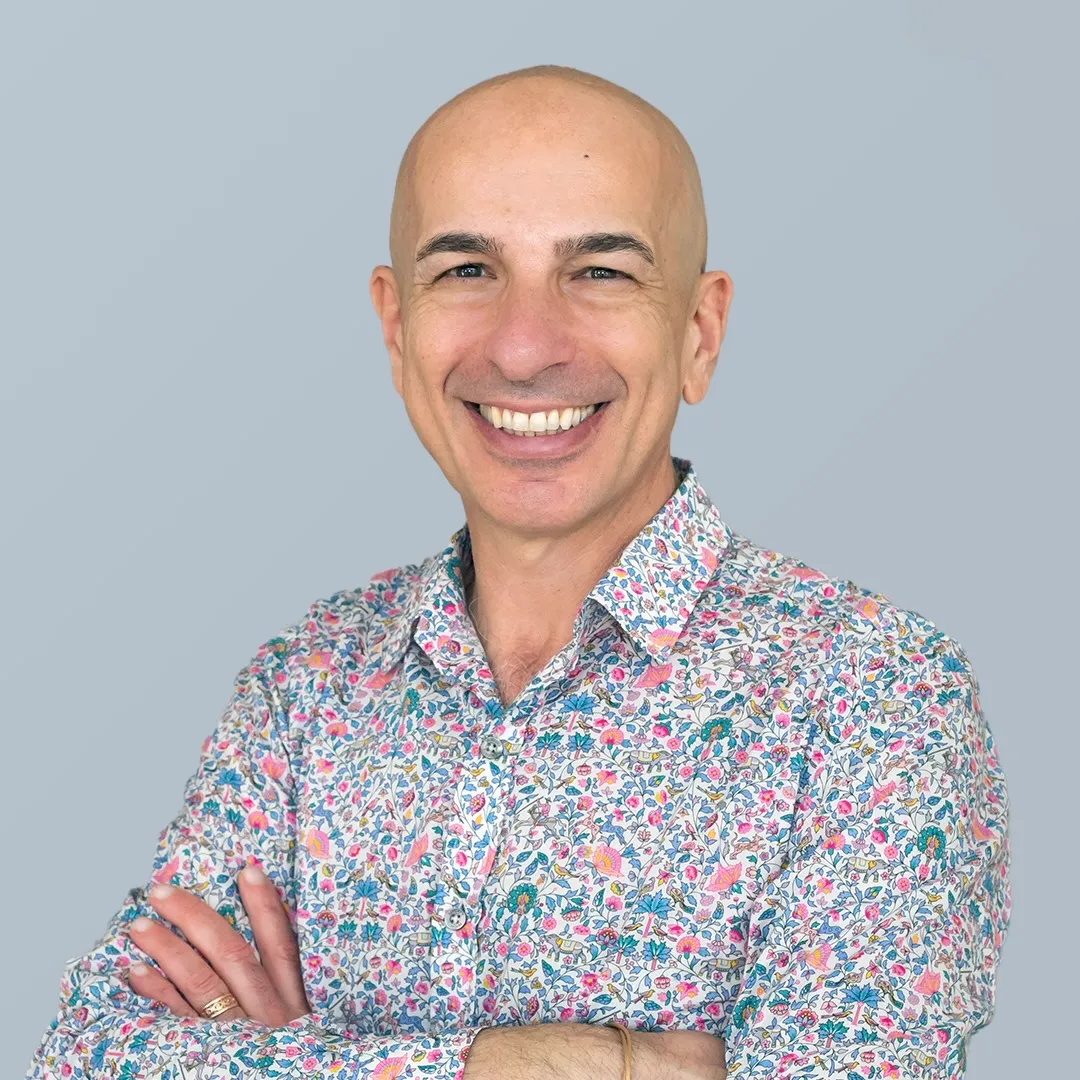
Gadi Shamia, CEO and Co-Founder of Replicant

CEO & Co-Founder, Replicant — San Francisco

Voice AI · Enterprise Software · San Francisco

Gadi Shamia

CEO & Co-Founder — Replicant

He ran a call center in his twenties. Now he's replacing them - one billion minutes of automated calls at a time. Gadi Shamia has spent two decades building, scaling, and selling enterprise software companies. His current bet: voice AI that sounds human, scales infinitely, and answers before the hold music kicks in.

1B+ Minutes Automated
$113M Total Funding
200+ Deployments
65 NPS Score

The Serial Builder Who Bet on the Phone

Before there was Replicant, before there was Talkdesk, before SAP acquired his startup and turned it into a global product, Gadi Shamia managed a call center. Not virtually, not at arm's length, but in the room - listening to the calls, watching agents absorb frustration eight hours a day. That experience never left him. It shows up in every decision Replicant makes, and in every percentage point of resolution rate the company tracks.

Replicant is the company he joined in December 2018 as CEO and co-founder. Its core proposition is blunt: most customer service calls are repetitive, scripted interactions that burn out human agents and irritate callers. Replicant's voice AI handles them instead - not with clunky IVR menus and press-1-for-billing, but with natural-sounding conversation that resolves the issue and moves on. By 2024, the platform had processed over one billion minutes of automated calls. That number is not a marketing figure. It is a statement about what contact centers actually need at scale.

The company he built around that idea has earned 200-plus enterprise deployments, a Net Promoter Score of 65 - unusually high for infrastructure software - and $113M in total funding. The Series B alone was $78M, raised in April 2022, reflecting investor conviction that contact center automation is not a feature but a category.


Lucky for us and all our customers, 60-70% of the calls have a clear conversion path, which means we can create immediate relief for companies and allow agents to really focus on where they can make a difference.

- Gadi Shamia, CEO of Replicant

The math that underpins Replicant is Shamia's. When he was COO of Talkdesk, he met hundreds of customers, listened to thousands of calls, and shadowed dozens of agents. The pattern was always the same: a huge share of inbound volume - he puts it at 60 to 70 percent - follows a predictable path. Appointment scheduling. Account verification. Payment status. Outbound reminders. These interactions have a known beginning and end. An AI does not need empathy to handle them. It needs accuracy, speed, and a voice that doesn't make the caller feel like they're trapped in a 1999 phone tree.

That insight is what Shamia brought to Replicant, and what Replicant has validated across industries from insurance and healthcare to retail and financial services. The other number he cites is equally telling: only 5% of callers actively ask to be transferred to a human agent. The other 95% just want the problem solved. Replicant solves it.

What gets underreported in the contact center AI story is the human side of the equation. Shamia has talked about the unexpected benefit that showed up in Replicant customer data: reduced agent attrition and fewer short-term disability claims. When machines absorb the relentless volume of routine, repetitive calls, the humans who remain handle more complex, meaningful conversations. Better pay. Less burnout. The economics of a better job.

$400M EchoSign sold to Adobe
20x Talkdesk growth as COO
$78M Series B raised
110+ Engineers & product team

A Map of What Came Before

The shortest version of Gadi Shamia's career is three exits and a unicorn. The longer version is a masterclass in knowing which problem to work on next.

His first company was TopManage - an ERP platform he co-founded in Israel for small and midsize businesses. SAP acquired it in 2002. That product lives on today as SAP Business One, the enterprise giant's core SMB offering. Hundreds of thousands of businesses worldwide run on software Shamia helped build before most of the current generation of startup founders had graduated high school.

From SAP, he moved through a succession of high-leverage operator roles. He served as General Manager and SVP of Product at SAP's Small Business Solutions Group from 2004 to 2008. He then helped grow EchoSign - the electronic signature platform - and was at the table when Adobe acquired it for $400M in 2011. He briefly served as Acting COO of EchoSign at Adobe, bridging the acquisition. Later, he led ReachLocal as General Manager through its IPO.

Career Arc - From Tel Aviv to Silicon Valley
~2000 - 2002
TopManage (Co-Founder)
ERP software for SMBs, built in Israel
Acquired by SAP → became SAP Business One
2004 - 2008
SAP
GM & SVP of Product, Small Business Solutions
Scaled global SMB product line
2011 - 2012
EchoSign / Adobe
Acting COO
Helped close $400M Adobe acquisition
2012 - 2014
Magneto Inc. (Co-Founder & CEO)
Second startup venture
Founded and led early-stage company
~2014
ReachLocal
General Manager
Led division through IPO
2015 - 2018
Talkdesk
Chief Operating Officer
Seed to unicorn, 20x growth in people and revenue
Dec 2018 - Present
Replicant (CEO & Co-Founder)
Building voice AI for enterprise contact centers
$113M raised, 1B+ minutes automated, 200+ deployments

The Talkdesk chapter is the one Shamia talks about most. He joined as COO when the company had a handful of employees. He left when it was valued at over $10B. In between, he engineered 20x growth in both headcount and revenue - a run that required every operational skill in the playbook. When he published his departure essay on Medium in July 2018, he called it "On Leaving Talkdesk, My Journey and a Scorecard." The scorecard detail is classically him: precise, reflective, and not shy about what didn't work.

Between Talkdesk and Replicant came a brief stint as Entrepreneur in Residence at Storm Ventures and a board advisory role at Algolia. He wasn't idle. He was deciding which problem deserved two decades of accumulated insight about how enterprise software gets sold, scaled, and survived.

When he published "Why I Joined Replicant" in July 2019, his answer was characteristically unglamorous: "Ultimately, I joined because of the team." Not the market size. Not the technology. The team. That's an operator's answer, not a founder's pitch. It tells you everything about how Shamia works.

The agents on the other side are not really interested in getting minimum wage to sit and hear people screaming at them all day long.

- Gadi Shamia, on the real cost of running a contact center

What He Actually Says

"We don't care if you scream at us or not. If a customer truly needs immediate help and asks for an agent, the machine will always transfer the call."

"Predictive machines and AI can boost productivity by taking on repetitive tasks that humans do poorly, allowing humans to focus on complex and creative assignments."

"Our vision of an AI-first contact center - where AI agents handle the majority of conversations and fewer, better trained and better paid human agents support only the most complex tasks - is quickly becoming a reality."

"Companies will need to develop a more elastic cost structure and customer service capabilities, and AI can be the answer."


The Thesis Driving Replicant

Shamia is not building a chatbot company. The distinction matters to him, and he makes it clearly: Replicant works across phone calls, SMS, and chat, but the phone is where enterprise contact centers live and where the volume is. While other companies chased web chat and messaging apps, Replicant doubled down on voice - the channel that nobody else wanted to touch because it's harder. Natural-sounding phone AI requires low latency, accurate speech recognition, and conversation logic that can handle interruptions, accents, and the messy reality of how humans actually speak when they're frustrated.

The industry Replicant operates in spans insurance, healthcare, retail, travel, financial services, and utilities - wherever companies handle millions of inbound calls per year. At that volume, even small improvements in automation rates create enormous cost savings. But Shamia's pitch isn't just efficiency. The contact center has one of the highest agent attrition rates of any industry. When AI absorbs the lowest-skill, highest-stress volume, what remains is a better job with better pay. That argument resonates with HR as much as it does with the CFO.

The co-founder alongside Shamia is Benjamin Gleitzman, the CTO, who worked as a contact center agent himself while studying at MIT. That operational credibility runs through the whole company. These are not people theorizing about call centers. They have lived inside them, and they are building software that reflects what actually happens on those calls, not what the flowcharts suggest should happen.

Things Worth Knowing

01

Ran a call center in his twenties - making him one of the few AI CEOs who has actually sat in an agent's chair.

02

His first startup became SAP Business One, still used by hundreds of thousands of SMBs worldwide.

03

Fluent in both English and Hebrew. His career began in Israel's Silicon Wadi before moving to San Francisco.

04

Holds multiple patents in e-commerce, sponsored content, and virtual consignment.

05

Has been involved in companies acquired by both SAP and Adobe - two of the largest enterprise software companies in the world.

06

Left Talkdesk when it was valued at $10B+. Wrote a public "scorecard" about his time there - a level of transparency unusual for executives.


Dialed In: The Podcast

Beyond the company, Shamia runs a podcast. "Dialed In: The Podcast for CX Innovators" is his vehicle for the conversations that don't fit in a press release - discussions about the future of customer experience with people who are actually shaping it. His guest list includes Brad Lightcap (COO, OpenAI), Tiago Paiva (founder, Talkdesk), Mike Milburn (former Salesforce Chief Customer Officer), Hanlin Fang (Head of Digital Experience, Airbnb), and Elizabeth Adams (Stanford Fellow, Responsible AI). That's not a typical vendor podcast lineup. It's a peer conversation about where the industry is heading.

🎙️

Dialed In - The Podcast for CX Innovators

Hosted by Gadi Shamia. Available on Apple Podcasts, Spotify, Amazon Music, and YouTube. 22+ episodes featuring guests from OpenAI, Airbnb, Salesforce, and Stanford.

Find Gadi Online

What a billion automated minutes actually means

A billion minutes is not an abstraction. It is the sum of every "What's my account balance?", "Can I reschedule my appointment?", "Why was I charged for this?" that contact center agents used to answer, one at a time, day after day. Gadi Shamia's argument is that those calls are not the problem. They are the symptom. The problem is that the industry built an infrastructure - minimum wage, maximum volume, maximum attrition - that treats human attention as the cheapest possible input. Voice AI changes the unit economics. The humans left doing the work can be paid more, trained better, and asked to do things that actually require a human.

That's the mission Shamia has organized his career around. He's been building for it since he sat in a call center in his twenties and understood, from the inside, what it actually costs to answer a phone all day.