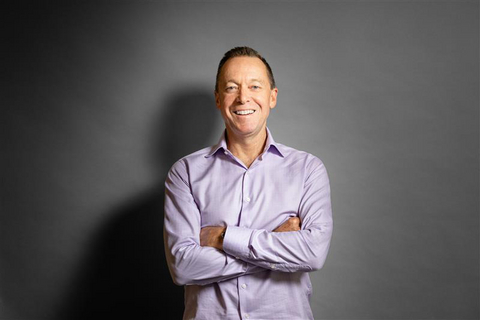
Running the Largest CX Automation Play in the Market
In February 2026, Dave Rhodes walked into a job that doesn't come around often: taking the top seat at a company founded in 1994, the same year he was completing his MBA, from a founder who had run it for over three decades. Dan Bodner built Verint from the ground up. Rhodes inherited it mid-sprint, mid-merger, and mid-AI revolution.
The context matters. Thoma Bravo, the private equity firm, had acquired Verint and combined it with Calabrio - the workforce engagement platform Rhodes had been running since September 2024. The resulting entity carries one of the largest customer experience datasets on earth: billions of interactions spanning contact centers, digital channels, voice, text, and behavioral signals. Rhodes runs it all, unified under the Verint brand, from his base in San Francisco.
"We are in a rare moment. Brands are under enormous pressure to harness AI to drive tangible business value, immediately."
- Dave Rhodes, on taking the Verint CEO role, February 2026The impatience in that quote is deliberate. Rhodes has spent his career around what he calls the "engagement capacity gap" - the structural mismatch between the volume of customer interactions brands must handle and the agent resources available to handle them. AI doesn't close that gap by accident. It closes it when companies stop treating AI as a feature and start treating it as operational infrastructure.
That's the company Rhodes is building. Verint's platform now spans workforce engagement management, agentic AI bots, real-time agent coaching, conversational AI, CX analytics, fraud detection, and compliance monitoring. It isn't a point solution. It's a system-of-record for how brands interact with customers - and the AI layer running through all of it.
Verint's customers include enterprises in financial services, healthcare, telecommunications, retail, government, and insurance. The products touch call centers, branch operations, back-office workflows, and digital self-service channels. The scale is unusual for a private company: nearly $900 million in annual revenue, 4,400 employees across the globe, and a technology stack that reads like a CTO's wish list - Kubernetes, Elasticsearch, MongoDB, OpenSearch, generative AI, NLP, speech-to-text, and a growing roster of agentic AI capabilities.
"Business outcomes, now - that's what we deliver, and that's what sets us apart."
- Dave Rhodes, VerintEleven Years at Autodesk, Then Four Companies in Eight Years
Rhodes spent his formative career at Autodesk, where he ran the Americas for 11 years as Vice President. Autodesk in the 2000s and early 2010s was navigating the same transition every legacy software company would eventually face - moving enterprise accounts from perpetual licenses to subscriptions, building global go-to-market infrastructure, and competing on platform stickiness rather than feature count. It's a playbook Rhodes internalized.
After Autodesk he moved to Paradigm (later acquired by Emerson), where he served as Executive Vice President of Sales, Services and Marketing, overseeing worldwide growth strategies for an industrial software business. The pattern held: complex enterprise software, global markets, go-to-market scale.
Then came Unity Software - the pivot that put Rhodes on the map as a revenue architect. As Chief Revenue Officer, he took Unity's revenue from $130 million to $600 million. That's not iteration. That's a structural rebuild of how a company sells, at scale, across industries that Unity had never systematically targeted. He later moved to SVP/GM of the Digital Twins business, overseeing the industrial and enterprise segment as Unity pushed beyond game engines into simulation, manufacturing, and real-world visualization.
4.6x revenue growth during Rhodes' tenure as Chief Revenue Officer at Unity Software
In August 2023, Rhodes took his first CEO chair at Sauce Labs, the continuous testing and quality platform. A year later, Calabrio called. By September 2024, he was CEO of the Minneapolis-based workforce engagement management company, backed by Thoma Bravo. And then - in what ranks as one of the more compressed executive arcs in enterprise software - Thoma Bravo merged Calabrio with Verint, and Rhodes became CEO of the combined entity in February 2026.
Three CEO roles. Three years. Each one larger and more complex than the last.
What Rhodes Thinks About AI and the Contact Center
"Harnessing the transformative power of AI requires contact centers to do more than simply adopt AI technologies, but to thoughtfully integrate them into their operations in a way that complements and enhances the customer experience."
"This shift can turn every customer interaction into a strategic asset and turn beleaguered agents into empowered problem solvers."
"I am excited to lead the team as we seize the immense growth opportunities ahead."
"The company continuously strives to redefine service excellence with technology advances and a unique focus on operational efficiency that drives transformative customer experiences."
What Verint Actually Does - and Why It Matters Now
Verint is a hard company to summarize. Its origin is in security intelligence and compliance monitoring - the kind of platform that financial services firms and government agencies use to capture, analyze, and audit communications. Over time, that core expanded into workforce management, quality monitoring, voice of the customer tools, and eventually full-spectrum contact center automation.
The Calabrio merger added workforce engagement management, agent performance analytics, and a strong base in the mid-market contact center segment. The result is a platform that can handle the entire customer engagement lifecycle: route the interaction, assist the agent in real time, capture and analyze the conversation, surface coaching recommendations, monitor for compliance, and feed insights back into scheduling and workforce planning.
Rhodes framed the combined platform around one concept at the time of his appointment: closing the "engagement capacity gap." Brands want to handle more customer interactions with better outcomes. They can't simply hire their way there. AI - specifically agentic AI that takes autonomous action, not just AI that surfaces suggestions - is the only way to close that gap at scale.
Agentic AI
Autonomous bots that resolve customer issues end-to-end without live agent involvement.
CX Analytics
Speech, text, and behavioral analytics across every customer interaction channel.
Workforce Engagement
Scheduling, forecasting, quality monitoring, and real-time agent coaching at scale.
Compliance & Fraud
Communications intelligence and fraud detection for financial services and government.
The company Thoma Bravo has assembled under Rhodes's leadership is not a portfolio of acquired point solutions. The integration thesis - Verint's enterprise customer base and compliance heritage with Calabrio's WEM depth and analytics - is about owning the full customer engagement stack. In a market crowded with AI copilots and chatbot overlays, that full-stack position is a meaningful differentiator.
How Dave Rhodes Got Here
Five Things Worth Knowing
Dave Rhodes in Conversation
An interview from the Calabrio era - Rhodes on transforming contact centers and the opportunities ahead.