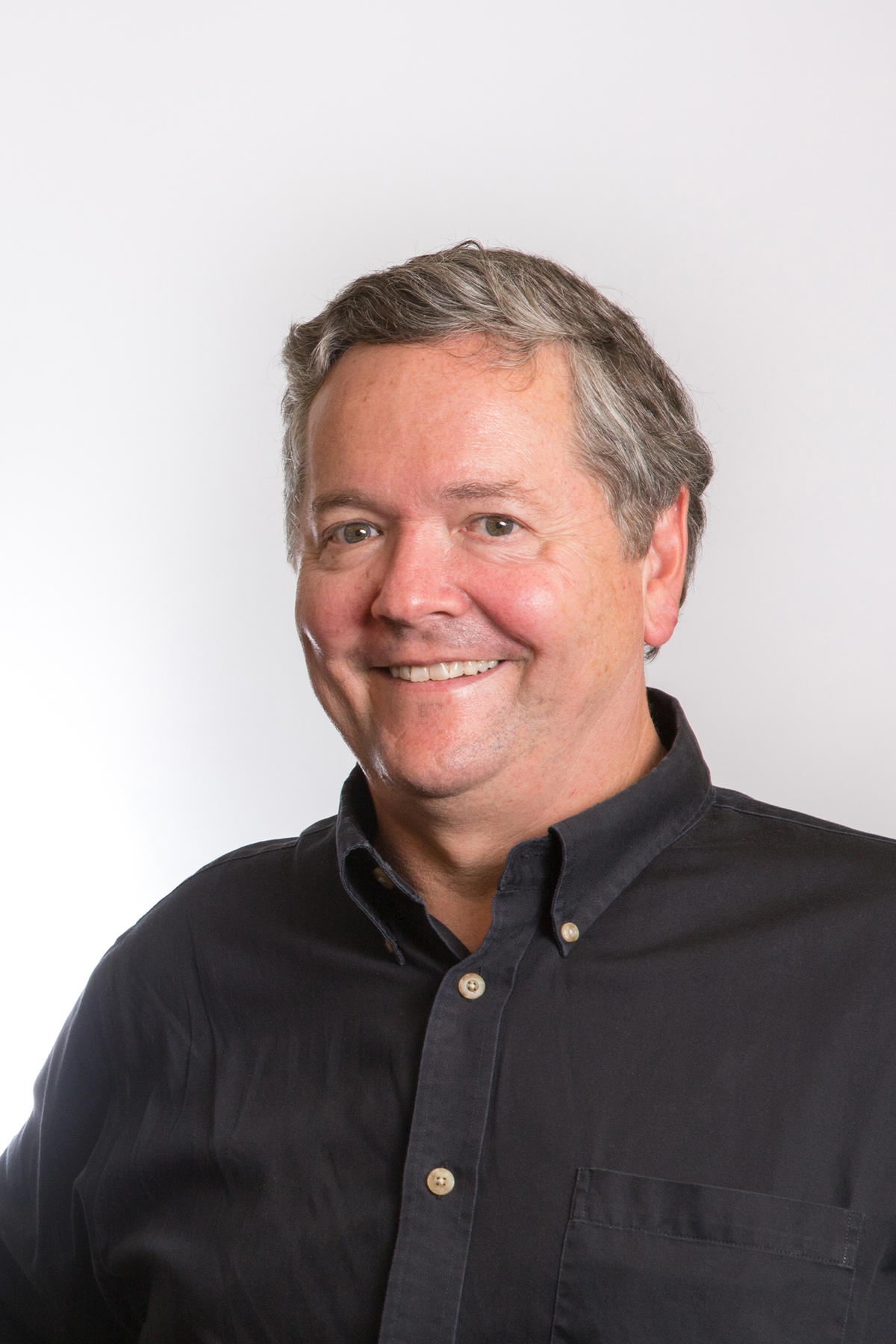
Founder • Publisher • Father of the Maker Movement
Dale
Dougherty
The man who gave tinkerers a name, a magazine, and a world stage.
Founder • Publisher • Father of the Maker Movement
The man who gave tinkerers a name, a magazine, and a world stage.
Profile
There's a word Dale Dougherty invented that you've probably used without knowing it. In 2005, editing the first issue of Make: magazine at O'Reilly Media's offices in Sebastopol, California, he needed to describe the people who soldered, hacked, built, and tinkered. He picked: makers. A year later, he filled a parking lot in San Mateo with 20,000 people who just wanted to show each other what they'd made.
That was 2006. By 2026, Maker Faire has run in 40 countries, drawn 1.5 million attendees annually, and given rise to a global education movement, an ecosystem of community workshops, and a vocabulary - "makerspace," "maker education," "maker culture" - that lives comfortably in school board presentations, tech conferences, and presidential speeches. When President Obama introduced Dougherty at the 2014 White House Maker Faire, he called him "an American innovator." Obama was not overselling it.
What's less commonly told is that by the time Dougherty launched Make:, he had already built and sold the internet's first commercial web portal, helped co-found one of technology's most influential publishing companies, and popularized a term - "Web 2.0" - that named a generation of participatory internet culture. Three naming coups in three decades. Some people have good timing. Some people just see what's coming.
Today, Dougherty runs Make: Community LLC from Santa Rosa, California - the reorganized successor to Maker Media, which he personally bought back from creditors in July 2019, weeks after it had collapsed and laid off its entire staff of 22. He rehired 15 of them. The movement continues.
The Moment
When Maker Media ceased operations in June 2019, every staff member lost their job. Within weeks, Dougherty had purchased back the brands, domains, and content from creditors and was calling people back. It's not the story of a company that bounced back. It's the story of a person who couldn't let the thing he'd built simply stop.
"Making is one of the fundamental things that make us human. Making isn't a hobby. Making isn't a fad."- Dale Dougherty
Origins
Dougherty grew up in Louisville, Kentucky, came west, and landed at O'Reilly & Associates at the company's earliest days. His co-founder credit with Tim O'Reilly is real but often undersold - O'Reilly Media didn't just publish books; it mapped the topology of computer science for a generation of working programmers. Dougherty was the one editing sed & awk, getting the right words on the right pages for people who needed working knowledge, not theory.
Then, in 1993, he built something that barely had a name yet. The Global Network Navigator - GNN - was the internet's first commercial website, the first to be supported by advertising. Mosaic, the browser that made the web visual, had only just arrived. Most people didn't know the internet existed. Dougherty was already publishing on it. AOL recognized the value fast enough to acquire GNN in 1995 for enough that O'Reilly kept running - and Dougherty kept inventing.
The "Web 2.0" moment happened in a brainstorming session at O'Reilly Media around 2004. The idea was to name what was happening with participatory, user-generated web platforms - blogs, wikis, social sites - as distinct from the first-wave static internet. The O'Reilly Web 2.0 Conference gave the term its platform. Dougherty had done it again: found the word for the thing everyone was noticing but couldn't quite articulate.
Make: magazine followed in 2005. Not as a tech publication, but as something closer to a manifesto for physical creativity. The first issue had projects involving electronics, woodworking, rocketry, and home chemistry. It was explicitly not a lifestyle magazine. It was a how-to document for people who believed that understanding something meant taking it apart - and putting it back together, differently, better.
"Education is not a preparation for life - it's life itself. We're talking about people becoming good learners and doing it their entire lives."- Dale Dougherty on the philosophy behind maker education
The Bigger Argument
The education argument runs through everything Dougherty does, and it's not a soft one. His position - developed through years of watching Maker Faires, running Maker Ed, and lecturing at UC Berkeley's School of Information Management and Systems - is that standardized curriculum is the wrong tool for preparing people for a world that rewards creative problem-solving.
He's not arguing that every school needs a laser cutter. He's arguing for a different relationship between students and knowledge - one in which making something, breaking something, and figuring out why it broke is the curriculum. "My hope is that maker education is a means to transform education by offering a new way to engage students as learners," he said in a 2015 interview. "It's not about adding making to the curriculum; it is about changing school so that it focuses on the best ways that students learn."
Dougherty's 2016 book, Free to Make, written with Adriane Conrad, makes the fullest case. The argument is economic and philosophical at once: the maker movement isn't just about soldering kits and STEM; it's about restoring a relationship between people and the objects in their lives - a relationship that mass production and consumer culture spent a century eroding. He was honored at the White House twice for this work. Not bad for a guy who started by editing Unix documentation.
The Long Game
At the 2014 White House Maker Faire - the first and only such event held at the White House - President Obama personally introduced Dougherty before a crowd of America's most inventive young people and their projects. It remains one of the more unusual career trajectories in American publishing: from sed & awk to being introduced by the President of the United States.
Key Achievements
Career Timeline
In His Own Words
Everyone is a maker.
Making is one of the fundamental things that make us human. Making isn't a hobby. Making isn't a fad.
I want to see a culture where people have access to materials and tools that make them feel like they're in control of their world.
Maker Faire is a modern-day agora where people come to show, to learn, to be inspired, and to celebrate.
A relatively small amount of people can have a big impact. That's what we see in the Maker Movement.
Life is not about waiting to be given solutions - makers become empowered agents of their own lives.
Published Works
The definitive case for the Maker Movement as a transformative social force - in education, the economy, and human self-understanding. Foreword by Tim O'Reilly.
How makerspaces, maker culture, and DIY manufacturing are reshaping urban economies and creating new opportunities at the city level across America.
The authoritative O'Reilly guide to two of Unix's most powerful text-processing tools. A foundational text for programmers and systems administrators - and the origin of Dougherty's tech publishing career.
Watch & Learn
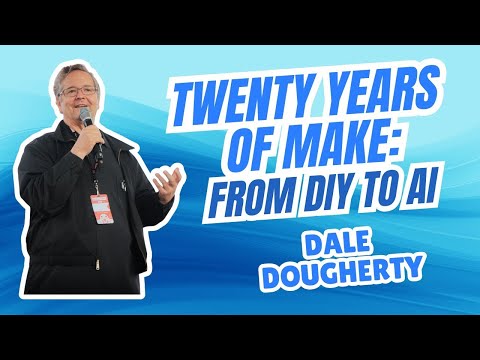
Maker Faire Bay Area keynote, September 2025. Dougherty traces making from the DIY spirit through personal computing to today's global movement.
More Talks on YouTube
Explore all of Dale Dougherty's recorded keynotes, interviews, and conference talks on YouTube - from TED-style maker talks to education policy panels.
The Details
01 / The Word
He literally invented "makers" as we use it culturally today - it appeared first in Make: magazine Vol. 1, 2005. Before that, there was no single word for what these people were doing.
02 / The First Ad
GNN (1993) was the first website on the internet to be funded by advertising - a business model that would eventually dominate the entire internet economy. Dougherty was 37 when he built it.
03 / The Parking Lot
The first Maker Faire, 2006, San Mateo, California - Dougherty wasn't sure if anyone would show up. 20,000 people did.
04 / Three Decades, One Town
Dougherty has lived in Sebastopol, California for 30+ years - a small Sonoma County town of 8,000 people that has quietly been central to American tech publishing history.
05 / The Newsletter
He publishes the Sebastopol Times on Substack - a local news and community newsletter with 7,500+ subscribers, alongside running a global maker movement. Scale is a spectrum.
06 / The Recovery
In July 2019, Dougherty bought back Make: from creditors within weeks of its collapse. The movement had been declared dead. It wasn't.
07 / Three Terms
Coined or popularized: "Web 2.0," the GNN-style web portal model, and "makers." That's three phrases that shaped the tech and education landscape of the last 30 years.
Explore