He was scaling pharmaceutical proteins at Genentech before most people knew biotech was an industry. Now he writes the first checks into the companies trying to do to climate and disease what Genentech did to cancer — and he plays ukulele on weekends.
In 1986, Mohan Iyer walked into Genentech as a process engineer and got assigned a job that had never been done before: scale up the production of pharmaceutical proteins to kilogram quantities. Biotech's first medicines — things like insulin and growth hormone — were still being figured out. Iyer was part of the team doing the figuring.
He stayed seven years. When Roche acquired Genentech, he left to get his MBA at Yale. That pivot — from bench to business — would define the next three decades. Not in spite of his engineering background, but because of it. He never stopped being someone who understood what the science was actually saying.
The MBA led to healthcare consulting at IBM's Wilkerson Group, then to corporate development at diaDexus for nearly a decade, then to investment banking at Burrill & Company. By the time he landed at Tethys Bioscience as CFO — where the company built the first commercial test to identify people at high risk of converting to type 2 diabetes — Iyer had assembled an unusual combination: deep scientific literacy, financial discipline, and operating muscle across every company function.
At Second Genome, he joined as Chief Business Officer when the company was pioneering microbiome genomics as a therapeutic target — before "microbiome" was a dinner-party word. He stayed five years, helping establish the company's commercial viability through partnerships and the early science of linking gut microbiota to human disease outcomes.
Then came Pendulum Therapeutics, where he served as COO and helped commercialize precision probiotics — bacteria engineered to help people with type 2 diabetes manage their A1C levels without additional medication. The science was counterintuitive: fix metabolic disease with microbes. Iyer understood why it wasn't.
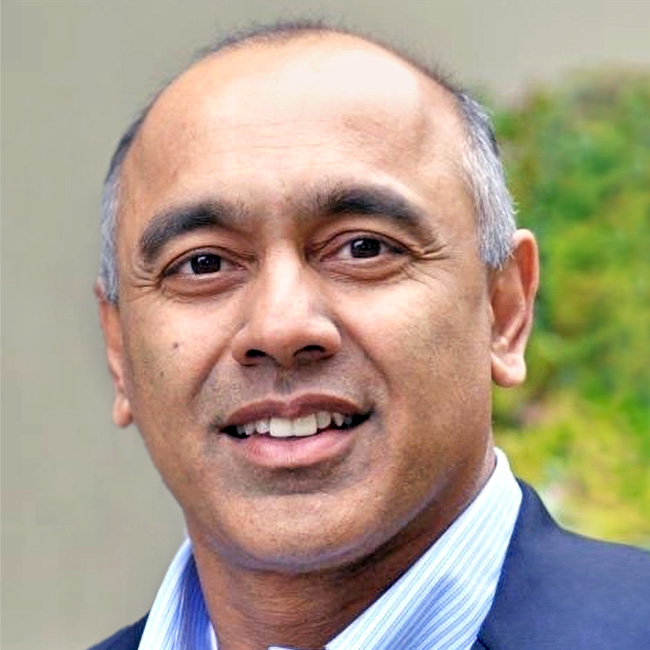
Iyer's entry into venture capital was not a headhunter call. It was him picking up the phone. He had been mentoring a handful of IndieBio portfolio companies — quietly, on the side — and decided he wanted to do more of it. So he called Po Bronson, one of IndieBio's co-founders and a SOSV General Partner, to explore the conversation.
That conversation became a job offer. In September 2021, Iyer joined SOSV as one of three new General Partners announced in a single expansion — a signal of the firm's growing ambition in early-stage deep tech. He joined Po Bronson and Pae Wu on the IndieBio SF team, bringing something neither of them had: three decades of operating experience inside the very kinds of companies they were now funding.
The practical value Iyer brings is articulation. Many brilliant founders know what their biology can do — they struggle to explain it in terms investors and partners understand. Iyer has spent decades on both sides of that translation problem. He describes his primary contribution as helping founders "articulate, structure and execute against their north star goals."
His investment universe spans the full IndieBio thesis: companies at the intersection of life sciences and planetary health. That means healthtech, synthetic biology, environmental biotech, sustainable agriculture, industrial biotech, and climate tech. If biology is the engine and the company is the vehicle, Iyer wants to ride along from the earliest possible moment.
Iyer has a way of putting the last three decades of biotech in its proper place. Genentech, the Human Genome Project, CRISPR, mRNA vaccines — all of it, he argues, is just the setup. The transformative part is still ahead.
Synthetic biology, in his reading, will do to petroleum-based and animal-based industries what biotech did to small-molecule pharma. It will not happen in one company or one decade — it will happen across sectors, in companies currently sitting in IndieBio's labs on 3rd Street in San Francisco, in early-stage founders who haven't yet pitched their first investor.
Iyer's platforms of focus track this thesis precisely: genomics, transcriptomics, proteomics, metabolomics, microbiomics. The "-omics" revolution gave scientists the ability to read the molecular language of life. The next phase — which IndieBio is betting on — is the ability to write it.
He sees three macro forces converging: the climate crisis demanding biological alternatives to fossil-fuel products; the aging global population creating demand for novel therapeutics and longevity science; and the democratization of biotech tools making it possible for smaller teams to attempt bigger problems than ever before.
Iyer's academic arc is the arc of biotech itself: engineering foundations, life sciences specialization, and business fluency. He learned to build things before he learned to fund them — a sequence that shows up in how he works with founders. He once noted, somewhat wryly, that Duke graduates are well-regarded on the West Coast — something he discovered when recruiters chose his resume over Stanford applicants. The credential assumptions don't always match reality.
Iyer describes his mission at IndieBio not as investor-selecting-founders but as serving them. He uses the word "servant" deliberately. His goal is to help "genius entrepreneurs realize their mission of a better world by creating, scaling, and exiting meaningful new companies." The language is unusual in venture capital, where the investor is typically cast as the protagonist.
Part of what shaped this posture is where he spent his career. He wasn't a hedge fund analyst who pivoted to VC. He was the CFO who helped figure out the numbers when the company had no revenue. He was the COO who had to scale operations while the science was still being validated. He rolled up his sleeves — and he intends to keep doing that from the other side of the cap table.
He is, by his own account, drawn to continuous learning. Each company he joined over the decades required acquiring new expertise: genomics, metabolomics, microbiome science, probiotics, pharmaceutical manufacturing. The willingness to be a student of the science, even from an operator's chair, is what makes him credible to the PhDs and MDs who walk through IndieBio's doors.
That line — "improbable goals" — is not accidental. It describes every company he has worked for or backed. Tethys wanted to predict diabetes before it happened. Second Genome wanted to treat disease by editing gut bacteria. Pendulum wanted to reverse metabolic decline with living medicine. None of these were safe bets. All of them required founders who were willing to be wrong in public on the way to being right.
Catch Mohan Iyer on the Red Chair Podcast (Season 3, Episode 1), where he talks about his career in biotech, his philosophy on early-stage investing, and what he looks for in founders with world-changing ideas.
Watch on YouTube - Red Chair Podcast, Season 3