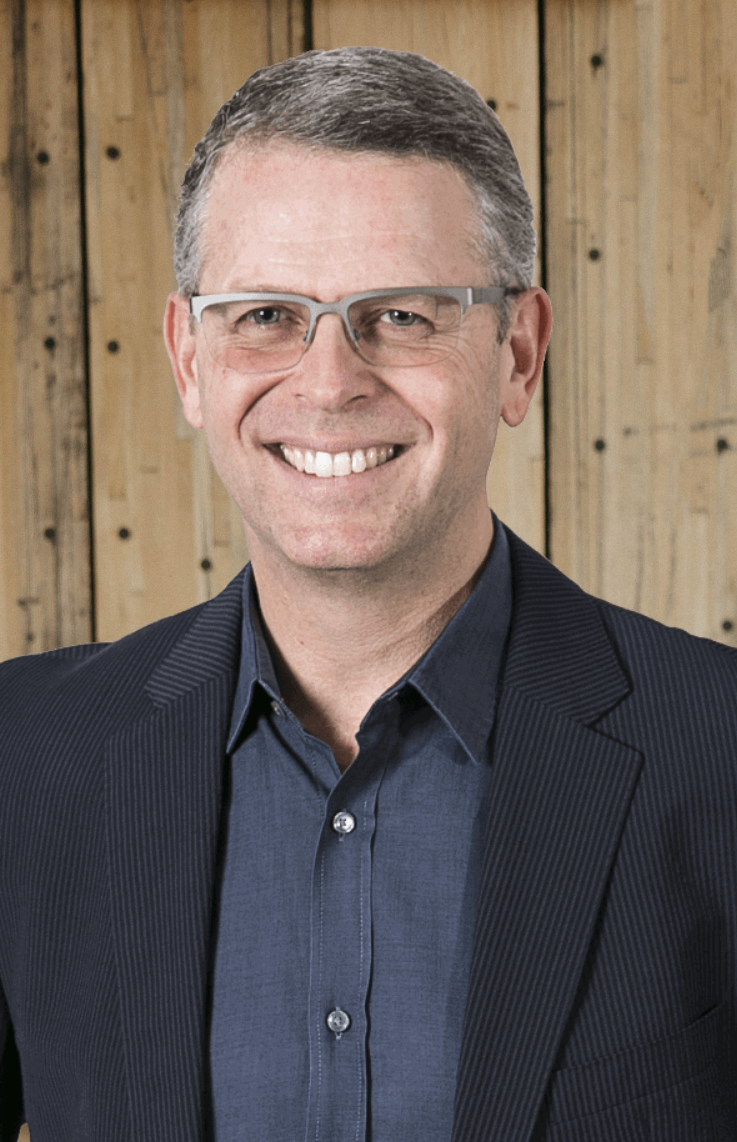
Michael Skok has a heresy he likes to deliver early, before anyone in the room can get too comfortable with their own genius. "I want to get rid of the idea of ideas," he tells the founders gathered at the Harvard Innovation Labs. "It's a terrible thing." People come to him, he says, breathless about their incredible idea for X, Y and Z. His verdict is merciless and cheerful at once: "Ideas are two a penny. Sorry, I should say two a cent."
▶ Watch on YouTubeThe point is not cruelty. It is diagnosis. Skok — a longtime venture capitalist, founding partner of Underscore VC, and the creator of the long-running "Startup Secrets" series at the Harvard i-lab — has spent a career watching companies die, and he has narrowed the cause of death to a single sentence. "The number-one reason that companies fail is because they're not solving a valuable enough problem," he says. "And therefore, they don't create the value that's worth investing in, and therefore, they fail in their basic form of meeting a need."
An idea, he argues, is "free floating." It has no meaning until it collides with a real problem or opportunity. And so the evening's mission is not to celebrate ideas but to interrogate them — to define a problem, evaluate it honestly, and only then build a value proposition around it. Unusually for Skok, who normally insists there are no answers, only questions, he promises a framework. By the end of the session, every founder should be able to complete a single sentence: for who that is dissatisfied with what, due to some unmet need, you offer a product that solves it and provides key benefits compelling enough that people actually want to buy.
The terror of "everybody"
The first word in that sentence is the one founders most love to fudge. For who? Skok turns to Gulnaz, founder of Connect-Ed, a nonprofit bridging the digital divide in Kazakhstan. She has been in his class before, and it shows. She does not say "everybody." She says children — specifically, children from marginalized and rural communities who lack basic digital literacy skills and don't have equipment.
That precision is the whole game. Skok contrasts her with an i-lab team, Compra Facil, that described a slick credit-comparison marketplace but never said for who. "That's a massive problem when you are building a business," he says, "because if you don't know who your customer is, you don't know what the persona is that you're selling to." Then comes the warning he underlines twice: "If you think it's everybody, I can tell you, you're going to fail by default." Boiling the ocean is a job for the largest companies on earth — and even they, he notes, "get very crisp about it."
A sharp question lands from the audience: what if your user isn't your customer? It is exactly the tension Connect-Ed lives with, since the children use the product but donors and funders pay. The room works it out together. The user is who benefits; the customer is who pays. And when they differ, one founder observes, "you actually have to satisfy two different value propositions." Skok agrees but plants a flag: start with the user. "If the user is not using it, nobody's going to pay for it." He calls it pull — the gravitational tug of genuine demand, without which nothing else matters.
The value-prop sentence
For [a specific segment] dissatisfied with [the status quo] due to [an unmet need], you offer [a product] that provides [compelling benefits] — unlike the alternatives.
From "who" comes a second idea Skok has borrowed from a decade of startup lore: the minimum viable segment, the natural dance partner to the minimum viable product. If you point your smallest product at the whole world, he warns, you'll be "pulled in all sorts of different directions" by users with conflicting needs. The MVS is the antidote — "one path where you get the same needs for the same users that allows you to sell the same product over and over and over and over again without you having to change the product."
How do you find that path? The answer, delivered by the room almost in unison, becomes the refrain of the night: ask the user. "All of you can do this without spending a single penny," Skok says. "Just go out, and talk to them." Keep asking until you find the person who says, that's the problem I have — and keep asking until the pain is big enough that they lean in. "Don't pitch them anything," he says. "Ask them everything."
A problem well stated is half-solved
With "who" settled, Skok turns to "what." He offers one of his favorite maxims — "A problem well stated is half-solved" — and a diagnosis of where teams go wrong. Get five engineers in a room who can't agree what they're building, or for whom, and you have the seed of failure. The cure is a framework he calls the Four Us: is the problem Unworkable, Unavoidable, Urgent, and Underserved?
Unworkable gets a vivid definition: a problem whose consequences are so severe "that somebody could get fired for it." His example is the early iPhone, when buyers lined up, bought the device, and then couldn't get it activated — iCloud contacts and calendars dead on arrival. "A lot of people got fired," Skok recalls, and Steve Jobs was "famously on a tirade about it." Skok happens to have invested in a company that fixed exactly that provisioning nightmare for carriers like AT&T — a workflow repair "worth tens of millions of dollars." But unworkable isn't only technical. When Gulnaz frames Connect-Ed, Skok pushes her past features to consequences: what happens to Kazakhstan if the socioeconomic gap goes unaddressed? Her answer — protests, a wave of unhappy people — reframes a digital-literacy program as a response to national unrest. "This is one of the biggest problems of our time," he says.
A founder raises the sharpest objection of the night: how do you know you're not just hypothesizing that something is unworkable? She offers oral cancer — you might blame lack of awareness when the real problem is lack of access to care, and end up "blaming patients." Skok grins. "You answered your own question." The discipline is to keep drilling until you reach root cause — and the person to ask is, inevitably, the user.
Unavoidable gets the room's favorite pair: taxes and death, or, as Skok gently reframes it, aging. Whole industries — accounting, elder care, TurboTax — spring from what cannot be dodged. Education, he argues, is nearly as unavoidable for any society that wants to stay economically viable. COVID makes the point sharper still: masks, testing, supply chains, entire businesses that didn't exist before an unavoidable health crisis conjured them.
Urgent is where Skok challenges Space Health, a venture supplying medical professionals to the commercial space sector. Is space medicine urgent, he asks, for anyone in this room right now? Not exactly. But for the narrow segment actually going to space, checking their health before launch is very urgent indeed — proof that "urgency is all relative," and that the trick is finding the segment for whom your clock is already ticking. His practical tip: don't introduce yourself at all. Ask a potential customer what their number-one priority is tomorrow morning, and why. "Oftentimes, they won't even get to number two." Market shifts, he adds, manufacture urgency wholesale — mobile phones reordered banking overnight, and AI is doing the same to everything now.
Underserved lands with Taste of Kenya, whose founder Zipporah explains that low-income Kenyan coffee consumers can't afford Kenyan coffee and drink Brazilian instant instead. Skok lights up: the market is doubly broken — unworkable because people can't afford it, underserved because there's no local supply at all.
The Four Us produce the evening's most electric "aha." Dan, whose startup TerraFlow helps pharma companies understand why a drug works in some patients and not others, reframes his own problem live. His real customer, he realizes, is a scientist who stuck their neck out to fund an expensive clinical trial and now has to prove to a vice president it was worth it. What happens if they can't identify the right biomarkers? "It would be billions." Skok could not have scripted it better. "Now you're going to get people's attention. Now you're going to build something that is compelling, that causes people to act and want to buy."
Vitamins, painkillers, and the loneliness study
Not every business trades in hair-on-fire pain. For consumer products, Skok reaches for a Maslow-flavored map of latent versus blatant needs. Why does everyone in the room use Facebook, Instagram or WhatsApp? "Connection," someone answers. Skok pounces: "Do you know what the number-one cause of unhappiness in the world is?" Loneliness. "The number-one finding of the longest study at Harvard ever since 1938 of happiness is one thing: connection." That single human need, he notes, built Facebook, Bumble and WhatsApp — the last of which took off because it was too expensive for people abroad to phone home.
Some needs, though, start latent and aspirational — nice to look good, nice to feel confident — and only later curdle into something blatant and critical. The iPad is his case study. Mocked at launch as "just a big iPhone," it languished until developers built the apps that made it indispensable — navigation for pilots, touch controls in operating rooms. "Trust me, it's critical," Skok says of the cockpit iPad. "It's what you use to make sure you're going to get home." The lesson: understand whether your use case is a vitamin or a painkiller, and get yourself into the top-right quadrant where must-have lives.
That prompts Victor's chicken-and-egg question: when Apple built the iPad, it didn't yet solve a critical problem, because the apps didn't exist. Skok's answer is a small tribute to Steve Jobs, the man famous for never asking users. What Jobs had was vision — and, crucially, a platform. He made it easy enough for millions of developers to build the applications that solved their own problems, the same open-platform logic behind open source, Drupal, Salesforce and the app economy itself. A counter-example flies in from the audience: Pebble, which fit the frameworks and is now gone. Skok, who once publicly offered his "useless" first Apple Watch to anyone who could justify keeping it, admits the Watch survived where Pebble didn't partly on the strength of its developer platform — and partly, he concedes, on marketing.
Skok's field questions for founders
- "What's your number-one priority tomorrow morning — and why?"
- "What are all the reasons you would not buy my product?"
- "What was the situation before — and what will it look like after?"
- "Is this a vitamin, or is it a painkiller?"
Kill "faster, better, cheaper"
Then Skok comes for the phrase every founder loves. Almost everyone in the room believes they are "faster, better, cheaper." He wants to abolish the words. "There are people out there who have more resource than you do as a startup," he says. If KAYAK or Travelocity decides to chase David — the founder building a "destinationless" travel app that surfaces airfares 30% to 90% off — they'll simply outspend him on the same tech. What a startup needs is not incremental superiority but a breakthrough that is defensible even against giants.
Enter the 3Ds: Disruptive, Discontinuous, Defensible. Disruption, Skok stresses, is often a business model rather than a technology — Airbnb invented nothing and owns no homes, yet reorganized travel by connecting people to unused resources. "That could have been invented sitting here tonight." Multi-touch, by contrast, was a genuine technological disruption, collapsing a hundred dedicated interfaces into one screen that can save lives in an operating theater.
His masterstroke is Amazon. Was it disruptive at launch? The room says no — e-commerce already existed. Skok agrees the products were nothing new, then reframes: Amazon's real breakthrough was refusing the trade-off between low prices and fast delivery ("You can have both"), plus a third weapon, selection — the long tail of books you physically couldn't find in stores. Scale made it a breakthrough. And scale birthed the second D: discontinuous innovation. Amazon's compute grew so cheap that renting it out became AWS — cloud computing, without which our phones, our post-COVID work lives, and half of today's startups (TerraFlow included) simply couldn't function. Skok notes the origin story was told in that very i-lab by AWS creator Andy Jassy.
The third D, defensible, is the moat. IP and patents are the obvious route — Skok predicts TerraFlow's edge will be protectable — but the deeper defensibility is switching costs. Once a customer bakes your product into how they bring drugs to market, they won't rip it out. He tests it with a thought experiment: would you take a brand-new phone if you had to surrender your number and change carriers? Most of the room says no. Networks are the ultimate moat — a better social network with nobody on it is worthless — and data is its close cousin. To Vivian, building an actionable data product for marketers, Skok sketches the flywheel: the more marketers who contribute, the better her data, the deeper her moat, the harder she is to displace.
The gain/pain ratio
The final leg is evaluation — deciding whether a value prop is worth a life. Skok starts simple, with a before/after "T diagram." For Selene Health, whose founders Stella and Scarlett are building personalized menopausal care, the "before" is women rendered dysfunctional and out of work by hot flashes and night sweats; the "after" is restored productivity and quality of life. It is, Stella notes, spectacularly underserved: pregnancy research yields millions of results, menopause "barely a hundred," with only about 2% of research funding devoted to the population. The room applauds. Skok, revealing that someone in his own family struggles with it, calls it "such a great four-U problem."
But before/after needs a measuring stick, and that is the gain/pain ratio — the value you deliver divided by the total pain of adopting you. Founders can always recite the gains, Skok says; almost none can name the pain. He walks through Venmo: obviously convenient today, but early on it was "yet another app," of dubious security, useless until enough people joined — the cold-start problem in miniature. His tip is brutal and simple: ask customers not why they'd buy, but "what are all the reasons you would not buy my product?" Keep asking until every objection surfaces — cost, retraining, supply-chain inertia, and above all the risk of betting on a startup that might fail and take your money with it.
So what ratio is enough? Founder Dan offers 10 to 1 — "you got to get people over that activation energy." Skok agrees it depends on the customer. A pharma company changing its drug-development workflow might need a full order of magnitude; a consumer offered airfares 30% to 90% cheaper might switch for far less. The governing law is inertia: "If you really are not giving them at least an order of magnitude improvement in something, they're not going to do anything. Life's too short. They're too busy." The pain, he reminds them, includes everything it takes to find you, try you, buy you, and get trained on you; the danger is that if trying is one click, deleting is one click too.
Built around you
Skok assembles the pieces into one statement — define the who with a minimum viable segment, confirm blatant-and-critical needs, name what's unworkable and underserved, prove you're disruptive rather than merely cheaper, and quantify the gain/pain at 10x with reasons. Then he closes on something quieter than a framework.
"The most important thing in all of this is that it's built around you," he tells the founders. "If you don't uniquely understand the problem you're addressing, then why are you doing it?" He calls it founder-market fit — the reason a particular person is uniquely positioned to solve a particular problem, and to do it with a business model that lasts. Ideas, after all, are two a penny. What isn't cheap is the founder who has asked enough users, drilled to enough root causes, and stared honestly enough at the pain to know they've found something worth a decade of their life.
"So in summary," Skok says, one minute early, "have fun defining it. Have fun evaluating it. And make sure it's built around you, and you'll have a great company."
▶ Watch the full session on YouTube