One line of code.
Your audience, back.
There's a data point that explains Paulo Martins better than any resume line: Arena reached 24,000 customers before he spent a single dollar on marketing. The product simply spread - embedded on one website, seen by a reader, dropped onto the next. That's the whole model. Engagement as contagion. Community as infrastructure.
Martins grew up in Minas Gerais, the landlocked Brazilian state known for mountains, cheese, and an outsized share of the country's tech talent. He studied computer science in Uberlândia through a Brazil-France university partnership that sent him to Lyon, where he earned a master's in data mining and machine learning at INSA Lyon. From France he moved to Houston - not for startup culture, but for NASA. Algorithms, space systems, the Johnson Space Center. Not the most obvious on-ramp to a live-chat SaaS company, but it trained a particular kind of thinking: build for scale, build for reliability, build for environments where failure is not an option.
Ubisoft came next - a data engineering role spanning Montreal, Paris, and Bucharest that put him inside the machinery of shipping more than 25 million game units on three platforms simultaneously. Then Hulu. This is where the entrepreneurial itch became impossible to ignore. He joined the ad products team early enough to watch the company grow from roughly 100,000 paying subscribers to 7 million. Revenue went from nothing to $1.1 billion. He ran campaigns for the Super Bowl and the Oscars. The scale was intoxicating, but so was the clarity it gave him: he didn't want to run campaigns for someone else's platform forever.
In 2016, he left Hulu. In 2017, with co-founder Rodrigo de Castro Reis, he launched what was then called Stationfy - later rebranded as Arena. The thesis was simple enough to fit on a napkin: social platforms have stolen every brand's audience, and someone needs to give it back. One embed, one line of code, and your website becomes a live arena where your readers, fans, customers, and subscribers can talk to each other, interact with content, and stay.
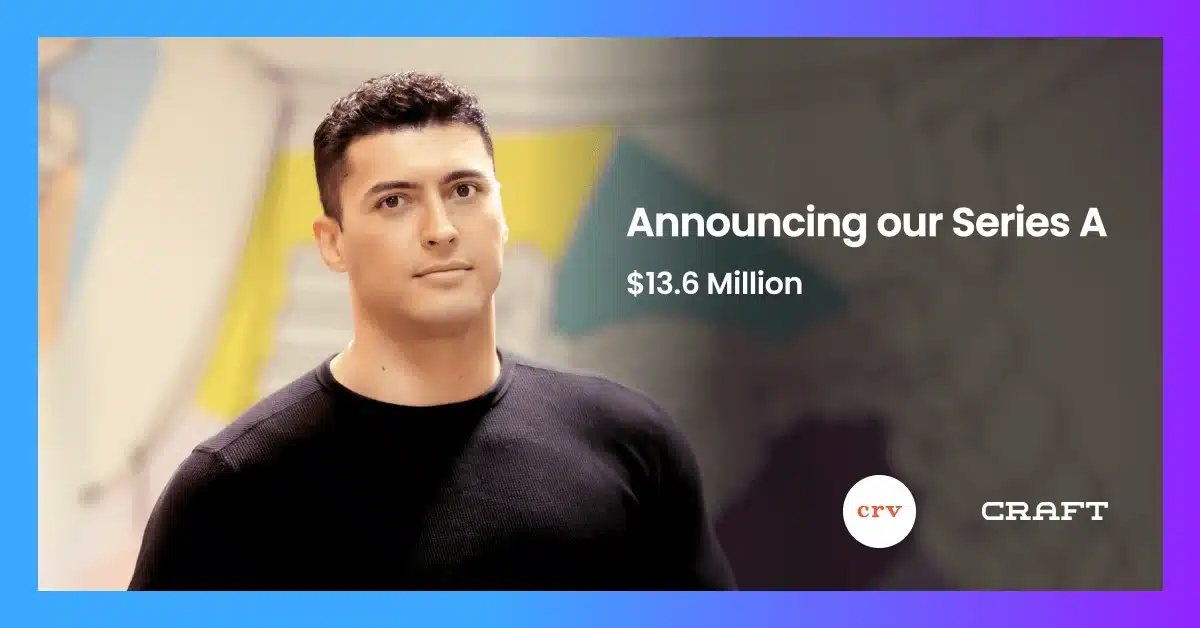
By 2020, Redpoint Ventures put in $2.3 million. By March 2022, CRV led a $13.6 million Series A - alongside Craft Ventures, Artisanal Ventures, Vela Partners, and a set of angels whose names alone signal how seriously people took the vision: David Sacks (Yammer, PayPal Mafia), Des Traynor (Intercom), Olivier Pomel (Datadog). Arena had 25,000 customers in 150 countries. The NPS was 76. Customers were reporting 64% engagement lifts and five times more first-party data.
Martins describes Arena as "the Discord for every B2B or B2C company that wants to create that engagement, on their website, with just one line of code." He is also quietly building a bridge between Silicon Valley and Brazil - Arena committed to hiring 55 Brazilian developers, offering relocation sponsorship or remote work options, and training the team on US business-scaling methods. Diversity, he says, is "the default. It's basically in our DNA." Four languages spoken fluently - Portuguese, English, French, Spanish - backs that claim with evidence rather than policy.