Jason Langheier’s first job was recycling at Tops Friendly Markets. Before the degrees, the software company and the board meetings, there was a supermarket. It is a pleasing beginning for someone who would spend much of his working life thinking about what happens between deciding to buy food and actually getting it home. The grocery business has a habit of making grand ideas answer a small question: can you afford what is in the basket?
He grew up in a rural area outside Buffalo, in a family where money sometimes ran short. His father worked as a truck driver or mechanic and sometimes faced layoffs. Food stamps and free school lunches helped. Langheier remembers the awkwardness of carrying the stamps into a store, as well as the effort his parents made. Those memories give the founder of Foodsmart a particular starting point. A household budget is something he has lived inside.
Years later, he would earn degrees from Williams, Duke and Harvard, build companies and become a San Francisco founder. The distance between those worlds is considerable. His career keeps returning to an ordinary concern from the first one: making everyday decisions possible for people whose resources are already spoken for.
The first person to leave for college
Langheier, who also goes by Jay, was the first person in his extended family to attend college. At Williams, he studied biology and trained in neuroscience. His education also included Cambridge. For a student arriving without a family tradition of university life, college offered both an academic education and an introduction to unfamiliar social circumstances.
He has described Williams as a place whose standing he did not fully appreciate until later. That admission makes a refreshing addition to a founder biography. Usually the university appears as a credential, polished and placed conveniently near the top. Here it also appears as a discovery. He had reached a place before he understood quite what arriving there meant.
“Williams teaches you entrepreneurship without even knowing it,” he said. It is an interesting account of a liberal arts education: a preparation for starting things that does not announce itself as such. Learning how to approach an unfamiliar question can be useful long after the original subject has disappeared from view.
“Williams teaches you entrepreneurship without even knowing it.”
Jason Langheier
His later qualifications included an MD from Duke and an MPH from Harvard. The sequence brought together research, analysis and an interest in how people behave. His professional biography also records research at the National Institutes of Health. By the time he founded Foodsmart, he had spent years moving among institutions with different languages and different ways of deciding what counts as a useful result.
A founder before Foodsmart
Foodsmart was not Langheier’s first attempt at building an organization. He founded the nonprofit Fitness Forward and co-founded Proventys, where he served as Chief Technology Officer. The latter role matters to the story because it places him inside the work of making software, rather than simply commissioning it from somewhere on the other side of a meeting table.
A founder’s previous organizations rarely fit tidily into the story of the next one. Yet those experiences established that Langheier’s interests could take organizational form. He could work on a nonprofit, help build a technology company and then start again. His eventual Foodsmart co-founder was Milo Krastev. They founded the company in 2010 under the name Zipongo.
The name had the bouncy optimism of an early internet business. Its first public offering was equally recognizable to that period: food deals. A June 2011 launch announcement described discounts on groceries, with simple color-coded badges to help shoppers navigate products. There were food brands to recruit and a service to put in front of consumers. The idea had to work in a store as well as in a presentation.
Coupons sound modest beside a founder’s academic qualifications. Their modesty is useful. A discount has an immediate test: somebody uses it, or somebody does not. It obliges a company to pay attention to the purchase itself, to the price on the shelf and to whether its proposed convenience is convenient at all.
The question behind the coupon
In the early years, Zipongo participated in the Rock Health incubator even though it already had a product in the market and had raised money. Langheier valued the opportunity to work alongside other founders. He talked about getting to know people over time, seeing how their businesses developed and finding opportunities to work together later.
That is a less theatrical version of networking than the usual hunt for a decisive introduction. It allows a relationship to have a future that neither party can describe at the first meeting. His comments also reveal patience with a developing industry. He expected the field to change over the following decade and wanted to know the people helping shape it.
Meanwhile, the product was becoming more elaborate. By 2016, Zipongo offered recommendations shaped by an individual’s preferences, including recipes, shopping lists and restaurant suggestions. These were distinct ways of reaching the same daily decision. A useful dinner suggestion depends on whether someone is cooking, shopping or ordering. Software has to notice the difference.
Langheier’s recurring interest was the environment around a choice. It is an approach with practical consequences for product design: put a relevant option where someone can act on it. A shopping list that connects to a purchase is different from advice that leaves the entire next step to the reader. The gap between the two is where a great many good intentions spend their evenings.
Same household decision. A different route to paying for the work.
Changing who paid
One of Langheier’s consequential business decisions was to change the customer behind the customer. Zipongo moved away from a consumer model funded by food makers and toward a model paid for by employers and other organizational buyers. He identified that transition as a key decision in a 2018 account of the business. IBM and Google were among its corporate customers.
This is the sort of change that receives a short paragraph in a company history and deserves rather more attention. Who pays a business influences what it must sell, how it distributes its product and whose satisfaction it needs to measure. Switching the buyer means revisiting all three. The familiar startup word “pivot” can make this sound like a neat turn. It is closer to moving the plumbing.
The enterprise model also offered a route to groups of users through an existing organization. Instead of finding every household separately, the company could negotiate with a buyer that already had a relationship with them. That arrangement brought its own work: a service needed to fit into someone else’s offering. Partnerships became part of the product’s route into daily life.
His public appearances reflected that concern. In 2015 he was invited to reTHINKFood at the Culinary Institute of America in Napa Valley, a collaboration with the MIT Media Lab. His session concerned supply-chain companies and partnerships. The setting joined technology with the people responsible for food’s movement and preparation. A digital founder was discussing a decidedly physical business.
Two words for managing people
Asked about management, Langheier offered the phrase “Authentic leadership.” His explanation was practical: hire people who care about the work and pay them fairly enough to concentrate on it. Purpose and compensation belonged in the same conversation. An employee should not have to keep checking whether staying is financially sensible.
That is a useful corrective to the startup romance of devotion. Meaningful work still takes place in the lives of people with bills. The founder who remembers a household stretching its resources also recognizes that employees need a secure footing. A mission statement makes an unsatisfactory substitute for payday, however elegantly it has been typeset.
There are quieter details around the working life. Langheier enjoys hiking, sports and music with family and friends. In 2018 he named James Taylor as his favorite music, Osha Thai as a favorite restaurant and Edward Bellamy’s Looking Backward as his most influential book. These are dated snapshots, rather than permanent declarations of taste. They give the biography a little room to breathe.
Bellamy’s title is an apt companion for a founder whose account of his work repeatedly visits his childhood. The recollections are specific: a parent’s interrupted employment, the stamps at the checkout, the surprise of college. They help explain why convenience and affordability keep appearing together in his account of what a company should do.
A new chair, fifteen years later
In June 2024, Foodsmart announced a partnership with TPG’s Rise Fund involving a $200 million investment. The transaction gave the business capital to expand its operations. A funding figure belongs to the company, of course; it is not a measure of the founder’s personal wealth. It marks a change in the resources available for the work.
Investment announced with TPG’s Rise Fund.
Another change followed in March 2025. After fifteen years as CEO, Langheier became Chief Science Officer and remained a board director. Kurt Knight took the CEO role. The arrangement preserved the founder’s involvement while transferring executive leadership. For readers accustomed to treating the founder and the company as interchangeable, it offers a more precise picture of how an organization continues.
The two roles ask different things of a person. The CEO carries responsibility for running the whole business. A Chief Science Officer has a more concentrated brief. Langheier’s stated interest in spending more time on innovation helps explain the new division of labor, without requiring a drama to be invented around it.
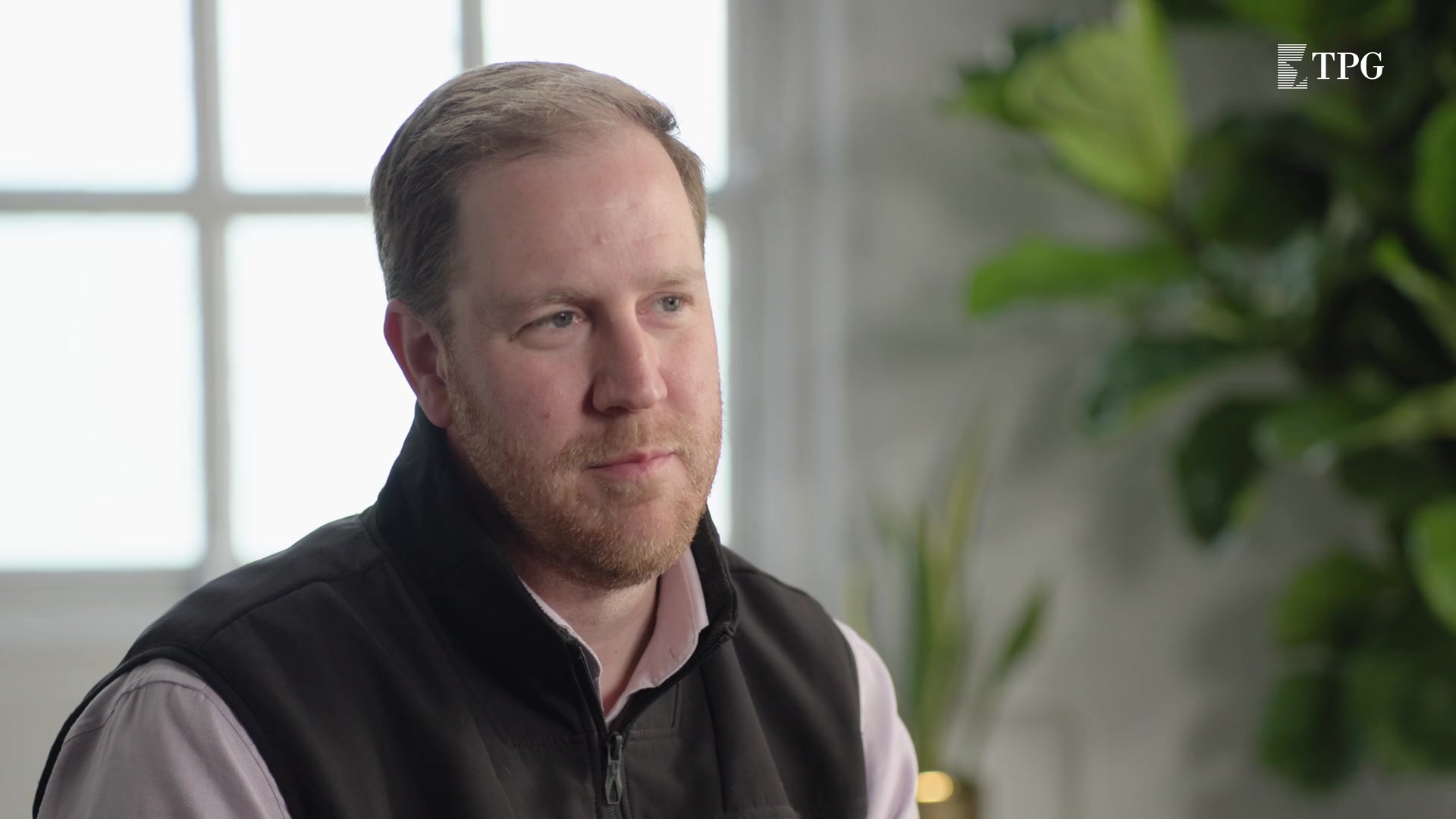
By February 2026, he was appearing in TPG’s Partnerships in Focus series as Foodsmart’s founder and Chief Science Officer. The conversation concerned the investment relationship, attracting talent, brand credibility and artificial intelligence. These are questions for a business with an established operating history, carrying the original project into a different stage.
Langheier’s story now contains both the decision to start and the decision to change jobs inside what he started. It began near Buffalo and passed through several universities, earlier organizations and a company called Zipongo. Along the way, the payment model changed, the company grew and the founder’s title changed with it. The supermarket remains a useful place to understand the whole journey. Whatever the software does, somebody still has to get dinner home.