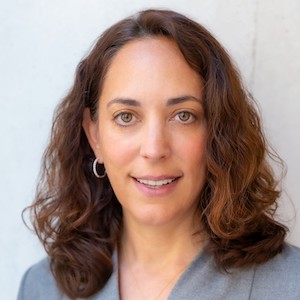
The problem wasn't the ring. The problem was that a Stanford MBA student - an MIT-trained engineer who had spent her early career designing satellite communications systems - couldn't find a single jeweler who could tell her where a diamond had actually come from. No chain of custody. No verified origin. No accountability. Just a Kimberley Process certificate that many insiders knew was full of gaps. Most people in that situation pick a ring and move on. Beth Gerstein started a company.
Brilliant Earth launched in 2005, which is to say it launched when nobody was buying luxury goods online, when "ethically sourced" wasn't a marketing category, and when the jewelry industry had absolutely no reason to welcome scrutiny of its supply chain. Gerstein and her Stanford GSB classmate Eric Grossberg went in anyway, bootstrapped, and made it profitable from the first year. That last detail tends to get buried under the IPO story. The company didn't burn through venture capital building toward a dream of future profitability. It made money from the start, in an industry neither founder had ever worked in.
"I'm most proud of the mobile school we funded in a diamond-mining community in the Democratic Republic of Congo. Education is critical to giving children alternatives."
Beth Gerstein, Brilliant Earth CEOThe Engineer's Edge
Gerstein grew up in Silver Spring, Maryland, as the youngest of three girls - both older sisters twins. Her parents were government engineers: her mother an executive at the Pentagon, her father at the NSA. She graduated from Duke University at 19 with a BS in Biomedical and Electrical Engineering. Then MIT for a master's in electrical engineering. Then Stanford for the MBA. The credentials read like a brochure for American credentialism, but the formative business experience she returns to most often is working at a daycare at $3 an hour.
"Taking care of 20 four-year-old kids was the hardest job I ever had," she's said. "Every job after it seemed like a piece of cake." That calculus - that managing toddlers calibrates your sense of difficulty for every professional challenge that follows - is the kind of grounding most business school case studies don't bother with. It's also, almost certainly, why she talks about it.
At MIT, being among the small minority of women in engineering wasn't a distraction - it was fuel. "Being in the minority gave me so much motivation to prove myself and prove to others that I deserved to be there." That same energy transferred to jewelry: an industry dominated by tradition and interlocking relationships, where an outsider arriving with ethical sourcing demands and an e-commerce model was, at minimum, an inconvenience.
Building Beyond Conflict Free
The Kimberley Process - the international certification scheme meant to prevent conflict diamonds from entering the market - was already a decade old when Brilliant Earth launched, and already insufficient. It covered diamonds funding rebel movements against recognized governments, but excluded diamonds mined with forced or child labor, diamonds from war zones where governments themselves were the abusers, environmental destruction, and a host of other harms. "Conflict free" had become a floor, not a standard.
Gerstein built Brilliant Earth's "Beyond Conflict Free" protocol to go further: verified origins, traceable supply chains, partnerships with miners operating under responsible labor and environmental standards. The company also added lab-grown diamonds and recycled precious metals to its catalog, giving customers choices that conventional jewelers weren't offering. It committed 5% of profits to communities harmed by conventional diamond mining - not as a charity add-on, but baked into the business model from year one.
"We recognize this isn't a transaction. This is supposed to be a celebration of a couple commemorating a really important milestone for them."
Beth Gerstein on the engagement ring experienceThe Brilliant Earth Foundation, co-founded in 2021, has channeled over $2 million into responsible sourcing programs, social impact initiatives, and climate action. A mobile school in a DRC diamond-mining community. Programs raising wages for miners. Conservation partnerships. Reforestation in Peru. The catalog of programs is large enough that it's easy to lose the thread - which is that every initiative traces back to the same original insight: the conventional jewelry supply chain was broken, and that brokenness had consequences for real people in real places.
The IPO and After
In September 2021, Brilliant Earth listed on Nasdaq under the ticker BRLT, raising over $100 million and opening at a valuation near $1.1 billion. Gerstein became one of a small cohort of women entrepreneurs who have taken a company public at that scale. She's also stayed. Sixteen years after founding the business, she's still running it - steering a 760-person organization through the volatility of the post-pandemic luxury market, a rising interest rate environment that cools engagement ring sales, and the broader reckoning the retail industry faces from shifting consumer preferences.
The results under her leadership as a public company are not flashy - they're consistent. Fourteen consecutive quarters of profitability through Q4 2024. Full-year 2024 net sales of $422.2 million. Fourth-quarter orders up 10% year-over-year. Her stated priority is long-term shareholder value, not day-to-day stock price - a commitment she makes explicitly in interviews, which is notable mostly because it's exactly what executives say and then frequently contradict in their next quarterly call. So far, the numbers suggest she means it.
Jane Goodall, DRC, and the State Department
In May 2024, Brilliant Earth announced a partnership with Dr. Jane Goodall and the Jane Goodall Institute. The inaugural collection came with a $100,000 donation from the Brilliant Earth Foundation to conservation efforts. The second collection launched in late 2025. Gerstein was in New York with Goodall just weeks before Goodall's passing, fundraising for the Institute at the launch of that second collaboration. She wrote publicly about the experience - a brief tribute that conveyed personal connection rather than PR calculation.
Her State Department appearance was earlier and less noticed. Invited to a roundtable on diamond trade transparency, she sat alongside representatives from Angola and Zimbabwe to discuss how to increase accountability in global diamond sourcing. A jewelry CEO at a foreign policy table is unusual. An engineer-turned-jewelry-CEO who had been demanding supply chain accountability since 2005 is slightly less so.
Sustainability Trailblazer and Industry Recognition
The 2024 Reuters Sustainability Trailblazer Award recognized Gerstein's leadership - specifically for pioneering responsible sourcing practices and driving innovation in the ethical jewelry space. The 2025 Jewelers for Children Facets of Hope Award, presented at the JCK show in Las Vegas, acknowledged her charitable impact. Inc.'s 2023 Female Founders 200 list included her. The Women in Retail Leadership Circle named her a Top Woman in Retail in 2022.
The awards matter less than the 20-year streak of building something genuinely different in an industry resistant to change. In March 2025, Brilliant Earth released its fourth annual Mission Report, marking the company's 20th anniversary. It wasn't a birthday party - it was a ledger. Impact measured. Targets set. Supply chain data disclosed. The engineering mindset that couldn't accept "we don't know where this diamond came from" in 2005 is still running the company in 2025.